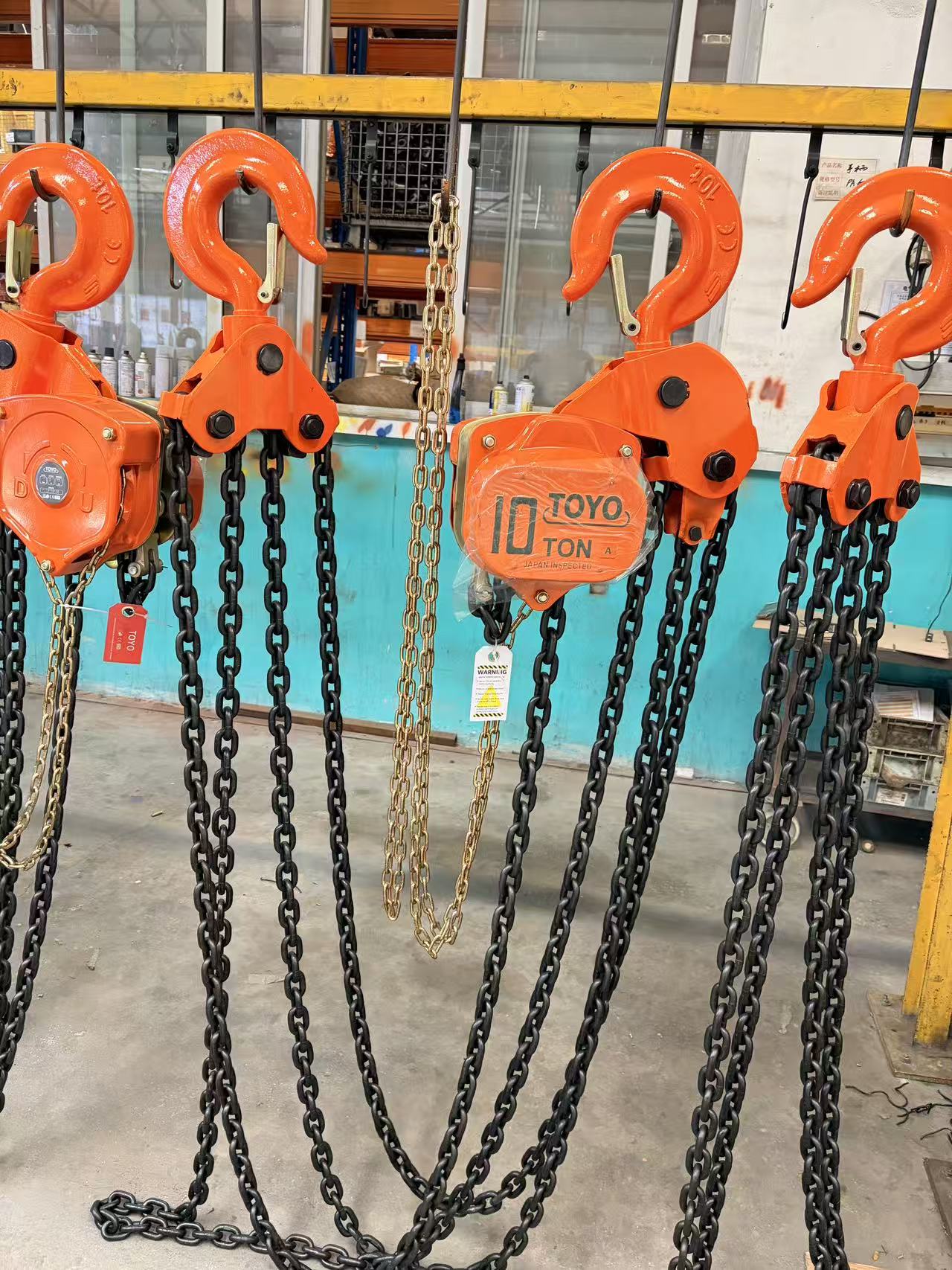
Um talha manual de corrente é uma solução prática de elevação para fábricas, oficinas, armazéns, estaleiros de construção, operações de manutenção e outras aplicações industriais. A sua estrutura mecânica simples permite aos operadores elevar e posicionar cargas sem necessidade de eletricidade, tornando-o útil em locais onde não há fornecimento de energia elétrica ou onde se prefere uma elevação manual controlada.
No entanto, um desempenho fiável na elevação depende não só da qualidade do guincho, mas também do seu estado antes da utilização.
Uma forma adequada inspeção do talha manual de corrente pode ajudar a identificar danos visíveis, desgaste anormal, deformações, corrosão e problemas mecânicos antes de estes afetarem uma operação de elevação.
Este guia apresenta uma lista de verificação prática para a inspeção que abrange a corrente de carga, os ganchos, a corrente manual, o sistema de travagem, o corpo do guincho, a capacidade nominal e o ambiente de trabalho.
Se procura equipamento industrial de elevação manual, explore o Talha de corrente TOYO gama para diferentes aplicações de elevação.
Por que razão deve inspecionar um talha de corrente manual antes de o utilizar?
Um talha de corrente pode estar sujeito a ciclos de elevação frequentes, poeira, humidade, impactos, armazenamento inadequado e condições de trabalho exigentes. Com o passar do tempo, estes fatores podem afetar componentes como a corrente de carga, os ganchos, o mecanismo de travagem e os engrenagens de elevação.
Uma inspeção pré-utilização permite identificar potenciais problemas antes de o guincho suportar uma carga de trabalho.
Uma inspeção básica deverá ajudá-lo a determinar se:
- A cadeia de carga encontra-se em bom estado
- Os ganchos não apresentam danos nem deformações visíveis
- Os fechos de segurança funcionam corretamente
- A corrente manual funciona sem problemas
- O sistema de travagem suporta a carga de forma adequada
- O corpo do guincho não apresenta danos estruturais evidentes
- A capacidade nominal é claramente identificável
- O ambiente de elevação é adequado
A inspeção não substitui o exame periódico nem a manutenção realizados por profissionais. Pelo contrário, constitui uma parte importante da gestão de rotina do equipamento de elevação.
Para os compradores que estão a avaliar fabricantes, a TOYO também disponibiliza informações sobre a sua Garantia de qualidade processos.
Lista de verificação para a inspeção de talhas manuais de corrente
Antes de utilizar um talha manual de corrente, inspecione os seguintes componentes essenciais.
1. Inspecionar a corrente de carga
A corrente de carga é um dos componentes mais críticos de um talha manual de corrente, uma vez que suporta diretamente a carga içada.
Inspecione cuidadosamente o comprimento visível da corrente antes de a colocar em funcionamento.
Procure:
- Ligações distorcidas
- Elos torcidos
- Links quebrados ou danificados
- Desgaste excessivo
- Corrosão grave
- Deformação
- Matérias estranhas ou contaminação
- Links que não se movem livremente
A corrente deve deslizar suavemente pelo guincho, sem qualquer resistência invulgar.
Uma corrente que pareça esticada, muito desgastada, torcida, rachada ou danificada de qualquer outra forma não deve ser utilizada até ter sido devidamente avaliada.
Por que razão é importante o estado da corrente de carga?
A cadeia de carga deve transmitir a força de elevação de forma segura através do mecanismo de elevação. Danos ou desgaste excessivo podem afetar a sua capacidade de suportar a carga prevista.
Nunca tente reparar uma corrente de carga danificada através de soldadura não autorizada, aquecimento, dobragem ou outros métodos que possam alterar as suas propriedades mecânicas.
2. Verifique o gancho superior e o gancho de carga
Os ganchos ligam o guincho à estrutura de suporte e à carga, o que os torna mais um ponto crítico de inspeção.
Verifique tanto o gancho superior como o gancho de carga quanto a:
- Fissuras
- Dobragem
- Deformação
- Desgaste excessivo
- Corrosão
- Danos causados por impacto
- Abertura anómala do gancho
- Travas de segurança danificadas ou em falta
Um gancho deve manter a forma pretendida e não deve apresentar sinais evidentes de alongamento ou deformação.
O trinco de segurança também deve mover-se corretamente e regressar à sua posição normal.
Se um gancho estiver rachado, gravemente deformado ou excessivamente desgastado, retire o guincho de serviço e mande-o avaliar de acordo com o procedimento de manutenção aplicável.
3. Inspecionar a corrente manual
A corrente manual permite ao operador controlar o movimento de elevação e descida.
Antes da utilização, verifique se a corrente manual:
- Funciona sem problemas
- Contém links inválidos
- Apresenta corrosão excessiva
- Está torcido
- Tem links que não funcionam
- Apresenta desgaste anormal
Manipule a corrente manual com cuidado para verificar se o mecanismo de elevação responde normalmente.
O operador não deve ter de recorrer a força excessiva para mover a corrente.
Se a corrente manual se tornar invulgarmente difícil de manobrar, pare e identifique a causa, em vez de forçar a sua utilização.
4. Verificar o sistema de travões
O sistema de travagem desempenha um papel fundamental na retenção da carga durante a elevação.
Antes de iniciar o funcionamento normal, verifique se o guincho consegue elevar e baixar de forma controlada e se o mecanismo mantém a carga conforme previsto.
Preste atenção ao seguinte:
- Deslizamento da carga
- Redução inesperada
- Atraso na ativação dos travões
- Ruído anormal
- Movimento irregular
Se o guincho não conseguir segurar a carga com segurança, não continue a utilizá-lo.
Os problemas nos travões exigem uma inspeção e manutenção adequadas antes de o equipamento voltar a entrar em serviço.
Para os compradores interessados na construção e nos ensaios de um talha manual de corrente, o Talha manual de corrente TOYO KII é um exemplo da gama de equipamentos de elevação manuais da TOYO.
5. Inspecionar o corpo do guincho
Inspecione o corpo principal e os componentes externos para verificar se apresentam danos visíveis.
Verifique se:
- Fissuras
- Deformação
- Componentes soltos
- Capas danificadas
- Fixadores em falta
- Corrosão grave
- Sinais de impacto
- Outros danos invulgares
O estado exterior do guincho pode fornecer indicações úteis sobre a forma como o equipamento tem sido utilizado.
Um guincho que tenha caído, sofrido um impacto, sido sobrecarregado ou exposto a condições ambientais adversas poderá necessitar de uma inspeção mais detalhada antes de ser utilizado.
6. Teste do funcionamento da elevação e da descida
Após concluir a inspeção visual, verifique o desempenho operacional básico do guincho em condições controladas adequadas.
O mecanismo deve funcionar sem problemas durante:
- Levantamento
- Participação
- Redução
Preste atenção a ruídos invulgares, como rangidos, estalidos ou outros sons anormais.
Fique também atento a:
- Movimento espasmódico
- Força de manobra excessiva
- Movimento inesperado da carga
- Vibração anormal
Não ignore comportamentos de funcionamento anormais apenas porque o guincho ainda consegue levantar uma carga.
Um desempenho anormal pode indicar desgaste, contaminação, montagem incorreta, sobrecarga ou outro problema mecânico que requeira atenção.
7. Verificar a capacidade nominal de elevação
Confirme sempre a capacidade nominal antes de proceder à elevação.
A carga não deve exceder a capacidade nominal do talha de corrente manual.
Verifique a placa de identificação do produto ou a marcação de identificação para obter informações como:
- Capacidade nominal
- Modelo
- Fabricante
- Identificação do produto
Nunca calcule a capacidade de elevação de um guincho com base nas suas dimensões físicas.
Por exemplo, um guincho de corrente manual compacto pode ter uma capacidade de elevação considerável, enquanto uma unidade aparentemente maior pode ter uma capacidade nominal diferente, dependendo do seu design.
Se não for possível confirmar a capacidade nominal, não utilize o guincho até que se determine a informação correta.
8. Inspecionar o ambiente de elevação
Uma inspeção de segurança deve abranger todo o sistema de elevação, e não apenas o guincho.
Antes da operação, verifique:
Ponto de suspensão
Certifique-se de que a estrutura de suporte ou o ponto de elevação são adequados para a carga prevista.
Ligação de carga
Verifique se a carga está corretamente ligada e devidamente apoiada.
Percurso de elevação
Certifique-se de que o percurso de elevação esteja livre de obstáculos e de pessoal desnecessário.
Posição da carga
Normalmente, o guincho deve elevar a carga na vertical. Evite puxar lateralmente ou posicionar a carga de forma a exercer forças anormais no gancho ou na corrente.
Área de Trabalho
Mantenha o pessoal não autorizado afastado da área de elevação e assegure um espaço adequado para uma operação controlada.
Um guincho com manutenção adequada não consegue compensar uma configuração de elevação inadequada.
Quando é que um talha manual de corrente deve ser retirado de serviço?
Um talha manual de corrente não deve ser utilizado se, durante uma inspeção, for identificada uma situação que possa comprometer a segurança da sua utilização.
Entre os exemplos contam-se:
- Ganchos rachados ou gravemente danificados
- Ganchos deformados
- Correntes de carga danificadas ou excessivamente desgastadas
- Travas de segurança em falta ou com defeito
- Avaria nos travões
- Elevação ou descida anómala
- Corrosão grave
- Corpo do guincho danificado
- Capacidade nominal não identificada
- Indícios de sobrecarga grave
- Qualquer outra condição que suscite incerteza quanto à segurança da operação
Quando for detetado um defeito, identifique claramente o equipamento como indisponível para utilização e providencie a inspeção, reparação ou substituição adequadas.
Não volte a colocar o guincho em serviço apenas porque o problema visível parece ser menor.
Lista de verificação para a inspeção diária do talha manual de corrente
Nas operações de rotina, uma lista de verificação simples pode ajudar os operadores a manter a consistência.
| Item de inspeção | O que verificar |
|---|---|
| Corrente de carga | Sem fissuras, torções, deformações ou desgaste excessivo |
| Gancho superior | Sem fissuras, deformações ou deformações anormais |
| Gancho de carga | Sem fissuras, deformações ou desgaste excessivo |
| Trava de segurança | Funciona e funciona corretamente |
| Corrente de mão | Funciona sem problemas e sem danos visíveis |
| Sistema de travões | Mantém a carga e funciona normalmente |
| Corpo do guincho | Sem fissuras evidentes, danos causados por impacto ou peças soltas |
| Marcação da capacidade | A capacidade nominal continua a ser identificável |
| Operação de elevação | Elevação e descida suaves |
| Ambiente de trabalho | Suporte seguro e trajetória de elevação desimpedida |
Esta lista de verificação destina-se a servir de referência prática antes da utilização. Os requisitos de inspeção podem variar consoante o tipo de equipamento, as condições de funcionamento, a regulamentação aplicável e as instruções do fabricante.
Inspeção diária vs. inspeção periódica
Uma inspeção pré-utilização e uma inspeção periódica têm objetivos diferentes.
Inspeção antes da utilização
Uma inspeção antes da utilização centra-se principalmente no estado visível e no funcionamento básico.
Pode incluir:
- Estado da corrente de carga
- Condição do anzol
- Trava de segurança
- Corrente de mão
- Funcionamento dos travões
- Corpo do guincho
- Capacidade nominal
- Ambiente de elevação
Inspeção periódica
Uma inspeção periódica é mais abrangente e pode envolver pessoal qualificado na análise dos componentes quanto a desgaste, deformação, corrosão, estado mecânico e outros problemas que possam não ser visíveis durante uma inspeção diária básica.
Dependendo do equipamento e do ambiente de funcionamento, a inspeção periódica pode incluir:
- Inspeção detalhada da corrente
- Medição do gancho
- Inspeção dos travões
- Inspeção de engrenagens e componentes mecânicos
- Avaliação do desgaste
- Lubrificação e manutenção
- Substituição de componentes desgastados
- Registos de inspeção
Para os fabricantes e compradores, os ensaios documentados e o controlo de qualidade também fornecem informações úteis na avaliação de equipamentos de elevação. Saiba mais sobre Testes aos produtos TOYO.
Como fazer a manutenção de um talha de corrente manual
A inspeção tem melhores resultados quando combinada com uma utilização, manutenção e armazenamento adequados.
Para ajudar na manutenção de um talha manual de corrente:
1. Não exceda a capacidade nominal
A sobrecarga pode exercer uma tensão excessiva na corrente, nos ganchos, no travão, nas engrenagens e noutros componentes.
2. Evite puxar para o lado
Utilize o guincho na direção de elevação prevista e evite aplicar forças laterais desnecessárias.
3. Manter a cadeia de carga limpa
Remova a sujidade e a contaminação de acordo com as recomendações de manutenção do fabricante.
4. Guarde o guincho de forma adequada
Quando não estiver a ser utilizado, guarde o equipamento num local adequado, protegido da humidade desnecessária, da contaminação e de impactos físicos.
5. Siga as instruções do fabricante
Utilize as instruções de funcionamento e manutenção do fabricante como referência principal para o modelo específico do guincho.
6. Retirar do serviço o equipamento com defeito
Não continue a utilizar um guincho quando não tiver a certeza do seu estado.
Inspeção de talhas manuais de corrente: o que os compradores devem ter em conta
A inspeção tem início após a aquisição de um guincho, mas a qualidade do equipamento começa muito antes, no processo de fabrico.
Para compradores industriais, distribuidores e utilizadores de equipamento de elevação, vale a pena ter em conta o seguinte:
- Qualidade de fabrico
- Seleção de materiais
- Qualidade dos componentes
- Conceção dos travões
- Qualidade da corrente de carga
- Ensaio de produtos
- Procedimentos de controlo de qualidade
- Certificações e documentação disponíveis
- Experiência do fabricante
- Assistência pós-venda
Um fornecedor de confiança deve ser capaz de apresentar especificações claras dos produtos e documentação técnica adequada.
A TOYO combina a sua experiência no fabrico de equipamento de elevação com processos de controlo de qualidade e de ensaio de produtos, para dar resposta às aplicações de elevação industrial.
Pode explorar o catálogo completo Gama de talhas de corrente manuais TOYO ou compare soluções de elevação manual, tais como Talhas de alavanca TOYO para aplicações que exijam puxar, posicionar ou levantar em espaços confinados.
Perguntas frequentes sobre a inspeção de talhas de corrente manuais
1. Com que frequência deve ser inspecionado um talha manual de corrente?
Antes da utilização, deve ser realizada uma inspeção visual e funcional básica. As inspeções periódicas mais detalhadas devem seguir as recomendações do fabricante do equipamento, as condições de funcionamento, a frequência de utilização e os requisitos de segurança aplicáveis.
2. O que devo verificar em primeiro lugar num talha manual de corrente?
Comece pela corrente de carga, pelos ganchos, pelos fechos de segurança e pelo corpo do guincho. Em seguida, verifique a corrente manual, o funcionamento do travão, a capacidade nominal e o ambiente geral de elevação.
3. Quais são os sinais mais comuns de um talha de corrente danificado?
Os sinais de aviso mais comuns incluem correntes danificadas ou deformadas, ganchos rachados ou dobrados, fechos de segurança defeituosos, deslizamento do travão, ruídos de funcionamento invulgares, esforço excessivo durante o funcionamento, corrosão e movimentos anormais de elevação ou descida.
4. Posso utilizar um talha manual de corrente com uma corrente de carga danificada?
Não. Uma corrente de carga danificada, muito desgastada, torcida ou deformada não deve ser utilizada até ter sido devidamente avaliada de acordo com os requisitos de manutenção do fabricante.
5. Posso utilizar um talha de corrente com um gancho dobrado?
Um gancho visivelmente dobrado ou deformado não deve ser utilizado para operações de elevação. Retire o guincho de serviço e providencie uma inspeção adequada.
6. Por que razão o meu talha manual de corrente é difícil de operar?
Uma força de manobra excessiva pode resultar de sobrecarga, utilização inadequada, contaminação, manutenção insuficiente, problemas na corrente ou uma avaria mecânica interna. Interrompa o funcionamento e identifique a causa, em vez de forçar a corrente manual.
7. O que devo fazer se um guincho de corrente não conseguir suportar a carga?
Deixe imediatamente de utilizar o guincho. Um guincho que não segure a carga com segurança necessita de uma inspeção e manutenção adequadas antes de poder voltar a ser utilizado.
8. Posso exceder temporariamente a capacidade nominal de um talha manual de corrente?
Não. A capacidade nominal não deve ser excedida. A sobrecarga pode exercer forças excessivas sobre componentes críticos do sistema de elevação e criar graves riscos de segurança.
9. Qual é a diferença entre uma inspeção diária e uma inspeção periódica?
Uma inspeção diária centra-se geralmente no estado visível e no funcionamento básico antes da utilização. Uma inspeção periódica é mais abrangente e pode exigir uma análise detalhada dos componentes, do desgaste, dos sistemas mecânicos e dos registos de manutenção.
10. Como posso escolher um fabricante fiável de talhas manuais de corrente?
Tenha em conta a gama de produtos do fabricante, a qualidade dos materiais e dos componentes, os procedimentos de ensaio, o controlo de qualidade, a documentação técnica, as certificações, quando aplicáveis, a experiência de fabrico e a capacidade de prestar apoio adequado à sua aplicação.
Escolha o talha de corrente manual adequado para a sua aplicação
Um habitual inspeção do talha manual de corrente ajuda os operadores a identificar problemas visíveis antes do início da operação de elevação. A verificação da corrente de carga, dos ganchos, dos fechos de segurança, do sistema de travagem, da corrente manual, do corpo do guincho, da capacidade nominal e do ambiente de trabalho constitui uma base prática para operações de elevação mais seguras.
Para os compradores industriais, escolher um fabricante de confiança é igualmente importante.
A TOYO oferece uma gama de talhas manuais de corrente e outros equipamentos de elevação para aplicações industriais, com processos de teste e garantia de qualidade que asseguram um desempenho consistente dos produtos.
Explore o Gama de talhas de corrente TOYO para encontrar um modelo adequado às suas necessidades de elevação.
Para obter especificações do produto, orientações sobre a sua utilização ou um orçamento, contactar a TOYO e discuta as suas necessidades com a equipa da TOYO.