Ручные цепные тали широко используются в строительстве, производстве, складском хозяйстве и при проведении ремонтных работ.
Однако опыт показывает, что Более 90% несчастных случаев с ручными цепными талями происходят не из-за дефектов продукции, а из-за неправильной эксплуатации.
Ниже приведены 7 распространенных и поддающихся количественному измерению ошибок которые значительно повышают риск поломок и несчастных случаев.
Ошибка 1: перегрузка подъемника (≈35% серьезных несчастных случаев)
Типичное поведение:
-
Использование 3-тонной ручной цепной тали для подъема 4-5 тонн
-
Игнорирование динамической нагрузки при подъеме
Количественное воздействие:
-
Нагрузка на тормозную систему увеличивается на 25-50%
-
Усталостная долговечность цепи снижается на более 60%
-
Высокий риск проскальзывания тормоза или деформации крюка
Даже с Подъемная цепь G80 (коэффициент безопасности 4:1), перегрузка строго запрещена.
Ошибка 2: Боковое вытягивание или не вертикальный подъем (≈20%)
Типичное поведение:
-
Подъемник не располагается непосредственно над грузом
-
Потяните за ручную цепь под углом
Количественное воздействие:
-
Повышается износ цепи и грузовых колес 2-3 раза
-
Повышенный риск заклинивания цепи и неравномерной нагрузки
Ручные цепные тали Предназначен только для вертикального подъема.
Ошибка 3: Недостаточная прочность точки подвеса (≈15%)
Типичное поведение:
-
Подвешивание подъемника на строительных лесах или тонких балках
-
Не проверяя WLL якорной точки
Количественное воздействие:
-
Повышается риск разрушения анкерной точки 3-5 раз
-
Отказы часто происходят внезапно и без предупреждения
👉 Точка подвеса должна быть не менее прочной, чем сам подъемник.
Ошибка 4: перекрученная или несогласованная цепь нагрузки (≈10%)
Типичное поведение:
-
Грузовая цепь перекручена на 180°
-
Неправильная посадка цепи в грузовом колесе
Количественное воздействие:
-
Местное напряжение на звеньях цепи увеличивается на более 40%
-
Повышенный риск заклинивания и ненормального износа
Ошибка 5: рывок за ручную цепь (≈8%)
Типичное поведение:
-
Сильно потяните за ручную цепь, чтобы поднять ее быстрее.
-
Неоднократное применение внезапной силы
Количественное воздействие:
-
Ударная нагрузка на шестерни увеличивается 1,5-2 раза
-
Ускоренный износ тормозных компонентов
Ошибка 6: использование ручного цепного таля для непрерывного подъема (≈7%)
Типичное поведение:
-
Длительные и бесперебойные подъемные операции
-
Замена электрической тали на ручную
Количественное воздействие:
-
Перегрев тормозов
-
Значительное сокращение срока службы
Ручные цепные тали предназначены для прерывистый подъемНепрерывная работа.
Ошибка 7: Отсутствие осмотра и технического обслуживания (≈5%)
Типичное поведение:
-
Использование ржавых или сухих цепей
-
Не обращайте внимания на изношенные крючки или предохранительные защелки
Количественное воздействие:
-
Повышенный риск заклинивания цепи
-
Снижение надежности тормозов
Как использовать Ручной цепной подъемник Безопасно
✔ Никогда не превышайте номинальную нагрузку
✔ Всегда поднимайтесь вертикально
✔ Проверяйте крюки и цепи перед использованием
✔ Регулярно смазывайте грузовую цепь
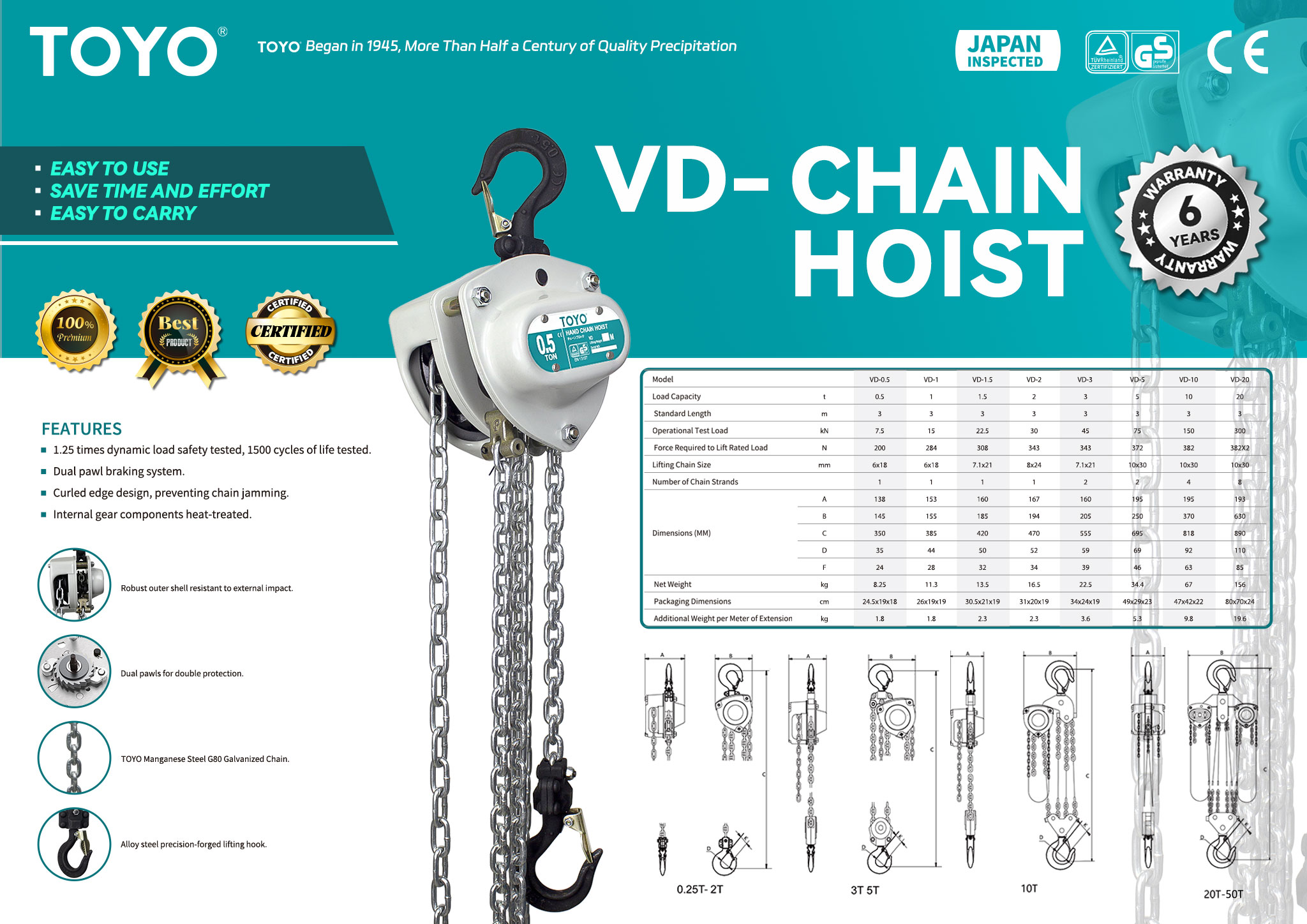
Почему ручные цепные тали VD созданы для безопасности
-
Испытание динамической нагрузкой 1,25×
-
Срок службы проверен на 1500 циклов
-
Тормозная система с двумя щеколдами
-
Подъемная цепь G80 с коэффициентом безопасности 4:1
-
Внутренние шестерни с термообработкой для долговечности
Заключение
Даже самая лучшая ручная цепная таль не сможет компенсировать неправильную эксплуатацию.
Понимание и избежание этих распространенных ошибок - ключ к безопасному и надежному подъему.
Свяжитесь с нами
Электронная почта: info@toyo-industry.com
Веб-сайт: www.toyo-industry.com