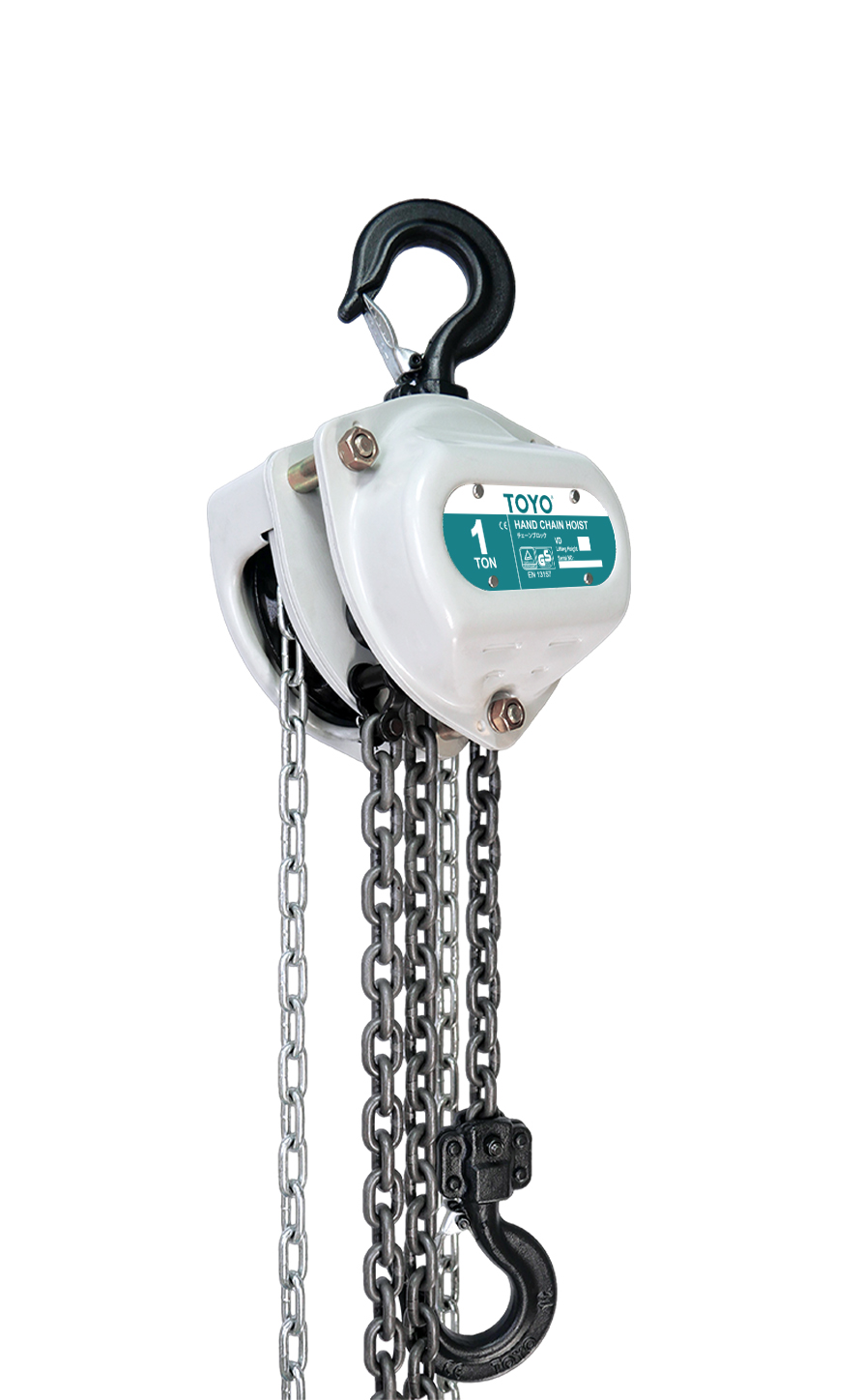
Palans manuels à chaîne sont largement utilisés dans les secteurs de la construction, de la fabrication, de l'entreposage et de la maintenance.
Toutefois, l'expérience sur le terrain montre que plus de 90% des accidents de palans manuels à chaîne ne sont pas dus à des défauts du produit, mais à une utilisation incorrecte.
Ci-dessous 7 erreurs communes et quantifiables qui augmentent considérablement le risque de défaillance et d'accident.
Erreur 1 : Surcharger le palan (≈35% des accidents graves)
Comportement typique :
-
Utilisation d'un palan manuel à chaîne de 3 tonnes pour soulever 4 à 5 tonnes
-
Ignorer la charge dynamique lors du levage
Impact quantifié :
-
La charge du système de freinage augmente de 25-50%
-
La durée de vie de la chaîne est réduite de plus de 60%
-
Risque élevé de glissement du frein ou de déformation du crochet
Même avec Chaîne de levage G80 (facteur de sécurité 4:1), la surcharge est strictement interdite.
Erreur 2 : Tirer sur le côté ou soulever de façon non verticale (≈20%)
Comportement typique :
-
Le palan n'est pas positionné directement au-dessus de la charge
-
Tirer la chaîne manuelle de biais
Impact quantifié :
-
Augmentation de l'usure des chaînes et des roues de charge 2 à 3 fois
-
Risque accru de blocage de la chaîne et de contraintes inégales
Les palans manuels à chaîne sont conçu pour le levage vertical uniquement.
Erreur 3 : Résistance insuffisante des points de suspension (≈15%)
Comportement typique :
-
Accrocher le palan à un échafaudage ou à une poutre de faible épaisseur
-
Ne pas vérifier la WLL du point d'ancrage
Impact quantifié :
-
Le risque de défaillance du point d'ancrage augmente 3-5 fois
-
Les défaillances sont souvent soudaines et sans avertissement
👉 Le point de suspension doit être au moins aussi solide que le palan lui-même.
Erreur 4 : Chaîne de charge tordue ou mal alignée (≈10%)
Comportement typique :
-
Chaîne de charge torsadée à 180
-
La chaîne n'est pas correctement installée dans la roue de charge
Impact quantifié :
-
La contrainte locale sur les maillons de la chaîne augmente de plus de 40%
-
Risque accru de blocage et d'usure anormale
Erreur 5 : Tirer sur la chaîne manuelle (≈8%)
Comportement typique :
-
Tirer violemment sur la chaîne manuelle pour la soulever plus rapidement
-
Application répétée d'une force soudaine
Impact quantifié :
-
Augmentation de la charge d'impact sur les engrenages 1,5 à 2 fois
-
Usure accélérée des composants de freinage
Erreur 6 : Utiliser un palan manuel à chaîne pour un levage continu (≈7%)
Comportement typique :
-
Opérations de levage longues et ininterrompues
-
Remplacement d'un palan électrique par un palan manuel
Impact quantifié :
-
Surchauffe des freins
-
Réduction significative de la durée de vie
Les palans manuels à chaîne sont conçus pour levage intermittentet non un fonctionnement continu.
Erreur 7 : Absence d'inspection et de maintenance (≈5%)
Comportement typique :
-
Utilisation de chaînes rouillées ou sèches
-
Ignorer les crochets ou les loquets de sécurité usés
Impact quantifié :
-
Risque accru de blocage de la chaîne
-
Réduction de la fiabilité du freinage
Comment utiliser un Palan manuel à chaîne En toute sécurité
✔ Ne jamais dépasser la charge nominale
soulever verticalement à tout moment
✔ Inspecter les crochets et les chaînes avant utilisation
✔ Lubrifier régulièrement la chaîne de chargement
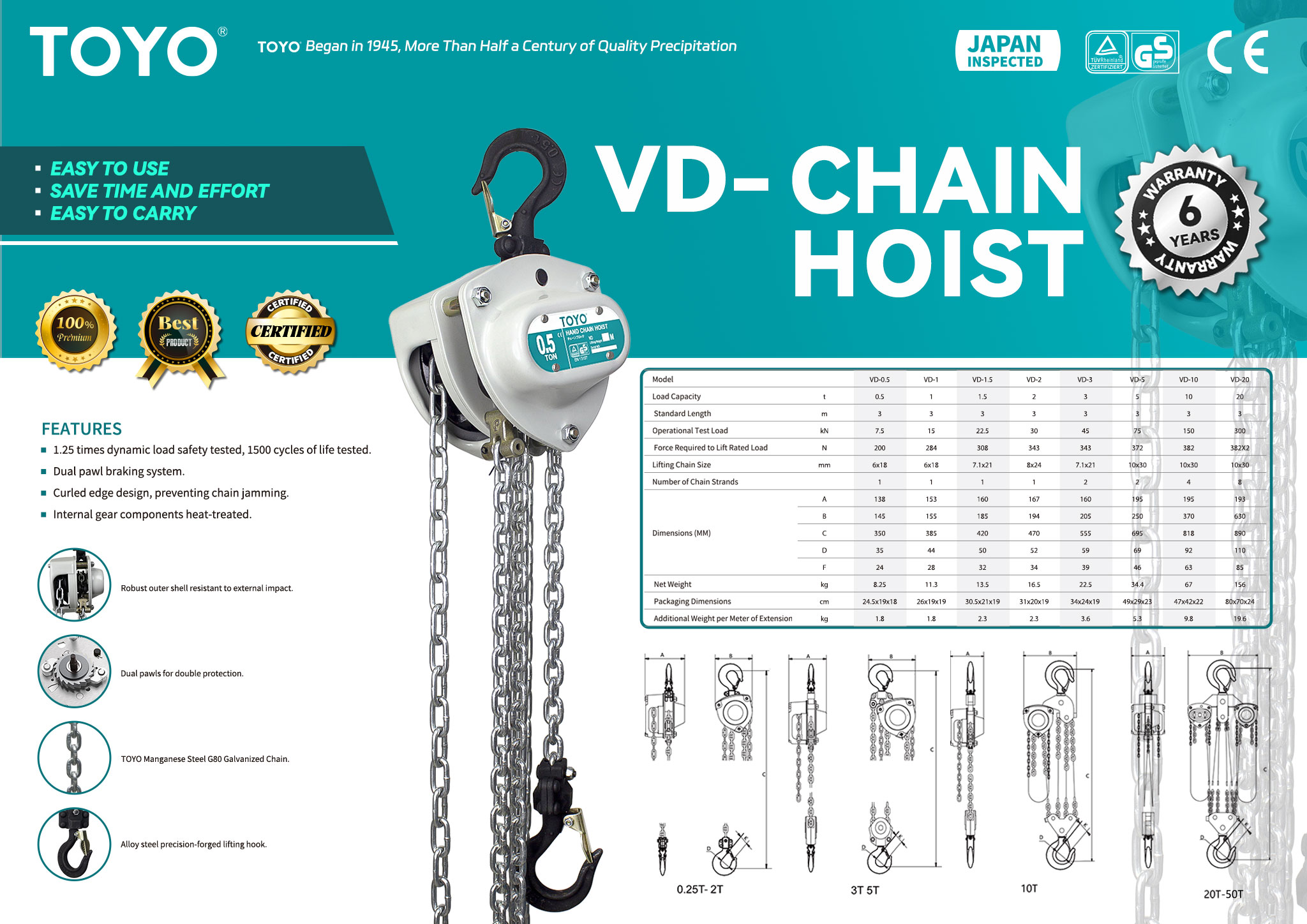
Pourquoi les palans manuels à chaîne VD sont conçus pour la sécurité
-
1,25× la charge dynamique testée
-
Durée de vie testée à 1500 cycles
-
Système de freinage à double cliquet
-
Chaîne de levage G80 avec facteur de sécurité de 4:1
-
Engrenages internes traités thermiquement pour une meilleure durabilité
Conclusion
Même le meilleur palan manuel à chaîne ne peut compenser un fonctionnement incorrect.
Comprendre et éviter ces erreurs courantes est la clé d'un levage sûr et fiable.
Nous contacter
Courriel : info@toyo-industry.com
Site web : www.toyo-industry.com