Résumé
The determination of the "best" electric winch is not a matter of crowning a single manufacturer, but rather a complex process of aligning a machine's technical capabilities with the specific demands of an operational context. This analysis deconstructs the multifaceted inquiry into who makes the best electric winch by examining five pivotal factors: load capacity, motor technology, gear systems, rope material, and brand-specific attributes like regional support and build quality. It moves beyond simplistic ratings to a more nuanced exploration of how environmental conditions, such as the high temperatures common in the Middle East and South Africa, influence the choice between series-wound and permanent magnet motors. The discourse synthesizes principles from mechanical engineering, material science, and operational logistics to provide a comprehensive framework for procurement. By contextualizing technical specifications, such as duty cycle and IP ratings, within real-world applications from industrial settings to off-road recovery, this guide equips professionals and enthusiasts in diverse global markets to make a discerning, results-focused investment that prioritizes safety, durability, and performance for 2026 and beyond.
Principaux enseignements
- Calculate your required pulling power by multiplying your vehicle's weight by 1.5 as a baseline.
- For hot climates or heavy use, prioritize a series-wound motor for its superior thermal resilience.
- Evaluate the winch's IP rating to ensure adequate sealing against dust and water in your environment.
- The question of who makes the best electric winch often depends on local service and parts availability.
- Choose between steel rope for abrasion resistance or synthetic rope for safety and lighter weight.
- Inspect gear train types and braking systems, as they are fundamental to control and safety.
Table des matières
- Understanding Load Capacity and Pulling Power: The Foundational Metric
- Motor Type and Duty Cycle: The Heart of the Winch
- Gear Train and Braking System: The Science of Control and Safety
- Rope Type and Construction: Synthetic vs. Steel Cable
- Brand Reputation and Regional Support: Beyond the Specifications
- Foire aux questions (FAQ)
- Conclusion
- Références
Understanding Load Capacity and Pulling Power: The Foundational Metric
The journey toward identifying the most suitable electric winch begins not with an examination of brands or features, but with a foundational inquiry into the physics of the work it will be asked to perform. The concept of "load capacity" appears straightforward, yet it is a deeply layered metric that, if misunderstood, can lead to equipment failure, operational inefficiency, and significant safety hazards. It is a common misstep to simply match a winch's rated capacity to the weight of the object to be pulled, be it a vehicle or an industrial load. Such a one-to-one correlation fails to account for the multitude of resistive forces that exist in any real-world scenario. Therefore, a more scrupulous and analytical approach is required.
The central task is to calculate the actual pulling force required. This calculation must transcend the simple dead weight of the load. For off-road vehicle recovery, the industry-standard starting point is to take the vehicle's Gross Vehicle Weight (GVW) and multiply it by 1.5. This formula, however, is not a universal law but a heuristic—a practical rule of thumb that provides a baseline safety margin. It accounts for a moderate amount of resistance, such as that encountered when pulling a vehicle on flat, firm ground. Yet, the moment the terrain changes, the formula's limitations become apparent. A vehicle mired in deep mud, stuck in sand, or needing to be pulled up a steep incline presents a far greater challenge than its simple weight suggests. Each of these factors introduces additional resistive forces—suction, friction, and gravity—that must be added to the equation. Thinking about this reminds me of the importance of context in any ethical dilemma; the right action, or in this case, the right capacity, is contingent upon the specific circumstances. A 10,000-pound winch might be perfectly adequate for a 6,500-pound truck on a level trail, but it could be dangerously underpowered if that same truck is bogged down to its axles in a swampy area of Southeast Asia or needs to be recovered from a sandy dune in the Middle East.
Defining Gross Vehicle Weight (GVW) and Rolling Resistance
To begin this analysis properly, one must first possess an accurate understanding of the Gross Vehicle Weight. The GVW is not the curb weight of the vehicle; it is the maximum operating weight as specified by the manufacturer, including the vehicle itself, fuel, cargo, and passengers. Using the curb weight is a frequent and perilous error. Imagine an off-road expedition vehicle: its base weight might be 5,000 pounds, but once fully equipped with recovery gear, roof racks, extra fuel and water, and occupants, its GVW could easily approach 7,000 pounds or more. Using the 1.5x multiplier on this accurate GVW (7,000 lbs x 1.5) yields a minimum required winch capacity of 10,500 pounds. This initial calculation is the first step in a responsible selection process.
Next, we must consider the nature of the resistance. Rolling resistance is the force resisting the motion when an object rolls on a surface. On hard pavement, this resistance is minimal. On soft sand, mud, or snow, the tires sink, and the vehicle must constantly "climb" out of the depression it creates, dramatically increasing the force required to move it. For example, the force required to pull a wheeled load through deep mud can be equivalent to as much as 50% of its weight. Suddenly, our 7,000-pound vehicle effectively requires an additional 3,500 pounds of force just to overcome the suction and friction of the mud, even before accounting for any incline. This is where the simple 1.5x rule begins to show its inadequacy as a sole determinant. The intellectual exercise here is to shift one's perspective from seeing the vehicle's weight as the primary obstacle to seeing the sum of all resistances as the true load. This holistic view is fundamental to safety and is a principle that applies equally to the selection of other lifting equipment, such as when determining the appropriate capacity for manual chain hoists in a workshop setting. The principles of calculating total load are universal (ulidehoist.com, 2025).
The 1.5x Rule: A Starting Point, Not a Dogma
It is worth dwelling on the nature of this 1.5x rule. Why was this specific multiplier chosen? It represents a considered judgment, a balance between providing a reasonable safety margin for common recovery situations and avoiding the unnecessary weight, cost, and electrical demand of a grossly oversized winch. It implicitly assumes a "stuck factor" that accounts for some level of resistance beyond simple rolling friction. However, treating it as an unassailable dogma is a failure of practical reason. It is a starting point for a conversation, not the final word.
The responsible user must learn to assess the environment and mentally adjust this multiplier. For a user who primarily traverses rocky trails with moderate grades, the 1.5x factor may remain a reliable guide. But for a user in the agricultural sector of South America who anticipates frequent recoveries from deep, clay-like mud, a multiplier of 2x or even 2.5x might be more appropriate. This is not about fear; it is about foresight. It is about acknowledging the limits of a simplified formula and applying situated knowledge—an understanding of one's specific operational context—to refine it. This process of refinement is a hallmark of professional expertise, whether one is selecting a powerful vehicle recovery winch or specifying electric chain hoists for a complex industrial assembly line. In both cases, one must account for not just the known weight but the potential for dynamic and environmental loads.
Dynamic Loads and Inclines: The Hidden Forces
The forces acting upon a winch are rarely static. An incline is one of the most significant and most frequently underestimated factors. Pulling a vehicle up a slope requires the winch to fight against gravity. The additional force required is not trivial. A simple table can illustrate this dramatically.
| Incline Angle | Added Load for a 7,000 lb Vehicle |
|---|---|
| 15 degrees | ~1,810 lbs |
| 30 degrees | ~3,500 lbs |
| 45 degrees | ~4,950 lbs |
| 60 degrees | ~6,060 lbs |
As the table shows, pulling that 7,000-pound vehicle up a steep 45-degree slope adds nearly 5,000 pounds of force to the pull. If the vehicle is also moderately stuck in mud (adding, say, another 1,500 pounds of resistance), the total required force is now 7,000 (vehicle) + 4,950 (incline) + 1,500 (mud) = 13,450 pounds. A 12,000-pound winch, which may have seemed more than adequate based on the simple 1.5x rule, is now operating beyond its rated capacity, stressing its motor, gear train, and rope to the breaking point. This is how accidents happen.
Furthermore, the concept of a "dynamic load" must be understood. A static load is a constant force. A dynamic load involves acceleration or shock. If a recovery pull involves jerking or bouncing, the peak forces exerted on the winch line can momentarily be far greater than the static load. While proper winching technique aims to minimize such shocks, they are sometimes unavoidable. A winch with a higher capacity has a greater buffer to absorb these momentary peaks without failing. This buffer is analogous to the "safety factor" engineered into high-quality high-tensile slings and other rated lifting gear, which ensures the equipment can withstand unforeseen stresses (zohohoist.com, 2025). The search for who makes the best electric winch must therefore include a deep appreciation for these hidden forces.
The Impact of Layering: How Pulling Power Diminishes
A winch's rated capacity—for instance, 12,000 pounds—applies only when the rope is on its first layer, the one closest to the drum's core. With each successive layer of rope that wraps onto the drum, the effective diameter of the drum increases. This change in diameter alters the gear ratio, increasing the line speed but decreasing the pulling power. It is a fundamental principle of mechanical leverage: a longer lever arm (a fuller drum) requires more force to produce the same amount of torque.
The reduction in power is significant. It can be as much as 10-15% per layer. A 12,000-pound winch might only be able to pull around 9,500 pounds on its third layer and perhaps as little as 7,500 pounds when the drum is full. This is one of the most critical and least understood aspects of winch operation. A user might believe they have 12,000 pounds of pulling power available when, in reality, with most of their line still on the drum, they have only a fraction of that.
What is the practical implication of this? It means that whenever possible, one should spool out as much line as is safely feasible to get the pull operating on the lower layers of the drum where the winch is strongest. It also reinforces the argument for selecting a winch with a capacity well above the minimum calculated requirement. That surplus capacity ensures that even on the upper layers of the drum, the winch still has sufficient power to handle the load safely. When considering who makes the best electric winch, one must look at manufacturers who are transparent about this power drop-off in their technical specifications. This honesty is a sign of a commitment to user safety and education, a quality one also seeks in suppliers of industrial equipment like lever hoists and lifting clamps.
Comparing Industrial vs. Off-Road Capacity Ratings
Finally, it is useful to draw a distinction between the capacity ratings for off-road/vehicle recovery winches and those for industrial hoists and pullers. While both involve moving heavy loads, their design philosophies and rating standards can differ. Industrial lifting equipment, such as the electric chain hoists and manual chain hoists used in manufacturing and construction, are often governed by stringent standards like ASME B30.16 in the United States or EN 13157 in Europe (toponechain.com, 2025). These standards mandate specific design factors, testing protocols, and duty cycle classifications that are oriented toward repetitive, overhead lifting tasks where human safety underneath a suspended load is the paramount concern.
Off-road winches, while also built with safety in mind, are typically designed for intermittent, horizontal pulling applications. Their ratings (e.g., SAE J706) reflect this intended use. They are not designed or rated for overhead lifting. One must never use a vehicle recovery winch as a hoist. The braking systems, duty cycles, and safety factors are fundamentally different. An industrial hoist is designed to hold a load suspended indefinitely and securely, whereas a vehicle winch brake is designed to hold a load on an incline during a pull.
This distinction is important because it helps to contextualize the specifications. A customer looking for an electric winch for an industrial application—perhaps pulling heavy machinery into a workshop in Russia or positioning materials on a construction site in South Africa—should be looking at products specifically designated as "industrial pullers" or "hoists," not vehicle recovery winches. The question of "who makes the best electric winch" becomes "who makes the best winch for my specific application." The answer will differ dramatically between a 4×4 enthusiast and a factory maintenance supervisor. The supervisor's needs might be better met by the robust, duty-cycle-rated performance of industrial electric chain hoists, which are built for sustained, repetitive work.
Motor Type and Duty Cycle: The Heart of the Winch
If load capacity is the foundational question, the motor is the heart of the answer. The motor is the component that converts electrical energy from the vehicle's battery into the mechanical force that drives the winch. Its design, power, and resilience to heat are arguably the most critical factors determining a winch's real-world performance and longevity, especially in the demanding climates of the Middle East, Southeast Asia, and Africa. The two dominant motor technologies used in electric winches are the series-wound (SW) motor and the permanent magnet (PM) motor. Understanding the profound differences between these two designs is not merely an academic exercise; it is essential for anyone seeking to answer the question of who makes the best electric winch for their needs.
The choice between an SW and a PM motor is a choice between philosophies of power and endurance. It is a trade-off between efficiency at low loads and raw, heat-resistant power under extreme strain. For a user in a temperate climate who uses their winch infrequently for light-duty tasks, a PM motor might suffice. But for a professional recovery operator in Dubai or a serious off-roader exploring the rugged terrain of South Africa, the debate is largely settled in favor of the series-wound design. This preference is rooted in the fundamental physics of how each motor generates a magnetic field and, consequently, how it responds to heavy loads and the heat they generate.
Series Wound vs. Permanent Magnet Motors: A Deep Dive
A permanent magnet motor, as its name suggests, uses fixed magnets to create the stator's magnetic field. This design is relatively simple, inexpensive to manufacture, and efficient under light loads, drawing less current from the battery. This can be an advantage for smaller vehicles with less robust electrical systems. However, its primary weakness is its susceptibility to heat. When a PM motor is worked hard, the high electrical current flowing through it generates significant heat. This heat can, over time, weaken the permanent magnets, leading to a permanent loss of power. In a worst-case scenario, extreme overheating can cause the magnets to fail entirely. For this reason, PM motors are generally found on smaller, budget-oriented winches intended for light, intermittent use. They are not the tool for a prolonged, heavy pull on a hot day.
A series-wound motor, in contrast, creates its magnetic field electromagnetically. Both the stator and the armature coils are powered by the battery, connected in series. This design is more complex and expensive, and it draws more current than a PM motor, especially at no-load. However, its crucial advantage is its power and heat resistance. Because the strength of the magnetic field is proportional to the current flowing through it, an SW motor generates immense torque under load. Critically, it is also far more tolerant of heat. While it can still overheat with extreme use, it does not suffer the permanent degradation that plagues PM motors. Once it cools down, it returns to full strength. This resilience makes it the undisputed choice for heavy-duty applications, frequent use, and operation in high ambient temperatures. When you are asking who makes the best electric winch for serious work, you are almost invariably asking who makes the best series-wound winch.
| Fonctionnalité | Series-Wound (SW) Motor | Permanent Magnet (PM) Motor |
|---|---|---|
| Primary Advantage | High torque under load, excellent heat resistance | Lower cost, lower amp draw under light load |
| Primary Disadvantage | Higher amp draw, more expensive, heavier | Prone to overheating, can suffer permanent power loss |
| Meilleur pour | Heavy recovery, frequent use, hot climates (Middle East) | Light, infrequent use, temperate climates, budget-conscious |
| Common Application | Mid-to-high-end 4×4 winches, industrial pullers | Entry-level winches, utility winches (e.g., for ATVs) |
| Analogy | A marathon runner (built for endurance under stress) | A sprinter (fast and efficient, but for short bursts) |
This table clarifies the fundamental trade-off. Choosing a PM motor for a heavy vehicle in a hot climate is an act of false economy. The initial cost savings will likely be erased by poor performance and a shortened service life. The feeling of a winch fading and losing power in the middle of a critical recovery is something no one wants to experience. Therefore, for our target markets in South America, Russia, Southeast Asia, the Middle East, and South Africa, the recommendation leans overwhelmingly toward series-wound motors.
Understanding Duty Cycle: The Rhythm of Work
Closely related to motor type is the concept of the duty cycle. The duty cycle is a measure of how long a winch can operate under load before it needs to cool down. It is typically expressed as a ratio of on-time to off-time. For example, a duty cycle of 5% means that for every minute of operation, the winch requires 19 minutes of rest. Unfortunately, many consumer-grade winch manufacturers are not transparent about the duty cycle of their products, or they provide ratings based on very light loads. This is in stark contrast to the world of industrial lifting equipment, where duty cycle is a critical, standardized specification.
For instance, hoists are classified by organizations like the Hoist Manufacturers Institute (HMI) into categories (e.g., H1 to H5) based on their intended operational intensity. An H2 hoist is for light, infrequent use, while an H4 or H5 hoist is designed for continuous or near-continuous operation in a production environment (jindiaolifting.com, 2025). While vehicle winches are not typically classified using this same system, the underlying principle is identical. A winch with a robust, well-ventilated series-wound motor will have a significantly better duty cycle than a small, sealed permanent magnet winch.
How does a user assess this without a formal rating? First, prioritize winches with SW motors. Second, look for design features that aid in cooling, such as heat sinks on the motor housing. Third, consult real-world tests and long-term user reviews. Often, the off-road community will have established which models can endure prolonged pulls without faltering. The duty cycle is the rhythm of work. A winch with a poor duty cycle forces you into a frustrating pattern of pull-wait-pull-wait, turning a ten-minute recovery into a one-hour ordeal. This is particularly problematic in situations where speed is a factor, such as a vehicle at risk from a rising tide. The search for who makes the best electric winch is also a search for a winch that can work at your pace, not one that dictates a slow, halting rhythm.
Thermal Protection and Overheating in Hot Climates
For users in the Middle East, the hotter regions of South Africa and South America, or the humid climates of Southeast Asia, thermal management is not a secondary feature; it is a primary concern. Ambient temperatures can easily exceed 40°C (104°F), meaning the winch motor starts its work already warm. Under a heavy pull, motor temperatures can quickly rise to dangerous levels.
The first line of defense, as established, is a series-wound motor. The second is an integrated thermal protection system. Higher-end winches often include a thermometric switch or sensor that will either warn the operator (via an LED on the remote) or automatically shut the winch down if the motor reaches a critical temperature. While a forced shutdown can be inconvenient, it is vastly preferable to causing permanent damage to the motor. When evaluating a potential winch, the presence of such a protection system is a strong indicator of a quality design. It shows the manufacturer has considered real-world failure modes and engineered a solution.
Beyond built-in protection, users in these climates can take practical steps. Ensuring the winch is not obstructed by aftermarket bumpers that restrict airflow is crucial. Some users even fabricate small scoops or vents to direct more air over the motor housing. After a hard pull, it is wise to let the vehicle idle for a while. This ensures the alternator continues to supply power, but it also allows the engine fan to pull air through the engine bay, which can help cool a front-mounted winch. It is a system-level approach to thermal management. The winch is not an isolated component but part of an ecosystem, and its health depends on that system. This is a level of detailed thinking that separates the novice from the expert and is a key part of determining who makes the best electric winch for challenging environments.
Power Consumption and Battery Requirements
An electric winch is a power-hungry device. A 12,000-pound winch under full load can draw over 400 amps from the vehicle's electrical system. This is a massive amount of current, far more than any other accessory. This electrical demand has serious implications for the vehicle's battery and alternator.
A standard car battery is not designed to provide this kind of power. It is a starting, lighting, and ignition (SLI) battery, designed to deliver a high burst of current for a short period to start the engine. A deep-cycle battery, often used in marine or RV applications, is better suited as it is designed to be discharged and recharged repeatedly. Many serious off-roaders use hybrid or dual-purpose batteries that combine the characteristics of both. At a minimum, a winch-equipped vehicle should have a high-quality, high-capacity battery with a high Cold Cranking Amps (CCA) and Reserve Capacity (RC) rating.
The alternator is equally important. The alternator's job is to recharge the battery and power the vehicle's electrical system while the engine is running. A stock alternator on a passenger vehicle might only produce 70-90 amps. During a heavy winching operation that is drawing 400+ amps, the battery is being drained far faster than the alternator can replenish it. This is why it is critical to keep the engine running at a high idle (around 1,500 RPM) during winching—to maximize the alternator's output. For vehicles that will see frequent and heavy winch use, upgrading to a high-output alternator (160 amps or more) is a wise investment.
What does this have to do with who makes the best electric winch? A "good" winch manufacturer understands this electrical ecosystem. Their documentation will provide clear information on amp draw at various loads. This allows the user to properly plan their electrical system upgrades. A manufacturer that omits or obscures this data is doing its customers a disservice. The best winch is one that is supported by a vehicle capable of powering it. Without sufficient power, even the most powerful motor is useless. This is a holistic perspective that extends to all powered lifting gear; one must always consider the power source, whether it's a vehicle's electrical system for a winch or the three-phase supply for industrial electric chain hoists.
Gear Train and Braking System: The Science of Control and Safety
While the motor provides the raw power, it is the gear train that tames this power, transforming the high-speed, low-torque output of the motor into the low-speed, high-torque force needed to pull thousands of pounds. The braking system, integrated with the gear train, provides the critical safety function of holding the load securely when the motor is not pulling. These two systems work in concert, forming the mechanical core of the winch. An inquiry into who makes the best electric winch must, therefore, involve a scrupulous examination of these often-unseen components. Their design, material quality, and reliability are what separate a dependable recovery tool from a potential liability.
The gear train is a marvel of mechanical advantage. It is a force multiplier. A small electric motor, spinning at thousands of RPM, would be useless for pulling a heavy vehicle on its own. The gear train, through a series of interlocking gears, reduces this speed and, in doing so, multiplies the torque. The ratio of this reduction is known as the gear ratio. A higher gear ratio (e.g., 265:1) means more torque multiplication and a slower line speed, while a lower ratio (e.g., 150:1) results in a faster line speed but less pulling power. The choice of gear ratio is a fundamental design trade-off between speed and power.
Planetary Gear Trains: The Modern Standard
The vast majority of modern electric winches use a planetary gear system. The name comes from its resemblance to a solar system. It consists of a central "sun" gear (driven by the motor), several "planet" gears that revolve around the sun gear, and an outer "ring" gear that meshes with the planet gears. This design is compact, efficient, and capable of handling extremely high torque loads. Its coaxial design (the input and output shafts are aligned) makes it ideal for the cylindrical form factor of a winch drum.
Planetary gear sets are typically arranged in stages. A single stage might provide a 6:1 reduction. By connecting three stages in series, the total reduction becomes 6x6x6, resulting in a 216:1 gear ratio. This multi-stage approach allows designers to achieve very high gear ratios in a remarkably small space. When examining a winch, the number of stages in its planetary gear train is a good indicator of its intended purpose. A three-stage planetary gear train is the most common configuration and represents a well-balanced design for most off-road applications. The quality of a planetary gear system comes down to the materials used (hardened steel is essential) and the precision of the manufacturing. Poorly machined gears will be noisy, inefficient, and prone to premature wear or catastrophic failure under load. This is an area where you often get what you pay for. A budget winch may look the same on the outside, but its internal gear quality is where corners are often cut. The quest for who makes the best electric winch is in many ways a search for superior metallurgy and manufacturing precision within the gearbox.
Spur Gear vs. Worm Gear Systems: A Comparative Analysis
While planetary gears dominate the market, two other types of gear systems are worth mentioning, primarily for their historical significance and niche applications: the spur gear and the worm gear.
A spur gear winch uses a series of simple, cylindrical gears to transfer power. This design is rugged and straightforward but is also bulky, heavy, and noisy compared to a planetary system. The legendary Warn M8274, one of the most iconic winches ever made, uses a spur gear drivetrain. Its incredible speed and durability have made it a favorite among off-road competitors for decades. However, its large, upright configuration makes it difficult to mount on modern vehicles with integrated bumpers. It represents a different era of winch design, prioritizing raw performance over compact integration.
A worm gear system consists of a worm (a threaded shaft) that meshes with a worm wheel (a gear). This configuration provides a massive gear reduction in a single stage and has a unique, inherent braking characteristic: it is very difficult, often impossible, for the wheel to drive the worm. This means the system is naturally self-braking. Worm gear winches are very slow, but they offer exceptional load control and safety. For this reason, they are more commonly found in industrial applications where precise positioning and absolute load-holding are more important than speed. You might find a worm drive on an industrial puller used for positioning heavy components, where its slow, steady action is an asset. The principles of load control are similar to those found in manual chain hoists, which also allow for very precise, incremental movement. For most vehicle recovery tasks, however, the slow speed of a worm gear winch makes it impractical.
The Mechanics of Automatic Braking Systems (Load-holding brakes)
The brake is arguably the single most important safety component in a winch. Its job is to automatically engage and prevent the drum from spooling out when the motor stops. If a winch is holding a vehicle on a steep incline and the brake fails, the result is catastrophic. There are two primary types of automatic brakes used in modern planetary gear winches: the brake-in-drum and the brake-outside-the-drum.
The traditional and still common design is the automatic brake located inside the winch drum. This is typically a friction brake (similar in principle to a drum brake on a car) that engages mechanically when there is no power to the motor. While effective, this design has one major drawback: it generates a tremendous amount of heat. The friction that holds the load also creates heat, and this heat is transferred directly from the brake mechanism to the winch drum. This is particularly problematic when using synthetic winch rope, which is highly susceptible to heat damage. A prolonged period of holding a heavy load on the brake can heat the drum to a point where it can melt or seriously weaken the first few layers of a synthetic rope.
Recognizing this issue, a growing number of premium winch manufacturers have moved to a "brake-outside-the-drum" design. This is often a cone brake or a similar mechanism located at the gearbox end of the winch, away from the drum. This design offers two significant advantages. First, it isolates the heat-generating brake from the heat-sensitive rope, making it a much safer option for use with synthetic line. Second, it often provides superior load-holding power. This innovation is one of the most important advancements in winch technology in recent years. When debating who makes the best electric winch, particularly for use with synthetic rope, manufacturers who have adopted this superior braking technology have a very strong claim. A powerful winch is useless without a reliable brake, a truth that applies to every piece of lifting equipment, from a simple lever hoist to a multi-ton overhead crane. The integrity of the braking system is non-negotiable (toyo-industry.com, 2025).
Gear Ratios Explained: The Trade-off Between Speed and Power
As mentioned earlier, the gear ratio determines the winch's fundamental performance characteristics. A high ratio (e.g., 265:1) means the motor has to turn 265 times to make the winch drum rotate once. This massive reduction results in high torque and great pulling power, but the line speed will be slow. Conversely, a low ratio (e.g., 150:1) provides less torque but a much faster line speed.
Which is better? It depends entirely on the intended application. For most general-purpose off-road recovery, a balanced gear ratio in the range of 200:1 to 220:1 is a good compromise, offering ample power for tough pulls without being excessively slow. For off-road competition, where speed is paramount, a lower gear ratio (and a faster line speed) is desirable. The aforementioned Warn M8274 is famous for its "no-load" line speed of over 70 feet per minute, a result of its powerful motor and efficient spur gear drive. For industrial applications involving careful positioning of heavy loads, a very high gear ratio is preferred, as the slow, controllable speed is a safety feature.
Some manufacturers offer winches with multiple speed options, typically using a more complex gear train that can be shifted, much like a transmission. These are specialized and expensive but offer the ultimate in flexibility. However, for most users, selecting a winch with a single, well-chosen gear ratio is the most practical approach. Understanding your own priorities—do you need raw power for extreme situations, or do you value speed for quicker, lighter recoveries?—is key to choosing the right gear ratio. This self-assessment is a critical step in a mature purchasing decision, far more important than just looking at brand names. The question is not just "who makes the best electric winch," but "who makes the best electric winch for my specific balance of speed and power requirements."
Rope Type and Construction: Synthetic vs. Steel Cable
The winch line is the physical link between the winch and the load. It is the component subjected to the most direct abrasion, tension, and environmental abuse. For decades, the only choice was steel wire rope, a proven and durable option. In recent years, however, synthetic rope, made from high-modulus polyethylene (HMPE) fibers, has emerged as a popular and, in many ways, superior alternative. The choice between steel and synthetic is one of the most significant decisions a winch buyer will make, with profound implications for safety, weight, and handling. This is not a simple matter of preference but a complex equation involving the user's priorities, budget, and willingness to perform proper maintenance.
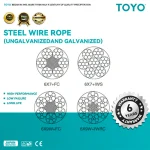
Steel wire rope has been the workhorse of the industry for a century. It is exceptionally durable, highly resistant to abrasion, and relatively tolerant of heat. If you are frequently winching in highly abrasive environments, such as over sharp rocks or through dense, woody undergrowth, steel rope has a clear advantage. It can withstand a level of abuse that would quickly shred a synthetic line. It is also less expensive than its synthetic counterpart, which is a significant factor for many buyers. However, steel rope has several considerable disadvantages. It is heavy, which adds unwanted weight to the front of a vehicle, potentially affecting suspension and handling. It is also difficult to handle; it develops sharp burrs ("jaggers") over time that can easily tear through gloves and skin. It is prone to kinking, and a kink permanently weakens the rope at that point. Most critically, when steel wire rope breaks under load, it stores a tremendous amount of kinetic energy, causing it to whip back with lethal force. Anyone who has seen a video of a steel cable snapping knows the terrifying danger it represents.
Synthetic rope, on the other hand, is a modern technological marvel. It is up to 80% lighter than steel rope of the same strength. A full 100-foot length of synthetic rope can weigh just a few pounds, making it far easier to carry out on the trail. It is flexible, easy to handle, and does not develop sharp burrs. It even floats on water, which can be a significant advantage in water crossings or swamp recoveries. Most importantly, from a safety perspective, it has very low stored energy. When it breaks, it tends to simply fall to the ground rather than whipping back violently. This single characteristic is arguably the most compelling reason to choose synthetic. However, it is not without its weaknesses. It is much more susceptible to abrasion and cutting than steel. It must be protected from sharp edges and rough surfaces by using sleeves or rock guards. It is also vulnerable to heat, which is why the pairing of synthetic rope with a winch that has a brake-in-drum design is so problematic. Finally, it is more susceptible to damage from UV radiation and chemical contamination, requiring more careful maintenance and eventual replacement.
Steel Wire Rope vs. Synthetic Rope: A Comparative Table
To clarify these trade-offs, a direct comparison is helpful.
| Fonctionnalité | Câble d'acier | Synthetic Rope (HMPE) |
|---|---|---|
| Poids | Lourd | Extremely light (up to 80% lighter) |
| Manipulation | Difficult; develops sharp burrs, prone to kinking | Easy; flexible, soft on the hands, floats on water |
| Safety (on break) | Extremely dangerous; stores kinetic energy and whips back violently | Much safer; low stored energy, tends to drop to the ground |
| Résistance à l'abrasion | Excellent; very durable against rocks, sand, and rough surfaces | Poor; easily cut or abraded without protection (sleeves) |
| Résistance à la chaleur | Good; not significantly affected by drum heat | Poor; can be damaged or melted by high drum temperatures |
| Maintenance | Requires regular lubrication to prevent rust and internal friction | Requires regular cleaning to remove grit that causes internal abrasion |
| Coût | Less expensive | More expensive |
This table does not declare a "winner." Instead, it frames the decision as a series of priorities. If your absolute top priority is safety, synthetic rope is the clear choice. If you operate in the most abrasive environments and are on a tight budget, steel may still be a rational choice, provided you adhere to strict safety protocols (such as using a heavy winch damper blanket on the line). The debate over who makes the best electric winch is intertwined with this rope choice. The best manufacturers offer their winches with a choice of either steel or high-quality synthetic rope, allowing the customer to make an informed decision based on their own needs. A powerful electric winch paired with the wrong rope for the application is a compromised system.
Rope Maintenance: Extending Lifespan in Harsh Environments
Regardless of the material chosen, a winch rope is not a "fit and forget" component. It requires regular inspection and maintenance to ensure its integrity. This is especially true in the harsh environments found in many of our target markets. The fine sand of the Middle Eastern deserts and the gritty mud of Southeast Asian jungles are particularly damaging to winch lines.
For steel wire rope, maintenance primarily involves keeping it clean and lubricated. After use in mud or sand, it should be spooled out, washed, allowed to dry completely, and then treated with a penetrating wire rope lubricant. This lubricant reduces internal friction between the wire strands and prevents corrosion, which can occur from the inside out. The rope should be regularly inspected for broken strands, flat spots, and kinks. A common rule is that if you can see more than six broken wires in one rope lay (one complete spiral of a strand), the rope should be retired.
For synthetic rope, maintenance is about cleanliness. Sand and grit can work their way into the rope's braid, and under tension, these particles act like tiny blades, causing internal abrasion that is invisible from the outside. The rope should be periodically washed with a mild soap and water and allowed to dry thoroughly away from direct sunlight. It should also be inspected regularly for cuts, chafes, and areas of heavy fuzzing, which indicate external wear. A protective sleeve should always be used at the hook end and anywhere the rope might contact the vehicle's bumper or fairlead during a pull. Proper maintenance is not just about longevity; it is a fundamental safety practice. It is a responsibility that comes with owning a powerful tool, much like the regular inspection required for industrial lifting clamps and high-tensile slings to ensure they remain fit for service (zohohoist.com, 2025).
Fairleads: Roller vs. Hawse
The fairlead is the guide on the front of the winch mount that directs the rope onto the drum. Its design must match the type of rope being used. There are two types: the roller fairlead and the hawse fairlead.
A roller fairlead consists of four steel rollers (two vertical, two horizontal) that create a smooth, low-friction path for the rope. It is the required choice for steel wire rope. The smooth, rolling surfaces prevent the steel rope from being scraped or bent over a sharp edge, which would quickly damage it. A roller fairlead can be used with synthetic rope, but it is not ideal. The corners where the rollers meet can sometimes pinch or chafe a synthetic line, and older rollers that have been used with steel rope may have developed burrs that can damage the synthetic fibers.
A hawse fairlead is a simple, solid piece of metal (usually polished aluminum or cast iron) with a large, smooth radius on its opening. It has no moving parts. This is the preferred and often required type of fairlead for synthetic rope. The smooth, rounded surface provides a low-friction guide that will not damage the soft synthetic fibers. One must never use a hawse fairlead with steel wire rope. The friction of the steel cable being dragged across the fixed surface of the hawse would quickly destroy both the fairlead and the rope.
The choice of fairlead is therefore dictated by the choice of rope. When purchasing a winch, it is essential to ensure it comes with the correct fairlead. If you are converting a winch from steel to synthetic, you must also change the fairlead from a roller to a hawse. This is a non-negotiable step. The best winch manufacturers sell complete conversion kits that include the synthetic rope and the appropriate hawse fairlead, simplifying the process for the user.
Brand Reputation and Regional Support: Beyond the Specifications
After a thorough analysis of the technical specifications—capacity, motor, gearing, and rope—the inquiry inevitably turns to the question of brand. Who actually builds these machines, and which names can be trusted? In a global marketplace, brand reputation is a complex tapestry woven from threads of manufacturing quality, design innovation, long-term reliability, and, perhaps most importantly, after-sales support. For a buyer in Johannesburg, Moscow, or São Paulo, the question "who makes the best electric winch?" is not just about the winch itself, but about the company that stands behind it. A technically superior winch from a manufacturer with no service network or parts availability in your region can quickly become an expensive paperweight.
The landscape of winch manufacturers is diverse, ranging from long-established American and European brands with decades of heritage to a host of newer, often Asian-based manufacturers offering competitive features at aggressive price points. There is no single "best" brand for everyone. The optimal choice depends on a user's budget, risk tolerance, and the level of local support available. A user's task is to navigate this landscape with a critical eye, looking beyond marketing claims to assess the true substance of a brand's promise.
Legacy Brands vs. Emerging Contenders
The winch market has long been dominated by a few "legacy" brands, particularly from the United States, who built their reputations on quality and durability. Brands like Warn Industries are often seen as the benchmark, having pioneered many of the technologies that are now standard in the industry. Their products are typically associated with robust engineering, high-quality materials, and extensive real-world testing. They often command a premium price, but for many professionals and serious enthusiasts, that price buys a proven track record and peace of mind. Their reputation is built on decades of reliable performance in the most demanding conditions, from military applications to top-tier off-road racing.
In recent decades, however, the market has seen the rise of numerous emerging contenders, many based in Asia and Australia. These brands often challenge the incumbents by offering similar features—series-wound motors, synthetic ropes, fast line speeds—at a fraction of the cost. This has been a disruptive force, making capable winches accessible to a much wider audience. The challenge for the consumer is to distinguish between the high-quality emerging brands and the low-quality imitators. Some of these newer brands have invested heavily in their own research and development, established rigorous quality control, and built a solid reputation for performance and value. Others simply compete on price, often by cutting corners on internal components, material quality, or weather sealing. Reading long-term reviews and seeking feedback from local user groups in your specific region is critical to separating the wheat from the chaff. The answer to who makes the best electric winch in the value-oriented segment is a moving target, as new players constantly enter the market and established ones evolve.
Assessing Build Quality: Sealing (IP Ratings), Materials, and Finish
One of the most reliable indicators of a winch's overall quality is its level of weather sealing. A winch is constantly exposed to the elements: rain, mud, dust, and river crossings. Water or dust ingress can corrode electrical contacts, contaminate gearbox lubricant, and lead to premature failure. The best way to objectively assess sealing is to look for an Ingress Protection (IP) rating.
An IP rating consists of two digits. The first digit (0-6) rates the level of protection against solid particles (dust), and the second digit (0-8) rates protection against liquids (water).
- IP67 : This is a common rating for high-quality winches. The "6" means it is completely dust-tight. The "7" means it can be submerged in up to 1 meter of water for 30 minutes without ingress.
- IP68 : This is an even higher rating. The "6" again means dust-tight. The "8" means it is protected against continuous immersion in water under conditions specified by the manufacturer.
A winch with an IP67 or IP68 rating demonstrates a serious commitment to durability by the manufacturer. It means gaskets, seals, and O-rings have been properly engineered and installed to protect the critical motor and gearbox components. For users in the wet, muddy conditions of Southeast Asia or those who face frequent water crossings, a high IP rating is not a luxury; it is a necessity. A manufacturer that proudly displays a high IP rating for their product is one that has confidence in its construction. This focus on sealing and durability is a shared characteristic of all high-quality industrial gear, from winches to electric chain hoists.
Beyond the IP rating, one can assess build quality by examining the materials and finish. Does the winch use stainless steel hardware to prevent corrosion? Is the paint or powder coating thick and evenly applied, or does it look like it will chip easily? Do the clutch lever and remote control feel solid and robust, or flimsy and cheap? These physical details often tell a story about the overall care and attention to detail that went into the winch's manufacturing.
The Importance of Localized Service and Parts Availability
This may be the most crucial factor for buyers outside of the main North American and European markets. A winch is a mechanical device, and all mechanical devices can eventually fail or require service. The clutch mechanism can wear, a solenoid in the control pack can fail, or a gear may be damaged by an extreme shock load. When this happens, the availability of local service and spare parts is paramount.
Before purchasing a winch, a potential buyer in South Africa, Russia, or Brazil should ask:
- Does this brand have an official distributor in my country?
- Does that distributor carry a stock of common spare parts like solenoids, remotes, and brake components?
- Are there authorized service centers that can perform repairs, or will the winch need to be shipped internationally for service?
A low-cost winch purchased online from a foreign vendor may seem like a bargain until it breaks. If parts are unavailable, the entire winch may need to be replaced. A slightly more expensive winch from a brand with a strong local presence can be a far better long-term investment. The value is not just in the device itself but in the support network that surrounds it. This is a universal principle of capital equipment procurement. A factory manager would not buy a critical piece of machinery like an overhead crane or a set of lever hoists without first confirming the availability of local technical support and parts. The same logic must be applied to selecting a vehicle recovery winch. The question of who makes the best electric winch for you is inextricably linked to who provides the best support in your city or region.
User Reviews and Long-Term Reliability Data
Finally, in the age of the internet, there is a wealth of user-generated data available. Forums, social media groups, and online magazines dedicated to off-roading and vehicle expedition are invaluable resources. However, one must learn to read these reviews critically. A single negative review about a winch failing may not be representative if the user was operating it improperly. Conversely, a wave of positive initial reviews may not reflect the product's long-term durability.
The most valuable feedback comes from long-term reviews—users who have owned and operated the winch for several years in conditions similar to your own. Look for patterns. Are multiple users reporting the same type of failure (e.g., solenoid failure, brake slippage)? Are users in hot climates consistently praising a particular model's resistance to overheating? This collective, long-term experience from the community is often a more reliable guide than the manufacturer's own marketing. It is the real-world, distributed testing of a product. By synthesizing this community knowledge with your own analysis of the technical specifications and local support options, you can move toward a well-reasoned and confident decision, finally answering the question of who makes the best electric winch for your unique journey.
Foire aux questions (FAQ)
Can I use a vehicle recovery winch for lifting?
No, you must never use a vehicle recovery winch for lifting or suspending a load overhead. Vehicle winches are designed for horizontal pulling and use a load-holding brake, not a true load-suspending brake. Lifting applications require equipment specifically designed and rated as a hoist, such as manual chain hoists or electric chain hoists, which are governed by strict safety standards (e.g., ASME B30.16) for overhead lifting.
How important is the IP rating on an electric winch?
The IP (Ingress Protection) rating is extremely important, especially if you operate in wet, muddy, or dusty environments like those common in Southeast Asia or the Middle East. A rating like IP67 or IP68 indicates the winch is sealed against dust and water ingress, which protects the motor and gearbox from contamination and corrosion, significantly enhancing its reliability and lifespan.
What is the main advantage of a series-wound motor over a permanent magnet motor?
The primary advantage of a series-wound (SW) motor is its superior heat resistance and torque generation under heavy load. Unlike permanent magnet (PM) motors, whose magnets can be permanently weakened by excessive heat, an SW motor can handle the high temperatures generated during long, hard pulls and will return to full strength once cooled. This makes it the preferred choice for serious recovery work and for use in hot climates.
Do I need to upgrade my vehicle's battery and alternator to use a winch?
For most heavy-duty winches (8,000 lbs and up), it is highly recommended. A winch under load can draw over 400 amps, which can quickly drain a standard battery and overwhelm a stock alternator. At a minimum, you should have a high-quality battery in excellent condition. For frequent winch use, upgrading to a high-output alternator and a dual-purpose or deep-cycle battery is a wise investment to ensure reliable performance and protect your vehicle's electrical system.
If I switch from steel rope to synthetic rope, what else do I need to change?
When converting from steel to synthetic rope, you absolutely must change your fairlead. You must replace the roller fairlead (used for steel) with a smooth-radius hawse fairlead (used for synthetic). Using a steel rope's old roller fairlead can damage the synthetic line with burrs and sharp edges. You should also ensure your winch drum is smooth and free of any nicks that could snag the new rope.
How do I determine the correct winch capacity for my vehicle?
A good starting point is to take your vehicle's Gross Vehicle Weight (GVW)—its maximum loaded weight, not its curb weight—and multiply it by 1.5. However, this is a minimum. You must also consider the types of situations you'll face. If you anticipate deep mud, steep inclines, or sand, you should consider a winch with an even higher capacity to account for these additional resistive forces.
What is winch "duty cycle"?
Duty cycle refers to the amount of time a winch can be operated under load before it needs to cool down, often expressed as a ratio of on-time to off-time. A winch with a poor duty cycle will require long rest periods during a recovery. Winches with robust series-wound motors and good ventilation generally have much better duty cycles than cheaper, permanent magnet models.
Conclusion
The pursuit of the "best" electric winch is not a search for a single, universally acclaimed product. Rather, it is an intellectual and practical journey of self-assessment and technical evaluation. It demands that we move beyond the allure of brand names and glossy advertisements to engage with the fundamental principles of mechanical engineering, physics, and material science. The answer to the question "who makes the best electric winch?" is ultimately found not in a catalog, but in a careful alignment of a machine's capabilities with the specific, and often harsh, realities of its intended environment.
We have seen that a responsible choice begins with a sober analysis of load, accounting not just for the static weight of a vehicle but for the powerful and often-underestimated forces of friction, suction, and gravity. We have dissected the heart of the winch, contrasting the heat-resilient endurance of the series-wound motor with the efficiency of the permanent magnet design, recognizing that for the demanding climates of the Middle East, South Africa, and Southeast Asia, thermal durability is not a feature but a prerequisite. The discussion explored the elegant mechanics of the planetary gear train and the critical, life-saving function of the braking system, highlighting the profound safety advantages of modern, out-of-drum brake designs, especially when paired with heat-sensitive synthetic rope.
The choice between traditional steel and modern synthetic rope was framed not as a simple dichotomy, but as a nuanced decision based on a user's personal valuation of safety, weight, and abrasion resistance. Finally, the analysis turned to the intangible yet crucial factors of brand reputation and regional support, arguing that in a global context, the best product is one that is backed by an accessible network of service and parts. A winch, like any serious tool, is an investment not only in steel and wire but in the reliability and support of the company that built it.
Ultimately, the best electric winch is the one that will not fail you in a moment of critical need. It is the one selected with foresight, maintained with diligence, and operated with a deep respect for the immense forces it commands. By engaging in this detailed process of inquiry, the user is empowered to make a choice that is not merely a purchase, but a confident affirmation of preparedness and a long-term investment in safety and capability.
Références
Jindiao Lifting. (2025, October 11). Expert 7-point checklist: Selecting the right high load capacity hoist in 2025. https://www.jindiaolifting.com/expert-7-point-checklist-selecting-the-right-high-load-capacity-hoist-in-2025/
MHI. (2025). Hoisting equipment.
Topone Chain. (2025, August 5). Manual chain hoist: A practical field guide. https://www.toponechain.com/new/manual-chain-hoist-a-practical-field-guide.html
Toyo Industry. (2025, September 25). Buyer’s guide: 7 critical factors for choosing a 3/4 ton chain hoist in 2025. https://www.toyo-industry.com/buyers-guide-7-critical-factors-for-choosing-a-3-4-ton-chain-hoist-in-2025/
Ulide Hoist. (2025, September 25). A practical chain hoist load capacity guide: 5 critical mistakes to avoid in 2025. https://www.ulidehoist.com/a-practical-chain-hoist-load-capacity-guide-5-critical-mistakes-to-avoid-in-2025/
Zoho Hoisting. (2025, August 28). The 5-step guide to mastering chain safe working load (SWL) in 2025. https://www.zohohoist.com/the-5-step-guide-to-mastering-chain-safe-working-load-swl-in-2025/
Zoho Hoisting. (2025, August 28). The ultimate 2025 guide to chain working load & lifting safety.