La elección de un polipasto eléctrico no se reduce únicamente a seleccionar la capacidad de elevación adecuada. Muchos compradores se centran principalmente en si un polipasto puede levantar un peso determinado, pero a menudo pasan por alto otro factor fundamental: frecuencia de funcionamiento.
La frecuencia de trabajo determina la periodicidad y la duración del funcionamiento de un polipasto eléctrico en su uso diario. Un polipasto que se utiliza de forma ocasional para el mantenimiento de equipos tiene requisitos totalmente distintos a los de un polipasto que funciona de forma continua en una línea de producción.
Elegir un polipasto en función de la frecuencia de uso ayuda a garantizar:
- Mayor vida útil de los equipos
- Mayor seguridad operativa
- Menores costes de mantenimiento
- Mayor eficiencia en la producción
- Un rendimiento de elevación más fiable
En el ámbito industrial, es fundamental elegir un polipasto eléctrico que se adapte a las condiciones reales de trabajo. Un polipasto ligero utilizado para operaciones de gran esfuerzo puede desgastarse más rápidamente, mientras que un polipasto de mayor capacidad del necesario, utilizado para elevaciones ocasionales, puede suponer unos costes de inversión innecesarios.
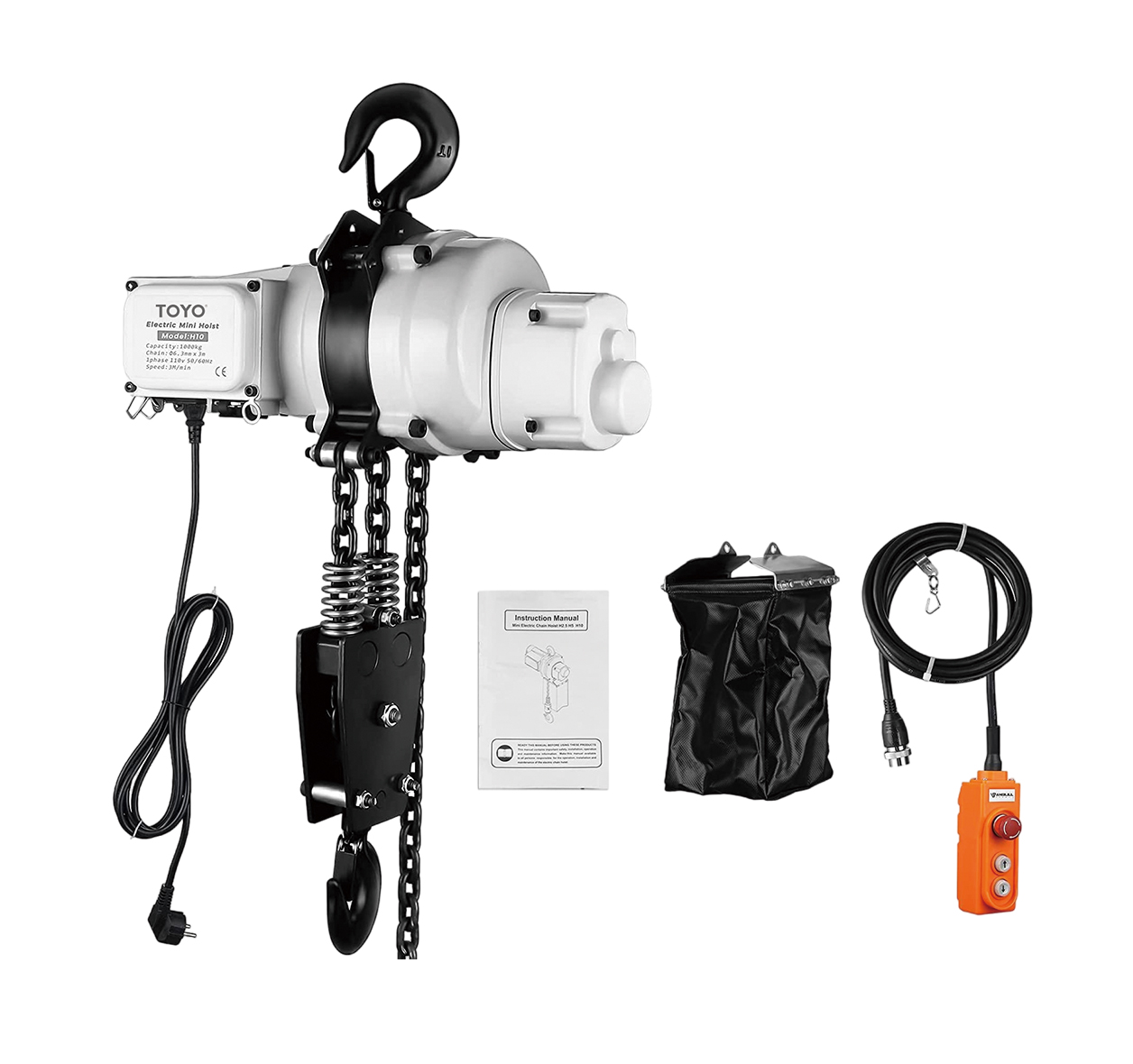
TOYO ofrece una gama completa de soluciones de elevación eléctrica, entre las que se incluyen: polipastos eléctricos pequeños, polipastos eléctricos de cadena y polipastos eléctricos de cable metálico, diseñados para diferentes frecuencias de trabajo y requisitos industriales.
Por qué es importante tener en cuenta la frecuencia de trabajo a la hora de elegir un polipasto eléctrico
La frecuencia de trabajo es algo más que el número de repeticiones
La frecuencia de trabajo se refiere al número de veces que un polipasto eléctrico realiza operaciones de elevación en un periodo determinado.
Incluye varios factores:
- Número de ciclos de elevación al día
- Horas de trabajo por turno
- Frecuencia de arranques y paradas del motor
- Porcentaje medio de carga
- Entorno de trabajo requerido
Por ejemplo:
Es posible que un taller de mantenimiento solo utilice una grúa varias veces a la semana para mover componentes de los equipos.
Una fábrica puede utilizar un polipasto eléctrico cientos de veces al día para la manipulación continua de materiales.
Aunque ambas aplicaciones puedan requerir una capacidad de elevación de 2 toneladas, el nivel de servicio del polipasto exigido es totalmente diferente.
Comprender el ciclo de trabajo de los polipastos eléctricos
El ciclo de trabajo es uno de los factores técnicos más importantes relacionados con la frecuencia de funcionamiento.
Describe la relación entre:
- Tiempo de funcionamiento
- Tiempo de descanso
- Calentamiento del motor
- Período de reflexión
Los motores de los polipastos eléctricos generan calor durante su funcionamiento. Si un polipasto funciona con demasiada frecuencia sin un tiempo de enfriamiento suficiente, el calor excesivo puede reducir la vida útil del motor y afectar a la fiabilidad del equipo.
Entre las consideraciones habituales sobre el ciclo de trabajo se incluyen:
Aplicaciones de baja carga de trabajo
Adecuado para:
- Levantamiento de peso de forma ocasional
- Trabajos de mantenimiento
- Pequeños talleres
- Instalación de equipos
Funcionamiento habitual:
- Periodos de trabajo cortos
- Baja frecuencia inicial
- Intervalos prolongados entre las operaciones de elevación
Para estas aplicaciones, existen soluciones compactas como la Polipasto eléctrico TOYO PA Mini son adecuados.
La serie PA presenta las siguientes características:
- Carcasa de aleación de aluminio
- Motor con cable de cobre resistente a altas temperaturas
- Función de protección térmica
- Protección de límites superior e inferior
- Opciones de funcionamiento con un gancho o con dos ganchos
Está diseñado para tareas de elevación ligera en talleres, garajes, almacenes y aplicaciones de mantenimiento.
Aplicaciones de carga media
Las aplicaciones de frecuencia media suelen implicar operaciones diarias de elevación.
Entre los sectores más habituales se encuentran:
- Fabricación en general
- Almacenamiento
- Montaje de equipos
- Producción en taller
Estas aplicaciones requieren un equilibrio entre:
- Fiabilidad
- Eficiencia operativa
- Relación calidad-precio
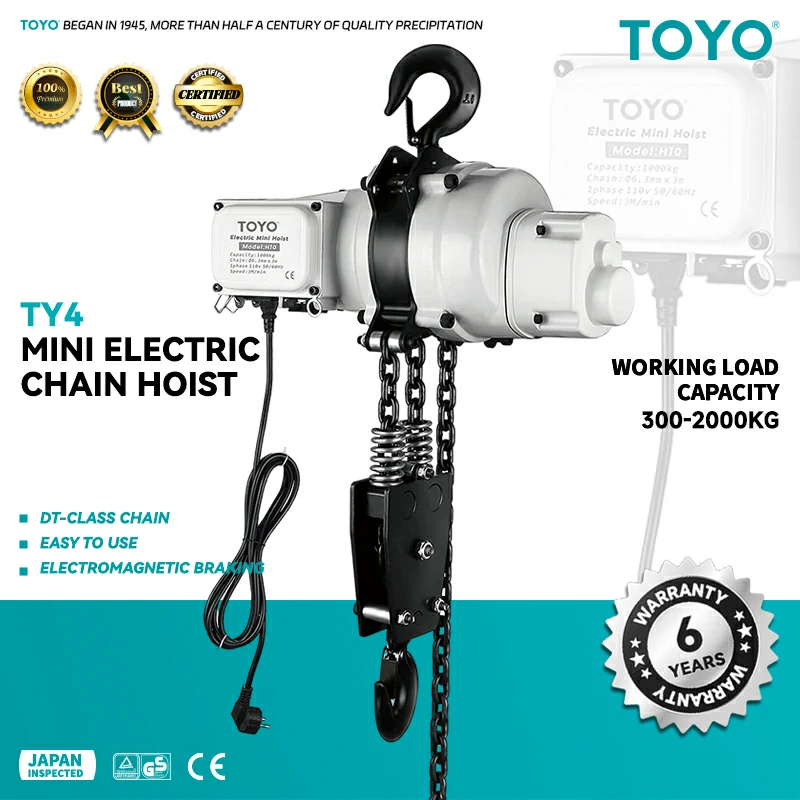
En Polipasto eléctrico de cadena TOYO TY4 Mini y Polipasto eléctrico de cadena de tipo fijo TOYO TY1 son opciones adecuadas para este rango de trabajo.
El polipasto eléctrico de cadena TY4 Mini está diseñado con:
- Cadena de grado DT
- Sistema de frenos electromagnéticos
- Engranajes con tratamiento térmico de alta precisión
- Gancho de acero aleado forjado
- Estructura compacta
Es ideal para fábricas, instalación de maquinaria, talleres y mantenimiento de equipos.
Para cargas de trabajo diarias más elevadas, la serie TOYO TY1 ofrece una solución industrial más resistente.
Cómo evaluar la frecuencia de funcionamiento de tu polipasto eléctrico
Antes de adquirir un polipasto eléctrico, los compradores deben plantearse varias cuestiones.
1. ¿Cuántas horas funcionará el polipasto cada día?
El primer paso consiste en determinar el tiempo de funcionamiento diario.
Por ejemplo:
Uso ocasional
Menos de una hora al día
Recomendado:
Uso diario habitual
Varias horas al día
Recomendado:
Producción en varios turnos
Funcionamiento continuo durante toda la jornada laboral
Recomendado:
- Polipasto eléctrico de cadena TY2
- Polipasto de cable metálico CD1
- Polipasto eléctrico europeo de cable TWH
2. ¿Cuántos ciclos de elevación se necesitan?
Un ciclo de elevación suele incluir:
- Levantar la carga
- Desplazamiento o posicionamiento
- Reducir la carga
Las aplicaciones con ciclos frecuentes requieren sistemas de frenado más potentes, una mayor resistencia al calor y clasificaciones de servicio más elevadas.
Por ejemplo:
Una cadena de montaje que maneja cientos de componentes cada día requiere una solución diferente a la que se utiliza para la carga ocasional en un almacén.
3. ¿Cuál es el porcentaje medio de carga?
Es poco habitual que un polipasto funcione a su capacidad máxima en todo momento.
Una grúa de 5 toneladas puede levantar, en ocasiones:
- Cargas de 1 tonelada
- Cargas de 3 toneladas
- Cargas de 5 toneladas
La carga media influye en la elección del equipo.
Una carga media más elevada, unida a un funcionamiento frecuente, requiere un polipasto de mayor resistencia.
Comprensión de las clasificaciones de funcionamiento FEM e ISO para polipastos eléctricos
A la hora de seleccionar un polipasto eléctrico para aplicaciones industriales, siempre se debe tener en cuenta la frecuencia de trabajo junto con el clasificación operativa.
Los fabricantes profesionales de equipos de elevación suelen evaluar los polipastos según sistemas de clasificación internacionales como FEM (Federación Europea de Manipulación de Materiales) y Grupos de trabajo de la ISO.
Estas clasificaciones ayudan a los usuarios a comprender con qué frecuencia está diseñado para funcionar un polipasto y qué nivel de carga de trabajo puede soportar a lo largo de su vida útil.
¿Qué es la clasificación FEM?
La clasificación FEM se utiliza ampliamente en Europa y en los mercados industriales internacionales para describir las condiciones de funcionamiento y la vida útil prevista de los equipos de elevación.
Una clase FEM más alta suele significar que el polipasto está diseñado para:
- Más ciclos de funcionamiento
- Jornadas laborales más largas
- Mayor frecuencia de carga
- Entornos industriales más exigentes
Por ejemplo:
- Clasificación inferior → adecuado para usos ocasionales o de baja intensidad
- Clasificación superior → apto para la producción industrial continua
A la hora de elegir un polipasto eléctrico, los usuarios no solo deben tener en cuenta la capacidad de elevación, sino también si la clase de trabajo se ajusta a su frecuencia de uso real.
Es posible que una grúa de 5 toneladas diseñada para elevaciones ocasionales no sea adecuada para una línea de producción que funciona a diario.
Grupo de trabajo de la ISO y nivel de responsabilidad
Los grupos de trabajo de la ISO constituyen otra referencia habitual a la hora de seleccionar equipos de elevación.
Entre las clasificaciones más habituales se incluyen:
- M3
- M4
- M5
- M6
Cuanto más alto sea el grupo de trabajo, mayor será la capacidad operativa prevista.
Clase M3
Adecuado para:
- Elevación industrial estándar
- Almacenes
- Talleres
- Manipulación general de materiales
El polipasto eléctrico de cable metálico TOYO CD1 está diseñado con:
- Sistema operativo: FC=25%
- Grupo de trabajo: M3
Es una solución económica y fiable para aplicaciones de elevación estándar en:
- Fábricas
- Minas
- Puertos
- Almacenes
- Zonas de manipulación de mercancías
La serie CD1 se puede instalar en:
- Grúas de viga única
- Grúas puente
- Grúas de pluma
También se puede adaptar para su uso en cabrestantes.
Curso M5–M6
Para aplicaciones que requieran una frecuencia de funcionamiento más alta, se recomienda una clasificación de funcionamiento superior.
Aplicaciones habituales:
- Fábricas con varios turnos
- Fabricación de maquinaria pesada
- Líneas de producción en continuo
- Grandes instalaciones industriales
El polipasto eléctrico de cable de acero TOYO TWH para Europa está diseñado para entornos industriales exigentes.
Según el modelo, la serie TWH ofrece:
- Clase de trabajo FEM M5
- Clase de trabajo FEM M6
- Motor de elevación de frecuencia variable
- Motor móvil de frecuencia variable
- Caja de cambios reforzada
- Componentes eléctricos de Schneider y Phoenix
- Limitador de carga ajustable
Estas características lo hacen adecuado para usuarios que necesitan:
- Operaciones frecuentes de elevación
- Posicionamiento preciso
- Rendimiento estable a largo plazo
Guía de selección de polipastos eléctricos en función de la frecuencia de trabajo
Las diferentes frecuencias de trabajo requieren distintos tipos de polipastos eléctricos.
La siguiente guía puede ayudar a los compradores a elegir la solución adecuada.
1. Aplicaciones de elevación ocasionales
Producto recomendado:
Polipasto eléctrico TOYO PA Mini
Aplicaciones adecuadas:
- Taller en casa
- Garaje
- Mantenimiento de los equipos
- Pequeñas operaciones de almacén
- Manipulación de materiales ligeros
Condiciones de trabajo habituales:
- Levantamiento de peso de forma ocasional
- Tiempo de funcionamiento reducido
- Baja frecuencia de elevación
La serie PA ofrece una solución compacta y económica.
Principales ventajas:
- Carcasa de aleación de aluminio ligera
- Motor de cobre resistente a altas temperaturas
- Sistema de reducción de ruido bajo
- Protección térmica
- Funciones de límite superior e inferior
- Opciones de gancho simple y doble
Capacidades disponibles:
- 50 kg
- 100 kg
- 200 kg
- 300 kg
- 500 kg
- 600 kg
(hasta 1000 kg en configuración de doble gancho)
Para los usuarios que solo necesitan levantar cargas de forma ocasional, optar por un mini polipasto eléctrico compacto evita una inversión innecesaria y garantiza al mismo tiempo un funcionamiento seguro.
2. Funcionamiento diario de la industria ligera
Producto recomendado:
Polipasto eléctrico de cadena TOYO TY4 Mini
Aplicaciones adecuadas:
- Talleres
- Instalación de la máquina
- Mantenimiento de los equipos
- Pequeñas zonas de producción
- Talleres de reparación de automóviles
El TY4 está diseñado para usuarios que necesitan un uso más frecuente que el de un minipoleo, pero que no requieren operaciones de elevación industrial pesadas.
Entre sus características principales se incluyen:
- Cadena de grado DT
- Sistema de frenado electromagnético
- Engranajes de precisión tratados térmicamente
- Gancho de aleación de acero forjado antigiro de 360 grados
- Estructura compacta
Rango de capacidad:
- 300 kg
- 500 kg
- 1000 kg
- 2000 kg
El TY4 ofrece una solución práctica a medio camino entre los pequeños polipastos portátiles y los polipastos de cadena eléctricos industriales completos.
3. Aplicaciones industriales de frecuencia media
Producto recomendado:
Polipasto eléctrico de cadena de tipo fijo TOYO TY1
Aplicaciones adecuadas:
- Plantas de fabricación
- Almacenes
- Instalación de equipos
- Proyectos de construcción
- Talleres de producción
Para las empresas que realizan operaciones de elevación a diario, la fiabilidad cobra mayor importancia.
La serie TY1 está diseñada con componentes de calidad industrial:
- Estructura integrada de fundición a presión con carcasa de aluminio
- Cadena FEC japonesa
- Engranajes con tratamiento térmico de alta precisión
- Dispositivo de frenado electromagnético
- Finales de carrera
- Grado de protección IP55
Rango de capacidad:
De 0,5 toneladas a 35 toneladas
Este amplio rango de capacidad permite a la serie TY1 satisfacer diferentes necesidades de elevación industrial.
Por ejemplo:
- Las pequeñas fábricas pueden elegir modelos de entre 0,5 y 3 toneladas.
- Para aplicaciones de fabricación pesada se pueden elegir modelos de mayor capacidad
El TY1 ofrece un excelente equilibrio entre:
- Seguridad
- Durabilidad
- Eficiencia operativa
- Costes de mantenimiento
4. Operaciones de producción de alta frecuencia
Producto recomendado:
Polipasto eléctrico de cadena TOYO TY2
En entornos de producción que requieran ciclos de elevación frecuentes, el polipasto debe ofrecer:
- Funcionamiento estable
- Control preciso
- Frenado fiable
- Larga vida útil
El polipasto eléctrico de cadena TOYO TY2 está diseñado para aplicaciones industriales de alta frecuencia.
Ventajas clave:
Control de velocidad variable
La función de control de frecuencia variable de dos velocidades permite a los operadores:
- Empieza con calma
- Coloca las cargas con precisión
- Reducir el impacto durante la elevación
Diseño de seguridad mejorado
El TY2 incluye:
- Cadena FEC japonesa
- Freno electromagnético
- Gancho de aleación de acero forjado antigiro de 360 grados
- Finales de carrera
- Carcasa de aleación de aluminio fundida a presión
Aplicaciones habituales:
- Líneas de producción
- Fabricación de maquinaria pesada
- Construcción naval
- Operaciones auxiliares de la minería
- Grandes talleres industriales
Cuando las operaciones de elevación se realizan con frecuencia a lo largo del día, elegir un polipasto diseñado para una mayor frecuencia de funcionamiento puede mejorar significativamente la productividad y reducir el tiempo de inactividad.
5. Aplicaciones de elevación industrial pesada
Productos recomendados:
Polipastos eléctricos de cable TOYO CD1 y TWH
Para cargas más pesadas y aplicaciones con sistemas de grúa, a menudo se opta por los polipastos de cable metálico.
En comparación con los polipastos de cadena, los polipastos de cable ofrecen ventajas en cuanto a:
- Mayor capacidad de elevación
- Mayor altura de elevación
- Integración de grúas
- Manipulación de materiales pesados
Polipasto eléctrico de cable de acero TOYO CD1
Recomendado para:
- Fábricas
- Minas
- Puertos
- Almacenes
- Zonas de almacenamiento de materiales
Características:
- Equipos de elevación de tamaño medio
- Instalación de una grúa de viga única
- Instalación de una grúa puente
- Instalación de una grúa de pluma
- Opciones de una o dos velocidades
El CD1 es una opción fiable para operaciones de elevación industriales estándar.
Polipasto de cable metálico TOYO TWH para Europa
Recomendado para:
- Fábricas de maquinaria pesada
- Fabricación en continuo
- Sistemas de grúas de alto rendimiento
Características:
- Clasificación FEM M5/M6
- Motor de elevación especializado alemán
- Motor móvil de frecuencia variable
- Caja de cambios reforzada
- Llantas modulares de acero aleado
- Componentes eléctricos de Schneider
- Funcionamiento por mando a distancia con un alcance de hasta 100 metros
Para aplicaciones exigentes que requieren un funcionamiento frecuente y una manipulación precisa, la serie TWH ofrece un rendimiento de elevación avanzado.
Polipasto eléctrico de cadena frente a polipasto de cable: ¿cómo elegir?
Una de las dudas más habituales a la hora de comprar equipos de elevación es si elegir un polipasto eléctrico de cadena o un polipasto eléctrico de cable.
Ambos tipos de polipastos tienen sus ventajas, pero la elección correcta depende de:
- Frecuencia de funcionamiento
- Capacidad de elevación
- Altura de elevación
- Método de instalación
- Entorno de trabajo
Polipasto eléctrico de cadena
Los polipastos eléctricos de cadena se utilizan ampliamente en aplicaciones industriales generales de elevación.
Ventajas:
- Estructura compacta
- Fácil instalación
- Menor necesidad de mantenimiento
- Adecuado para talleres y zonas de producción
- Buena flexibilidad para diferentes puntos de elevación
Aplicaciones recomendadas:
- Instalación de maquinaria
- Talleres de fábrica
- Almacenes
- Mantenimiento de los equipos
- Líneas de montaje
Las soluciones de polipastos eléctricos de cadena de TOYO incluyen:
- Miniascensor eléctrico PA
- Polipasto eléctrico de cadena TY4 Mini
- Polipasto eléctrico de cadena TY1
- Polipasto eléctrico de cadena TY2
Polipasto eléctrico de cable
Los polipastos eléctricos de cable metálico suelen elegirse para aplicaciones industriales más pesadas.
Ventajas:
- Mayor capacidad de elevación
- Mayor altura de elevación
- Apto para sistemas de grúas
- La mejor opción para la manipulación de materiales pesados
Aplicaciones recomendadas:
- Grúas puente
- Grúas de pórtico
- Acerías
- Puertos
- Fabricación de maquinaria pesada
TOYO proporciona:
- Polipasto eléctrico de cable de acero CD1
- Polipasto eléctrico europeo de cable TWH
Estos productos están diseñados para diferentes condiciones de trabajo industrial, desde aplicaciones de elevación estándar hasta operaciones de alta frecuencia y gran exigencia.
5 errores habituales a la hora de elegir un polipasto eléctrico
Elegir un polipasto eléctrico inadecuado puede tener como consecuencia:
- Vida útil más corta
- Mayores costes de mantenimiento
- Menor eficiencia en la producción
- Riesgos para la seguridad
A continuación se enumeran varios errores habituales que los compradores deberían evitar.
Error n.º 1: Elegir únicamente en función de la capacidad de elevación
Muchos compradores eligen un polipasto simplemente preguntando:
«¿Puede levantar 2 toneladas?»
Sin embargo, la capacidad de elevación es solo uno de los factores.
Un polipasto de 2 toneladas que se utiliza 5 veces a la semana y otro de 2 toneladas que se utiliza 500 veces al día requieren diseños completamente diferentes.
Ten siempre en cuenta lo siguiente:
- Frecuencia de funcionamiento
- Clasificación de funciones
- Horario de atención al público
- Ciclo de carga
Error n.º 2: Ignorar la clasificación arancelaria
Un polipasto de bajo rendimiento puede funcionar correctamente al principio, pero sufre un desgaste más rápido cuando se utiliza en aplicaciones de alta frecuencia.
Por ejemplo:
Un taller en el que sea necesario levantar peso de vez en cuando puede optar por el modelo TY4.
En una línea de producción industrial que requiera un funcionamiento frecuente, se debería considerar el uso de TY2 o TWH.
Elegir la clasificación de servicio adecuada para cada aplicación ayuda a maximizar la vida útil del equipo.
Error n.º 3: Elegir un polipasto de mayor capacidad de la necesaria
Una mayor capacidad no siempre significa que sea la mejor opción.
Un polipasto de dimensiones excesivas puede provocar:
- Mayor coste de adquisición
- Requisitos de instalación más amplios
- Aumento del consumo energético
La mejor solución es elegir un polipasto que se adapte a:
- Carga real
- Frecuencia de funcionamiento
- Entorno de aplicación
Error n.º 4: Ignorar las condiciones ambientales
El entorno de trabajo influye directamente en el rendimiento de la grúa.
Considéralo:
- Polvo
- Humedad
- Temperatura
- Exposición al aire libre
Por ejemplo, el polipasto eléctrico de cadena TOYO TY1 cuenta con un grado de protección IP55, lo que ofrece una mayor protección frente al polvo y la humedad.
En entornos industriales exigentes, la elección de componentes con los niveles de protección adecuados puede reducir las necesidades de mantenimiento.
Error n.º 5: Pasar por alto los requisitos de control
Las aplicaciones industriales modernas suelen requerir:
- Arranque suave
- Posicionamiento preciso
- Funcionamiento a velocidad variable
Para aplicaciones que requieren un control preciso de la carga, productos como el polipasto eléctrico de cadena TOYO TY2 y el polipasto de cable de acero TWH European ofrecen opciones de control avanzadas.
La serie TY2 incorpora un control de velocidad variable, lo que ayuda a los operarios a conseguir un rendimiento de elevación más suave.
Consejos de mantenimiento para polipastos eléctricos de uso frecuente
Incluso un polipasto seleccionado adecuadamente requiere un mantenimiento periódico para garantizar un funcionamiento seguro y eficiente.
En el caso de las aplicaciones de alta frecuencia, los usuarios deben tener en cuenta lo siguiente:
Inspección periódica
Comprueba:
- Ganchos
- Cadenas o cables metálicos
- Sistemas de frenado
- Finales de carrera
- Componentes eléctricos
La detección precoz del desgaste ayuda a evitar paradas inesperadas.
Supervisar las condiciones de funcionamiento
Ten en cuenta lo siguiente:
- Ruido anormal
- Vibraciones excesivas
- Velocidad de elevación lenta
- Respuesta de los frenos
Esto podría indicar posibles problemas con el equipo.
Respeta los límites de trabajo recomendados
Evita:
- Sobrecarga
- Funcionamiento continuo más allá de las condiciones nominales de servicio
- Arranques frecuentes con sobrecarga
El funcionamiento dentro de las condiciones de trabajo previstas mejora la fiabilidad de los equipos.
¿Por qué elegir los polipastos eléctricos de TOYO?
Con años de experiencia en la fabricación de equipos de elevación, TOYO ofrece soluciones fiables de polipastos eléctricos para diferentes aplicaciones industriales.
Los polipastos eléctricos TOYO están diseñados con:
Componentes de calidad
Dependiendo del modelo, las características incluyen:
- Cadena FEC japonesa
- Engranajes con tratamiento térmico de alta precisión
- Ganchos de acero aleado forjado
- Cajas de cambios endurecidas
- Componentes eléctricos fiables
Diseño centrado en la seguridad
Los productos TOYO incluyen características de seguridad como:
- Sistemas de frenado electromagnético
- Finales de carrera
- Protección térmica
- Limitadores de carga
- Cierres de seguridad
Soluciones para diferentes frecuencias de trabajo
Tanto si los clientes necesitan:
- Elevaciones ocasionales con fines de mantenimiento
- Manipulación de materiales en el taller
- Funcionamiento diario de la fábrica
- Aumento continuo de la producción
- Aplicaciones de grúas industriales pesadas
TOYO ofrece soluciones de elevación adecuadas.
Desde pequeños polipastos eléctricos compactos hasta avanzados polipastos de cable europeos, TOYO ayuda a los clientes a elegir el equipo adecuado en función de las condiciones reales de trabajo.
Preguntas más frecuentes (FAQ)
1. ¿Cómo elijo un polipasto eléctrico en función de la frecuencia de uso?
La elección depende de la frecuencia de funcionamiento del polipasto, las horas de trabajo diarias, los ciclos de carga y la clasificación de servicio requerida. Para aplicaciones de baja frecuencia se pueden utilizar polipastos compactos, mientras que las operaciones industriales continuas requieren modelos de mayor capacidad de servicio.
2. ¿Es suficiente la capacidad de elevación a la hora de elegir un polipasto eléctrico?
No. La capacidad es solo uno de los factores. La frecuencia de trabajo, el ciclo de trabajo, la altura de elevación, el entorno operativo y los requisitos de control también son importantes.
3. ¿Qué tipo de polipasto eléctrico es adecuado para el uso diario en una fábrica?
Para las operaciones diarias habituales en una fábrica, un polipasto eléctrico de cadena industrial, como el TOYO TY1 o el TY2, puede ofrecer un rendimiento fiable en función de la frecuencia de uso.
4. ¿Cuál es la diferencia entre las clasificaciones de polipastos M3 y M5/M6?
La clase M3 suele ser adecuada para aplicaciones industriales estándar de elevación, mientras que las clasificaciones superiores, como M5 y M6, están diseñadas para operaciones más frecuentes y exigentes.
5. ¿Cuándo debería optar por un polipasto de cable en lugar de uno de cadena?
Los polipastos de cable metálico suelen ser la opción preferida para cargas más pesadas, alturas de elevación mayores y aplicaciones de grúas, como las grúas puente y las grúas pórtico.
6. ¿Es importante la velocidad variable en los polipastos eléctricos?
El control de velocidad variable resulta muy útil cuando se requiere un posicionamiento preciso, un arranque suave y una reducción del impacto de la carga.
7. ¿Qué polipasto eléctrico de TOYO es adecuado para aplicaciones de alta resistencia?
Para aplicaciones industriales exigentes, el polipasto eléctrico de cable de acero TOYO TWH European y el polipasto eléctrico de cadena TY2 ofrecen soluciones para necesidades de elevación de mayor frecuencia.
8. ¿Con qué frecuencia se debe revisar un polipasto eléctrico?
La frecuencia de las inspecciones depende de las condiciones de funcionamiento y de la intensidad de uso. Las aplicaciones de alta frecuencia requieren inspecciones más frecuentes de los frenos, los ganchos, las cadenas, los cables metálicos y los sistemas eléctricos.
Conclusión
Elegir el polipasto eléctrico adecuado en función de la frecuencia de uso ayuda a las empresas a mejorar la seguridad, la eficiencia y el valor a largo plazo de los equipos.
En lugar de elegir un polipasto basándose únicamente en su capacidad de elevación, los compradores deberían tener en cuenta:
- Frecuencia de funcionamiento
- Ciclo de trabajo
- Clasificación FEM/ISO
- Condiciones de carga
- Entorno de trabajo
- Rendimiento de control exigido
TOYO ofrece una gama completa de soluciones de elevación eléctrica, que incluye mini polipastos eléctricos, polipastos de cadena eléctricos y polipastos de cable metálico, lo que ayuda a los clientes a elegir el equipo adecuado para cada aplicación.
Ponte en contacto con TOYO hoy mismo para recibir asesoramiento profesional sobre la selección de polipastos eléctricos y soluciones de elevación directamente de fábrica.
Sugerencias para el texto alternativo de las imágenes
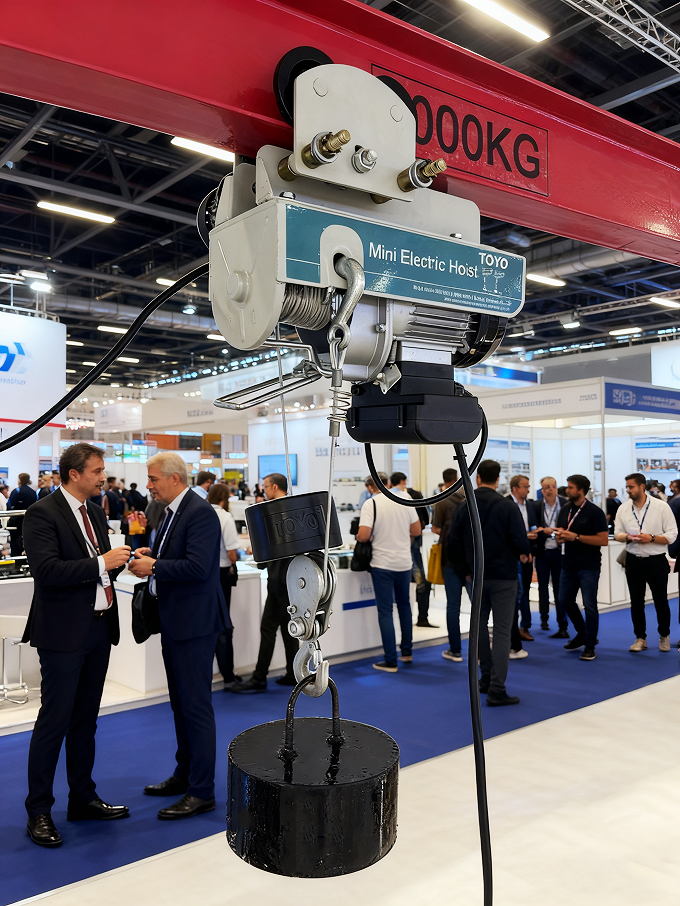
- Polipasto eléctrico en funcionamiento en la línea de producción de una fábrica industrial
- Polipasto eléctrico de cadena TOYO TY2 con control de velocidad variable
- Polipasto eléctrico de cadena TOYO TY1 para la elevación de cargas en almacenes
- Sistema de grúa con polipasto de cable TOYO TWH para Europa
- Tabla comparativa de la clasificación de carga de los polipastos eléctricos
- Infografía: Cómo elegir un polipasto eléctrico en función de la frecuencia de uso