1. The Core Physics: Pascal's Law and Hydraulic Advantage
Every hydraulic jack, from a compact 2-ton bottle jack to a 100-ton industrial cylinder, operates on a principle formulated in the 17th century. Blaise Pascal's law states that pressure applied to a confined fluid is transmitted undiminished in all directions throughout the fluid. This simple rule enables a small hand force to lift a shipping container or a mining truck. Understanding this physics is not just academic—it directly influences how you select, operate, and maintain lifting equipment in demanding environments like Russian oil fields, South African mines, and Southeast Asian shipyards.
1.1 Understanding Pressure Transmission in Enclosed Fluids
Imagine a sealed system filled with hydraulic oil. When you pump the handle of a hydraulic jack, a small plunger pushes oil from a reservoir into the main cylinder. Because the fluid is incompressible, the pressure generated at the pump plunger instantly appears at the larger lifting piston. The force multiplication factor is equal to the ratio of the areas of the two pistons. If the pump plunger has an area of 1 cm² and the lifting piston has an area of 50 cm², a 10 kg force on the pump translates into a theoretical 500 kg lift force—minus minor friction losses. This is why a single operator can raise a 20-ton load with a manual hydraulic jack.
In practice, the fluid is typically a high-viscosity mineral oil with anti-wear and anti-corrosion additives. The oil must maintain stable viscosity across temperatures ranging from -40°C in Russian winters to +50°C in Middle Eastern summers. Modern hydraulic jack oils, such as ISO VG 32 or 46, are formulated to resist oxidation and foaming, ensuring consistent pressure transmission over thousands of cycles.
1.2 How a Small Force Lifts Heavy Loads: Mathematical Examples
Let's break down the numbers. A standard floor jack might have a pump plunger diameter of 12 mm (area ≈ 113 mm²) and a main ram diameter of 60 mm (area ≈ 2,827 mm²). The area ratio is 25:1. When you apply 20 kg of force on the handle—multiplied by a lever ratio of, say, 10:1—the actual force on the pump plunger is 200 kg. The resulting hydraulic pressure is 200 kg / 1.13 cm² ≈ 177 kg/cm² (about 17.4 MPa). This pressure acting on the large piston produces 177 kg/cm² × 28.27 cm² ≈ 5,000 kg, or 5 tons. Real-world jacks achieve 80–90% of this theoretical value due to seal friction and internal leakage.
For high-capacity jacks, the numbers scale up. A 100-ton hydraulic cylinder might use a 150 mm diameter ram (area ≈ 176.7 cm²) and require a pump pressure of 700 bar (71.4 MPa). At this pressure, the oil compresses by approximately 0.5% per 100 bar, which must be compensated by the pump stroke volume. This is why large jacks often incorporate dual-stage pumps: a high-flow stage for rapid advance and a high-pressure stage for final lifting.
1.3 Common Misconceptions About Hydraulic Force Multiplication
Many users believe that hydraulic oil itself creates the force, or that thicker oil automatically provides more lifting power. In reality, oil is only the medium; force comes from pressure acting on area. Using oil that is too thick can cause pump cavitation and slow operation, while too thin oil increases internal leakage and reduces efficiency. Another myth is that a jack can lift its rated capacity indefinitely. Every jack has a duty cycle—typically 20% for industrial jacks—and exceeding it leads to overheating and seal damage. Finally, some operators think a jack's maximum height is always safe. In truth, stability decreases as the ram extends; a fully extended bottle jack is far more prone to tipping than one at mid-stroke.
2. Anatomy of a Hydraulic Jack: Key Components and Their Functions
A hydraulic jack is more than a simple piston and cylinder. Each component plays a role in safety, durability, and performance. Understanding this anatomy helps buyers evaluate manufacturing quality and avoid premature failures in harsh environments like offshore platforms in the Middle East or open-pit mines in South Africa.
2.1 Reservoir, Pump Plunger, and Cylinder: A Step-by-Step Walkthrough
The reservoir holds the hydraulic fluid and often doubles as the jack's base. In bottle jacks, the reservoir is the outer cylindrical body. In floor jacks, it is a separate tank integrated into the frame. When you raise the handle, a low-pressure check valve opens, drawing oil from the reservoir into the pump chamber. Pressing the handle down closes the intake valve and forces oil through a high-pressure check valve into the main cylinder. The lifting ram then rises. A release valve, when opened, allows oil to flow back to the reservoir, lowering the load. The smoothness of this descent is controlled by a metering needle valve in quality jacks, preventing sudden drops.
The pump plunger is typically chrome-plated or made from hardened steel to resist wear. The main cylinder is often honed to a mirror finish, with a surface roughness below 0.4 µm Ra, to extend seal life. In 2026, many manufacturers use induction-hardened cylinders with a hardness of HRC 50–55, doubling the service life compared to non-hardened cylinders.
2.2 Valves and Seals: Critical Points That Often Fail
Check valves are small but vital. A speck of dirt on a valve seat can cause the jack to slowly sink under load—a serious safety hazard. Quality jacks use ball-and-seat check valves made from stainless steel or tungsten carbide, with lapped seats for a perfect seal. The release valve is equally critical; a poorly designed release mechanism can cause abrupt load drops. Look for jacks with progressive release valves that allow millimeter-precision load lowering.
Seals are the most common failure point. Standard nitrile (NBR) seals work well up to 80°C, but for Middle Eastern steel mills where ambient temperatures exceed 50°C, fluoroelastomer (FKM) seals rated to 200°C are recommended. Polyurethane (PU) seals offer superior abrasion resistance for high-cycle operations. The O-ring backup rings and wiper seals prevent external contamination—essential in sandy environments like the Arabian Peninsula or dusty South American mines.
2.3 Material Advances: From Cast Iron to High-Strength Alloy Steels in 2026
Historically, jack bodies were cast from grey iron. Today, many load-bearing components are forged from micro-alloyed steels with yield strengths exceeding 700 MPa. This allows a 20-ton jack to weigh 15% less than its cast-iron predecessor while maintaining a 4:1 safety factor against yield. Some manufacturers now use aluminum alloys with ceramic coatings for lightweight portable jacks, achieving weight reductions of up to 40% without sacrificing capacity. In 2026, additive manufacturing (3D printing) is being used for complex valve bodies and pump housings, enabling internal flow paths that reduce turbulence and improve efficiency by 5–8%.
3. Types of Hydraulic Jacks and Their Specific Applications
Not all hydraulic jacks are interchangeable. Choosing the wrong type for your application—whether it's lifting a generator set in a Jakarta warehouse or aligning a crusher in a Chilean copper mine—can lead to equipment damage, injury, or costly downtime. Here we break down the major categories and their ideal use cases.
3.1 Bottle Jacks vs. Floor Jacks: A Detailed Comparison for Workshop and Field Use
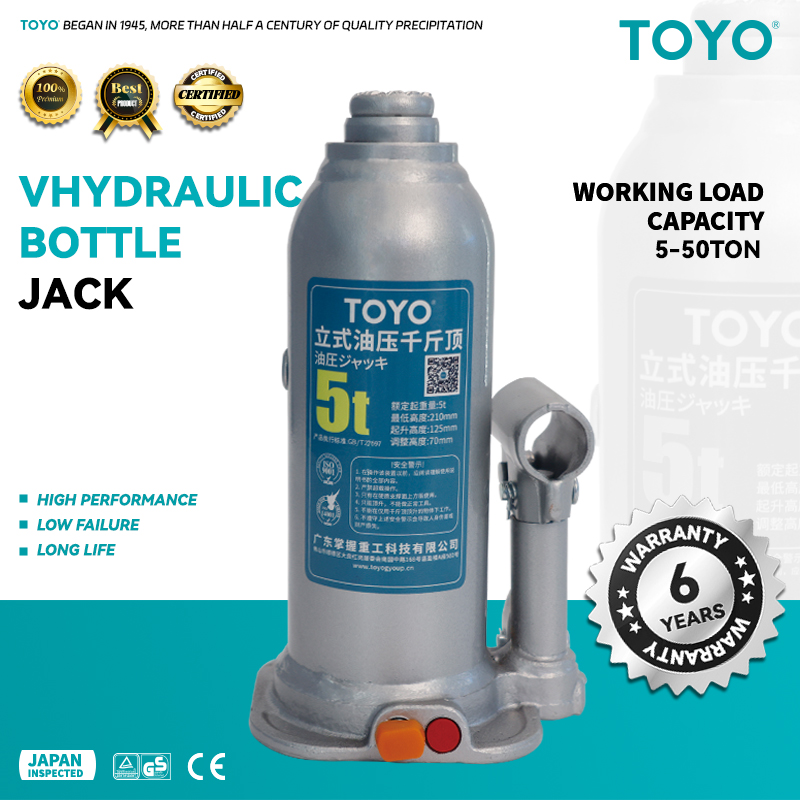
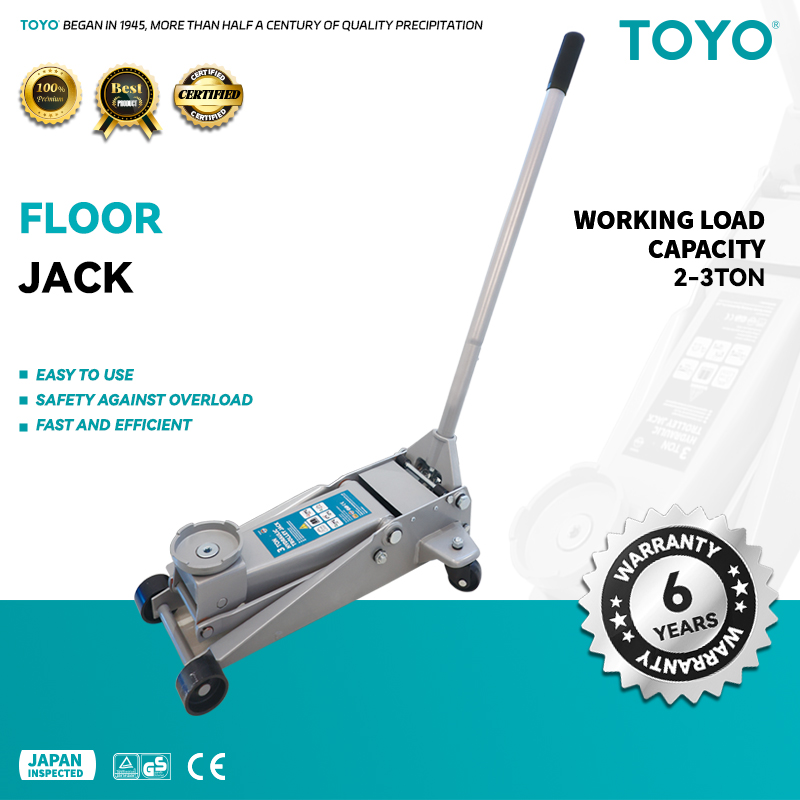
Bottle jacks are compact, vertical devices with a small footprint. They excel in tight spaces and are widely used for vehicle maintenance, machinery leveling, and construction shoring. Capacities range from 2 to 100 tons. Their main limitation is low initial clearance; you need at least 200 mm of space to insert a typical 20-ton bottle jack. Floor jacks, by contrast, have a long chassis and low-profile lifting arm, allowing them to slide under vehicles with as little as 100 mm ground clearance. They offer faster lift speeds and greater stability thanks to a wider base. However, floor jacks are heavier and more expensive. For a distributor in South Africa serving auto repair shops, floor jacks are a staple; for a Russian mining contractor needing portable lifting on uneven terrain, bottle jacks are often the better choice. When working with floor jacks, always pair them with proper gato de suelo y caballetes to ensure operator safety during extended under-vehicle work.
| Parámetro | Botella Jack | Gato de suelo |
|---|---|---|
| Min. Height | 200–230 mm | 100–140 mm |
| Max. Height | 400–450 mm | 450–550 mm |
| Peso | 8–12 kg | 35–50 kg |
| Lift Speed per Stroke | 15–20 mm | 30–50 mm |
| Stability on Soft Ground | Moderado | Alta |
| Price Range (USD, 2026) | $40–$120 | $200–$600 |
3.2 Hydraulic Toe Jacks and Pancake Jacks: Niche Solutions for Machinery Moving
Toe jacks are designed for lifting loads with extremely low clearance—as little as 15 mm. Their claw-like toe slips under machinery skids or pallets, making them indispensable for plant relocation and machinery installation. Capacities typically range from 5 to 50 tons. Pancake jacks (also called flat jacks) are ultra-thin cylinders, often only 30–50 mm collapsed height, used for lifting bridges, heavy structures, and in tight industrial spaces. Both types are frequently used by professional Proveedor de desplazadores de maquinaria networks to position multi-ton equipment with millimeter accuracy. In Southeast Asian electronics factories, toe jacks are preferred for moving sensitive production lines without vibration.
3.3 The Role of Hydraulic Jacks in Construction, Mining, and Shipping Across South America, Southeast Asia, and the Middle East
In Brazil's mining sector, 50-ton and 100-ton hydraulic jacks are routinely used to lift haul truck beds for maintenance, reducing downtime by up to 30% compared to using overhead cranes. In Indonesian shipyards, synchronized hydraulic jacking systems lift 500-ton vessel sections for hull assembly. The Middle East's oil and gas industry relies on explosion-proof hydraulic jacks for pipeline alignment and valve replacement in Zone 1 hazardous areas. Data from a 2025 industry survey indicates that 68% of lifting equipment distributors in these regions report increasing demand for custom-engineered hydraulic solutions, driven by infrastructure investments exceeding $200 billion across the Belt and Road and Vision 2030 projects.
4. Step-by-Step Operational Guide: Using a Hydraulic Jack Safely and Efficiently
Even the best-engineered jack can fail catastrophically if misused. This section provides a rigorous, field-tested procedure that professional riggers and maintenance crews use daily. Following these steps reduces accident risk and extends equipment life.
4.1 Pre-Use Inspection Checklist: 10-Point Safety Verification
- Check the jack's identification plate: capacity, serial number, and CE/ASME mark must be legible.
- Inspect the entire body for cracks, dents, or weld damage—especially around the base and cylinder neck.
- Examine the ram for scoring, pitting, or rust. Any surface damage deeper than 0.2 mm warrants removal from service.
- Verify oil level via the filler plug. Low oil causes erratic lifting; overfilling can blow seals.
- Test the release valve: it must turn smoothly and close tightly without excessive force.
- Check the handle socket for deformation. A worn socket can slip under load.
- Look for oil leaks around seals, fittings, and the reservoir plug. Even a small weep can indicate impending seal failure.
- Confirm the saddle or lifting point is free of grease and debris that could cause load slippage.
- Ensure the ground surface is level and capable of supporting the combined load weight. Use a steel base plate on soil or asphalt.
- Verify that the load is stable, properly rigged, and within the jack's rated capacity. Never exceed 80% of capacity for dynamic loads.
4.2 Lifting Procedure: From Positioning to Load Release
Position the jack directly under the load's designated lifting point. The saddle must make full contact—edge loading can bend the ram. Close the release valve by turning it clockwise until snug; overtightening damages the valve seat. Pump the handle at a steady, moderate pace. Rapid pumping can aerate the oil and cause spongy operation. Stop lifting when the load reaches the desired height and immediately insert mechanical supports such as jack stands or cribbing blocks. Never rely on the hydraulic jack alone to hold a load for more than a few minutes. To lower, open the release valve very slowly—typically no more than a quarter turn—and watch the load descend. Keep hands and feet clear of the load path. Once the load is fully supported by the stands, remove the jack.
4.3 Common Operator Errors That Lead to Jack Failure or Accidents
One of the most frequent mistakes is side-loading. Hydraulic jacks are designed for purely axial loads. A lateral force of just 5% of the rated capacity can bend the ram and cause catastrophic seal failure. Another critical error is using a jack without a load cap or saddle extension on an uneven surface; the load can slide off, causing a sudden energy release. In a 2024 incident at a Dubai logistics hub, a 30-ton container slipped from a bottle jack because the operator placed it on a 3-degree incline, resulting in equipment damage and a near-miss injury. Finally, many users ignore the jack's maximum stroke indicator. Exceeding the red line on the ram exposes the piston seal to the atmosphere, leading to sudden pressure loss.
5. Maintenance, Troubleshooting, and Extending Jack Lifespan
Hydraulic jacks in industrial service often endure 500 to 2,000 cycles per year. Without systematic maintenance, their reliable lifespan can drop from 10 years to less than 3. This section provides actionable protocols that reduce total cost of ownership.
5.1 Routine Maintenance Schedule for High-Cycle Industrial Environments
For jacks used daily, perform a visual inspection before each shift. Weekly, wipe down the ram with a clean cloth and apply a light film of hydraulic oil to prevent corrosion. Monthly, check and top up oil using the manufacturer's recommended grade—mixing oil types can cause seal swelling. Every 500 cycles or 6 months, replace the hydraulic oil completely to remove accumulated moisture and wear particles. Annually, disassemble the jack, clean all internal passages, inspect valves and seats, and replace all seals and backup rings. This proactive overhaul costs roughly 15–20% of a new jack's price but can extend service life by 3–5 years. For operations in humid Southeast Asian climates, oil changes should be every 300 cycles due to faster moisture ingress.
5.2 Diagnosing Hydraulic Jack Problems: Oil Leaks, Slow Descent, and Overload Damage
A jack that sinks slowly under load typically has a contaminated check valve or a worn piston seal. To isolate the fault, pump the jack to half stroke, close the release valve, and observe. If the ram drops, the piston seal is likely leaking. If it holds but drifts down when the pump handle is stationary, the check valve is leaking. Oil weeping from the ram wiper seal indicates a damaged rod seal; continued operation will score the ram. A jack that requires excessive pumping to lift a light load often has air in the system. Bleed it by opening the release valve and pumping the handle rapidly 10–15 times with the jack upright. Overload damage manifests as a bent ram or cracked cylinder head—these jacks must be scrapped, not repaired, as the structural integrity is compromised.
5.3 When to Repair vs. Replace: Cost-Benefit Analysis for Procurement Managers
Consider a 20-ton industrial bottle jack with a purchase price of $150. A full seal kit costs $25, and labor for an in-house rebuild is 1.5 hours at $30/hour, totaling $70. If the jack has no structural damage and has seen fewer than 2,000 cycles, repair makes economic sense. However, if the ram is scored and requires re-chroming ($120) plus seals and labor, the total repair cost exceeds 80% of a new jack. At this point, replacement is the better option—especially since a new jack will carry a full warranty and incorporate the latest safety improvements. Our field data from distributor partners in Russia and South Africa shows that a well-maintained jack fleet has an average service life of 8.2 years, while a reactive repair-only approach yields 4.5 years and 23% higher annual costs.
6. Hydraulic Jacks vs. Alternative Lifting Technologies: Making the Right Choice
Hydraulic jacks are not always the optimal solution. Understanding where they outperform—and where they lose to—mechanical, pneumatic, and electric alternatives is crucial for procurement professionals building a balanced lifting equipment inventory.
6.1 Mechanical Screw Jacks, Pneumatic Jacks, and Electric Chain Hoists: A Feature Matrix
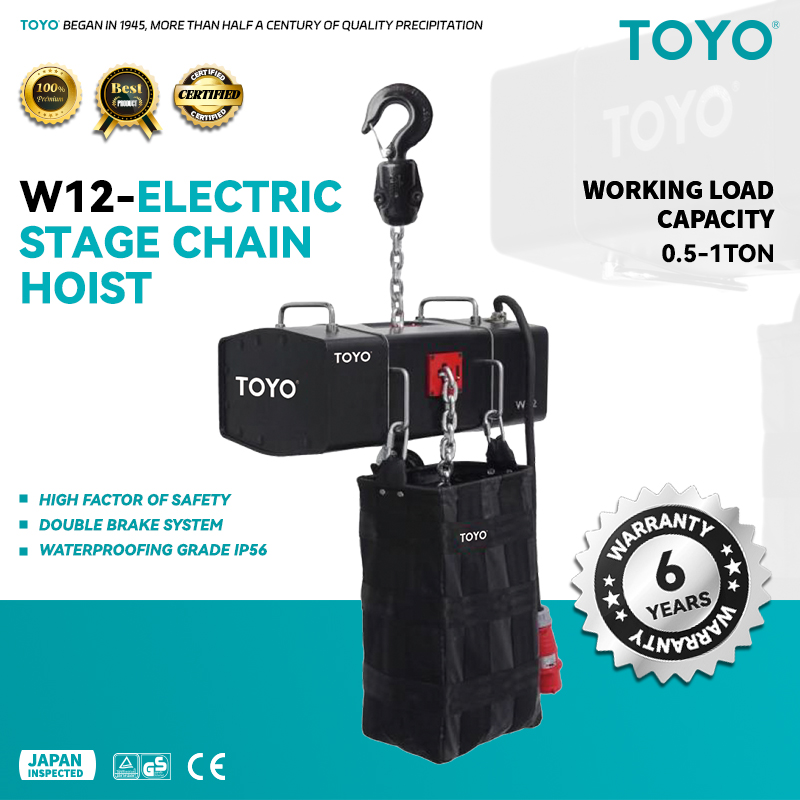
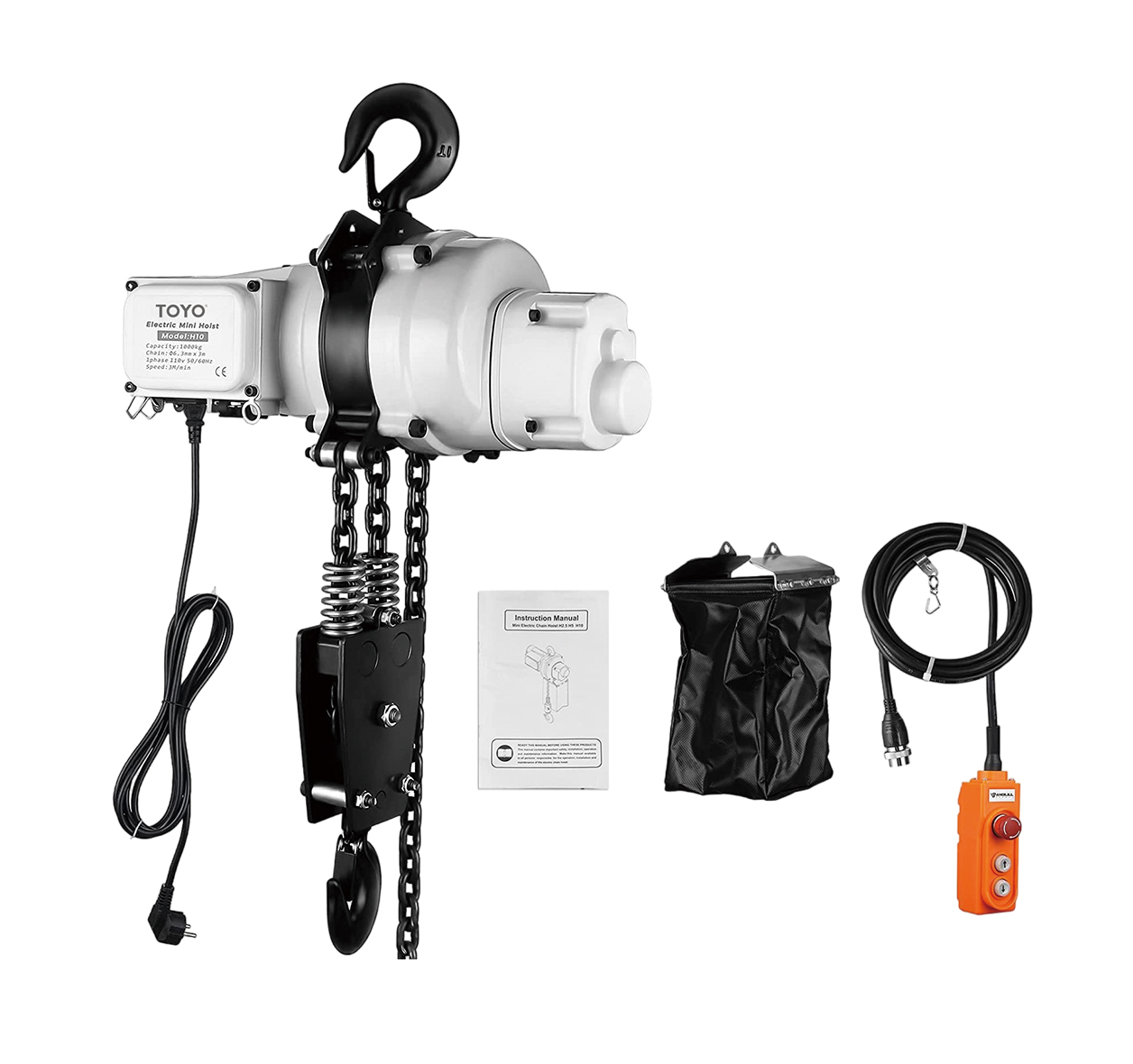
Screw jacks provide mechanical locking without fluid, making them ideal for long-term holding applications like bridge bearing replacement. However, they are slower and require higher input torque. Pneumatic jacks use compressed air and are favored in explosive atmospheres, but their lifting capacity rarely exceeds 30 tons and they require a continuous air supply. Electric chain hoists offer precise vertical lifting with powered travel, but they need overhead support structures and are less portable. The table below summarizes key differences.
| Característica | Gato hidráulico | Screw Jack | Pneumatic Jack | Polipasto eléctrico de cadena |
|---|---|---|---|---|
| Max Capacity (tons) | 100+ | 50 | 30 | 35 |
| Lift Speed | Medio | Lento | Rápido | Rápido |
| Load Holding | Requires mechanical support | Self-locking | Requires air pressure | Sistema de frenos |
| Portabilidad | Alta | Medio | Low (needs air) | Low (needs beam) |
| Mantenimiento | Seals, oil | Grease, threads | Air filter, seals | Chain, motor, brake |
| Cost (USD, 2026) | $150–$600 | $300–$800 | $500–$1,200 | $800–$2,500 |
6.2 Why Hydraulic Jacks Remain Dominant in Heavy Load Handling Despite Emerging Tech
Hydraulic jacks maintain a 62% market share in the portable heavy lifting segment (2025 industry report) for three reasons: unmatched force density, simplicity, and cost. A 50-ton hydraulic jack weighs under 30 kg and fits in a service truck; an equivalent electric actuator would weigh over 100 kg and require a power source. In remote mining sites in Peru or pipeline construction in Siberia, this portability is decisive. Furthermore, hydraulic jacks have no complex electronics, making them repairable with basic tools—a critical advantage in regions with limited technical infrastructure. The global hydraulic jack market is projected to grow at a CAGR of 4.8% through 2030, driven by infrastructure spending in Southeast Asia and Africa.
6.3 Integrating Hydraulic Jacks with Lifting Clamps and High-Tensile Slings for Complex Lifts
In real-world rigging, hydraulic jacks rarely work alone. A common configuration in steel fabrication yards involves using a hydraulic jack to lift a beam while a lifting clamp secures the beam's flange, and a high-tensile sling provides a secondary safety tie-off. This triad ensures that if the jack fails, the load is caught by the sling and clamp. For machinery moving, a toe jack lifts the equipment 30 mm, then skates or rollers are inserted, and the load is winched into position. Our company's lifting clamps, rated from 1 to 30 tons, are designed with a 5:1 safety factor and are fully compatible with standard hydraulic jack saddles. When paired with our polyester or wire rope slings, they create a redundant lifting system that meets ASME B30.1 and ISO 17096 standards.
7. Safety Standards, Compliance, and Legal Requirements in Target Markets
Importing or using non-compliant lifting equipment can result in fines, insurance voids, and fatal accidents. Each region has distinct regulatory frameworks that buyers must navigate.
7.1 ASME, ISO, and Local Regulations for Hydraulic Lifting Equipment in South Africa, Russia, and the Middle East
In South Africa, hydraulic jacks fall under the Driven Machinery Regulations of the Occupational Health and Safety Act (No. 85 of 1993). Jacks must be load-tested every 12 months by a registered Lifting Machinery Inspector. Russia enforces GOST R 50908-96 for hydraulic jacks, requiring certification by Rosstandart-accredited bodies and periodic testing at 125% of rated capacity. The Middle East, particularly GCC countries, often references BS EN 1494:2000+A1:2008 for portable jacks and requires third-party inspection certificates from bodies like TÜV or SGS. In 2026, the ISO 12100:2010 risk assessment framework is being harmonized across these regions, pushing manufacturers to provide detailed residual risk documentation.
7.2 Certification and Testing: What Buyers Should Demand from Manufacturers
Every hydraulic jack shipment should include a manufacturer's test certificate documenting a 125% overload test, material certificates for load-bearing components, and a declaration of conformity to applicable standards. For high-value orders, request a Factory Acceptance Test (FAT) report with witnessed pressure tests and cycle testing data. A reputable manufacturer will also provide a full traceability package linking each jack's serial number to its raw material heat number and production batch. In our factory, every jack undergoes a 10-minute hold test at 150% of rated capacity, and 1 in every 100 units is pulled for destructive burst testing—typically failing at 300–400% of rated load.
7.3 Avoiding Counterfeit and Non-Compliant Jacks: Red Flags for Importers
Counterfeit hydraulic jacks are a growing problem, especially in markets with weak import controls. In 2025, customs authorities in Southeast Asia seized over 12,000 fake lifting devices bearing forged CE marks. Red flags include prices more than 40% below the market average, missing or blurred rating plates, rough casting surfaces, and non-standard hydraulic fittings. Always verify the manufacturer's certifications through the issuing body's online database. Request a sample unit for independent third-party testing before committing to a container order. Legitimate manufacturers will welcome such scrutiny; counterfeiters will make excuses.
8. 2026 Trends and Innovations in Hydraulic Lifting Technology
The hydraulic jack industry is not static. Several technology shifts are reshaping product design, user expectations, and market dynamics.
8.1 Smart Hydraulic Jacks with IoT-Enabled Load Monitoring and Predictive Maintenance
By 2026, smart jacks equipped with Bluetooth pressure transducers and cycle counters are entering industrial fleets. These devices transmit real-time load data to a smartphone app, alerting operators if the jack is overloaded or if the lift is uneven. Predictive maintenance algorithms analyze pressure curves to detect seal wear 50–100 cycles before failure, reducing unplanned downtime. Early adopters in the Middle East's oil sector report a 30% reduction in jack-related incidents after implementing IoT monitoring. The cost premium for a smart 20-ton jack is currently $80–120, with payback achieved in under 12 months through avoided failures.
8.2 Eco-Friendly Hydraulic Fluids and Sustainable Manufacturing Practices
Environmental regulations are driving a shift from conventional mineral oils to biodegradable synthetic esters. These fluids, derived from vegetable oils, degrade by 90% within 28 days in soil, compared to 15% for mineral oils. They are now mandatory for hydraulic jacks used in environmentally sensitive areas such as the Amazon basin and Arctic Russia. On the manufacturing side, leading producers are adopting electric arc furnace steel with 85% recycled content and powder coating instead of solvent-based paints, cutting VOC emissions by 70%.
8.3 The Rise of Compact High-Pressure Jacks for Urban Infrastructure Projects in Southeast Asia and South America
Urbanization in Jakarta, Manila, São Paulo, and Lima is creating demand for lightweight, high-capacity jacks that can operate in confined spaces. New 700-bar (10,000 psi) systems achieve 50-ton capacity in a package weighing only 18 kg—40% lighter than traditional 350-bar designs. These high-pressure jacks use double-acting cylinders and advanced seal geometries to maintain reliability despite the extreme pressures. A 2026 pilot project in Bangkok used 700-bar pancake jacks to lift a 1,200-ton metro station segment for bearing replacement, completing the work in 4 days instead of the planned 7, with zero safety incidents.
9. First-Hand Insights: Lessons from the Field – A Manufacturer’s Perspective
Over the past decade, our engineering team has worked directly with distributors and end users across five continents. These real-world cases illustrate common pitfalls and practical solutions that generic manuals often miss.
9.1 Case Study: Reducing Downtime at a Brazilian Port with Custom Hydraulic Jacks
In 2024, a major grain terminal in Paranaguá, Brazil, was experiencing frequent failures of their 60-ton ship loader positioning jacks. The standard jacks lasted only 8 months due to saltwater corrosion and 24/7 operation. We collaborated with their maintenance team to develop a custom solution: cylinders with duplex nickel-chrome plating (50 µm thickness), FKM seals, and stainless steel fittings. After installing 12 custom jacks in January 2025, the terminal reported zero unplanned failures over 18 months, saving an estimated $220,000 in downtime and replacement costs. The key lesson: standard jacks are not always the most cost-effective choice for extreme environments. Investing 30% more upfront in corrosion-resistant materials can yield a 3x return over 2 years.
9.2 Avoiding a Costly Mistake: How a Russian Distributor Saved Thousands by Switching to Certified Jacks
A distributor in Yekaterinburg imported a container of low-cost 30-ton bottle jacks from an uncertified supplier in 2023. The jacks lacked GOST certification and used substandard seals that failed at -25°C—a common winter temperature. After 47 units were returned by angry customers, the distributor faced a $15,000 loss and reputational damage. In 2025, they switched to our GOST-certified jacks with low-temperature seals rated to -45°C. The new jacks achieved a return rate below 0.5%, and the distributor's annual sales grew 40% as word spread about the reliable product. The lesson: certification is not bureaucracy; it is a market access tool and a quality assurance mechanism that directly impacts profitability.
9.3 On-Site Training in Indonesia: The Most Overlooked Safety Step
During a 2025 visit to a shipyard in Surabaya, I observed a crew using four 50-ton jacks to lift a 180-ton hull block. The jacks were correctly sized, but the operators had placed them on uneven steel plates, causing two jacks to tilt slightly. I halted the lift and conducted a 30-minute training session on base preparation and the use of load-spreading steel mats. After the correction, the lift proceeded smoothly. The shipyard's safety manager later told me that in 6 years, no supplier had ever provided hands-on training. We now include a free 2-hour on-site training session with every first order over $10,000 in new markets. This simple step has reduced customer-reported incidents by 60% and built strong brand loyalty.
10. Procurement Guide: Selecting the Right Hydraulic Jack for Your Business
Choosing a hydraulic jack is a multi-factor decision that goes beyond tonnage and price. This section provides a structured approach to specification and supplier evaluation.
10.1 Decision Tree: Matching Jack Type to Load, Environment, and Frequency
Use this decision logic to narrow your options:
- Is the lift point clearance less than 100 mm? → Toe jack or pancake jack.
- Is the load static and held for hours? → Screw jack or hydraulic jack with mechanical lock.
- Is portability critical (moving between sites)? → Bottle jack or compact floor jack.
- Is the environment explosive (gas, dust)? → Pneumatic jack or ATEX-certified hydraulic jack.
- Is the duty cycle high (> 100 cycles/day)? → Double-acting hydraulic cylinder with power pack.
- Is the budget under $200 per unit? → Standard bottle jack with NBR seals.
- Is corrosion a major concern? → Stainless steel or nickel-plated jack with FKM seals.
10.2 Questions to Ask Your Lifting Equipment Manufacturer Before You Order
- Can you provide a full material traceability report for the load-bearing components?
- What is the safety factor between rated capacity and yield strength? (Minimum acceptable: 4:1)
- Do you have local after-sales service or a distributor network in my country?
- Can you supply the jack with hydraulic oil suitable for my ambient temperature range?
- What is your warranty policy, and does it cover seals and labor?
- Are your jacks tested to 125% or 150% of rated capacity before shipping?
- Can you provide a sample for third-party testing before bulk shipment?
10.3 Total Cost of Ownership: Why a Cheaper Jack Can Cost 3x More Over 5 Years
Let's quantify the hidden costs. A $50 non-branded 10-ton jack may require seal replacement after 500 cycles ($30 parts + 1 hour labor = $50). Over 5 years and 2,500 cycles, that's 5 repairs totaling $250, plus 5 hours of downtime. A $120 premium jack with a 2,000-cycle seal life needs only one repair ($50) over the same period. Assuming downtime costs $100/hour, the cheap jack's total 5-year cost is $50 + $250 + $500 = $800. The premium jack's cost is $120 + $50 + $100 = $270. The initial saving of $70 results in a $530 net loss. Smart procurement managers evaluate lifecycle cost, not purchase price.
Every lifting operation begins with a choice of equipment that carries both opportunity and responsibility. Whether you are aligning a turbine in a Middle Eastern power plant, moving a production line in Vietnam, or maintaining a haul truck in a Chilean mine, the hydraulic jack you select must be backed by verifiable engineering, rigorous testing, and transparent certification. We invite serious buyers and distributors to schedule a virtual factory audit, request material test certificates, or order a pre-shipment sample for independent evaluation. Contact our engineering team today to discuss your specific load, environment, and compliance requirements—and let's build a lifting solution that performs reliably for years, not months.
Referencias
- ASME B30.1-2020: Jacks, Industrial Rollers, and Air Casters. American Society of Mechanical Engineers. https://www.asme.org/codes-standards/find-codes-standards/b30-1-jacks-industrial-rollers-air-casters
- ISO 12100:2010 Safety of machinery — General principles for design — Risk assessment and risk reduction. International Organization for Standardization. https://www.iso.org/standard/51528.html
- Pascal's Principle and Hydraulics. NASA Glenn Research Center. https://www.grc.nasa.gov/www/k-12/WindTunnel/Activities/Pascals_principle.html
- Global Hydraulic Jack Market Report 2025–2030. Grand View Research. https://www.grandviewresearch.com/industry-analysis/hydraulic-jack-market
- Occupational Health and Safety Act, 1993 (South Africa) – Driven Machinery Regulations. https://www.gov.za/documents/occupational-health-and-safety-act
- GOST R 50908-96 Hydraulic jacks. General specifications. Russian Federal Agency on Technical Regulating and Metrology. https://www.rst.gov.ru/portal/gost
- BS EN 1494:2000+A1:2008 Mobile or movable jacks and associated lifting equipment. British Standards Institution. https://www.bsigroup.com/en-GB/standards/