Choisir entre un palan électrique à câble et un palan électrique à chaîne Il s'agit d'un choix important pour les applications de levage industriel. Bien que ces deux types de palans utilisent un moteur électrique pour soulever et abaisser des charges, leurs mécanismes de levage, leurs configurations, leurs exigences d'installation et leurs applications typiques diffèrent.
Le bon choix ne dépend pas uniquement de la capacité de levage. Hauteur de levage, fréquence de fonctionnement, vitesse de levage, encombrement, configuration de la grue, environnement d'exploitation et niveau de service requis Il convient de prendre tous ces éléments en compte avant d'effectuer un achat.
Ce guide présente les principales différences entre les palans électriques à câble métallique et les palans électriques à chaîne, et aide les acheteurs à choisir la solution la mieux adaptée à leur application.
Palan électrique à câble métallique ou palan à chaîne : comparaison rapide
| Facteur | Palan électrique à câble | Palan électrique à chaîne |
|---|---|---|
| Moyen de levage | Câble d'acier | Chaîne de chargement |
| Mécanisme de levage principal | Enrouleur de corde | Pignon et chaîne |
| Applications typiques | Levage industriel et pour charges lourdes | Manutention générale dans l'industrie et les ateliers |
| Hauteur de levage | Convient à une large gamme de hauteurs de levage | Convient à différentes hauteurs de levage selon le modèle |
| Installation | Ponts roulants, ponts à portique, potences et autres systèmes | Installations fixes, monorails, potences et systèmes de levage adaptés |
| Configuration de l'équipement | Généralement plus grands | Souvent plus compacts |
| Priorités en matière de maintenance | Câble métallique, tambour, guide-câble et composants associés | Chaîne, guide-chaîne, pignons et composants associés |
| Utilisation courante | Production, entrepôts, usines, ports et manutention de charges lourdes | Fabrication, maintenance, logistique et manutention en général |
Ce tableau n'a qu'une valeur indicative. Le choix final doit toujours être fondé sur les spécifications techniques du modèle retenu et sur les conditions réelles d'utilisation.
Qu'est-ce qu'un palan électrique à câble métallique ?
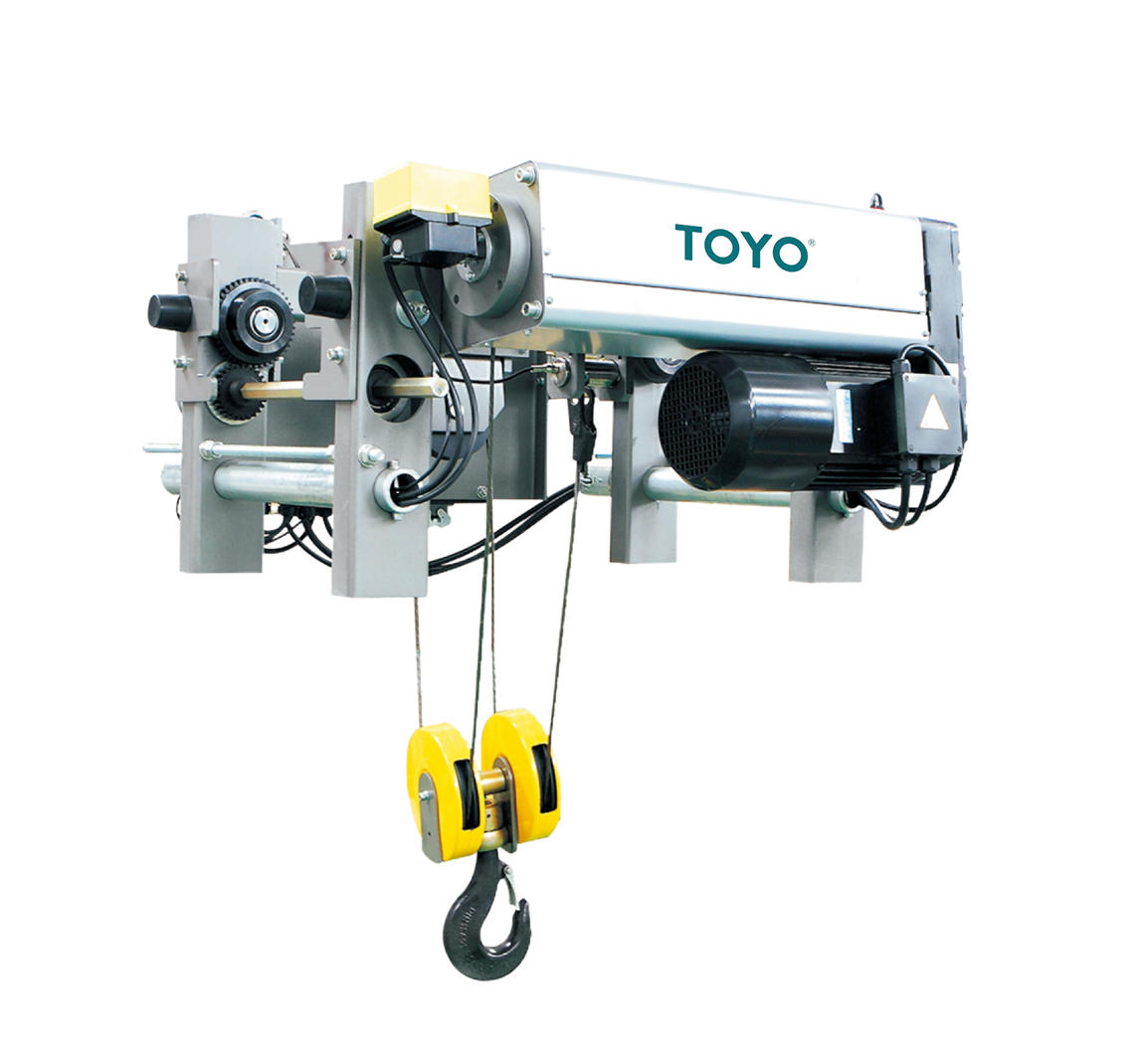
Un palan électrique à câble utilise un câble en acier comme moyen de levage. Un moteur électrique entraîne un tambour qui enroule et déroule le câble, permettant ainsi au palan de soulever et d'abaisser des charges.
Ce type de palan est largement utilisé dans les systèmes de levage industriels et peut être intégré à différentes configurations de grues.
Par exemple, le Palan électrique à câble métallique TOYO CD1 peut être installé sur des ponts roulants monopoutre, des ponts roulants à travée fixe et des potences. TOYO précise également que le modèle CD1 peut être utilisé comme treuil moyennant les modifications appropriées.
Les applications typiques sont les suivantes
- Usines de fabrication
- Ateliers de mécanique
- Entrepôts
- Ports
- Opérations minières
- Espaces de stockage de marchandises
- Installations de production
- Systèmes de ponts roulants
Découvrez le palan électrique à câble métallique TOYO CD1
Palan électrique à câble métallique TOYO CD1
La série CD1 propose différentes configurations de levage. La page produit TOYO actuelle répertorie les hauteurs de levage standard, notamment 6 m, 9 m, 12 m, 18 m, 24 m, 30 m et 36 m, en fonction de la configuration.
Qu'est-ce qu'un palan électrique à chaîne ?
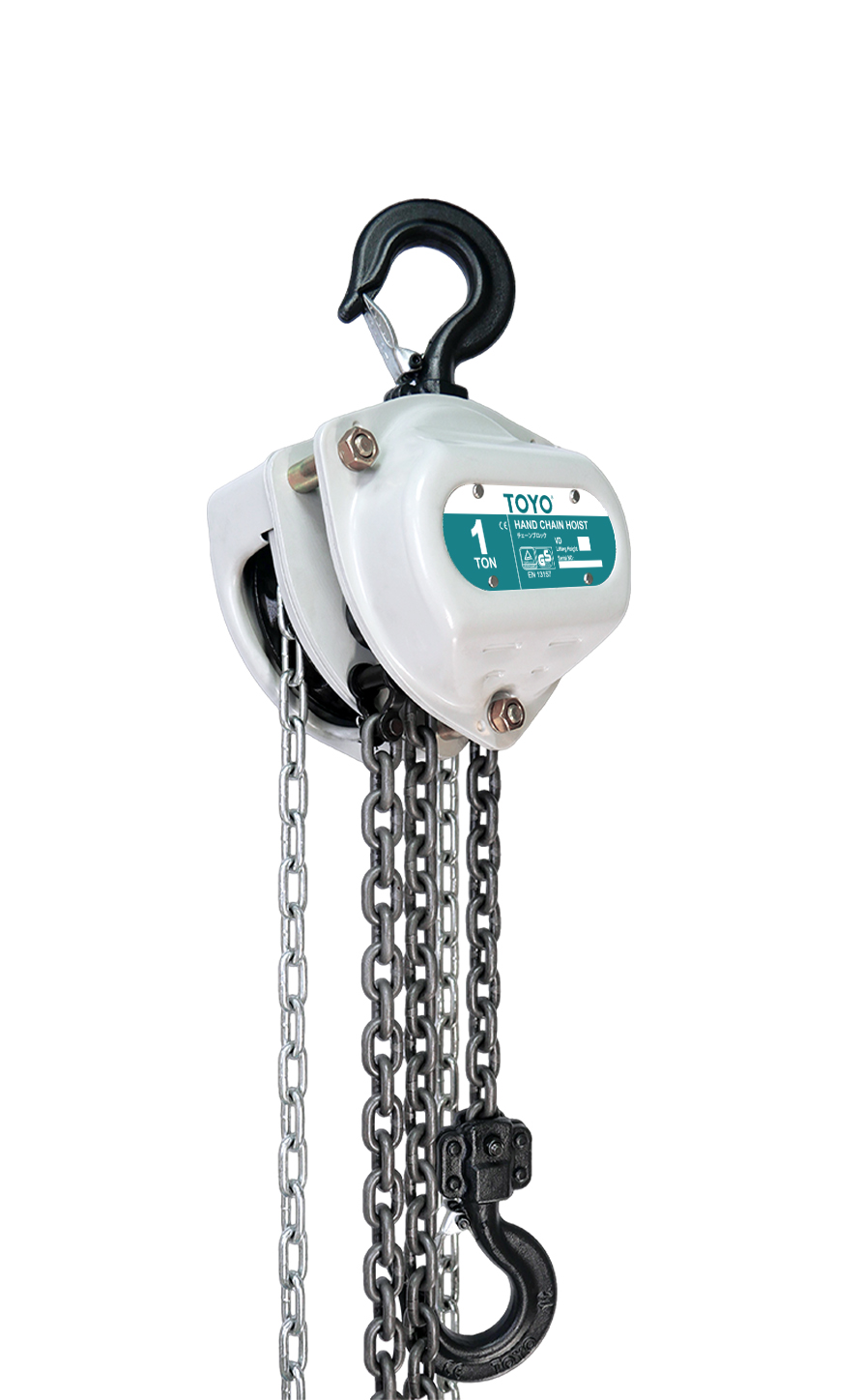
Un palan électrique à chaîne utilise une chaîne de levage à la place d'un câble en acier. Le moteur électrique entraîne un système de transmission et une roue à chaîne pour monter et descendre la charge.
Les palans électriques à chaîne sont largement utilisés dans l'industrie manufacturière, la maintenance des équipements, l'entreposage, le bâtiment et d'autres applications de manutention.
Ils peuvent être configurés pour une installation fixe ou d'autres types d'installation adaptés, selon le modèle du produit.
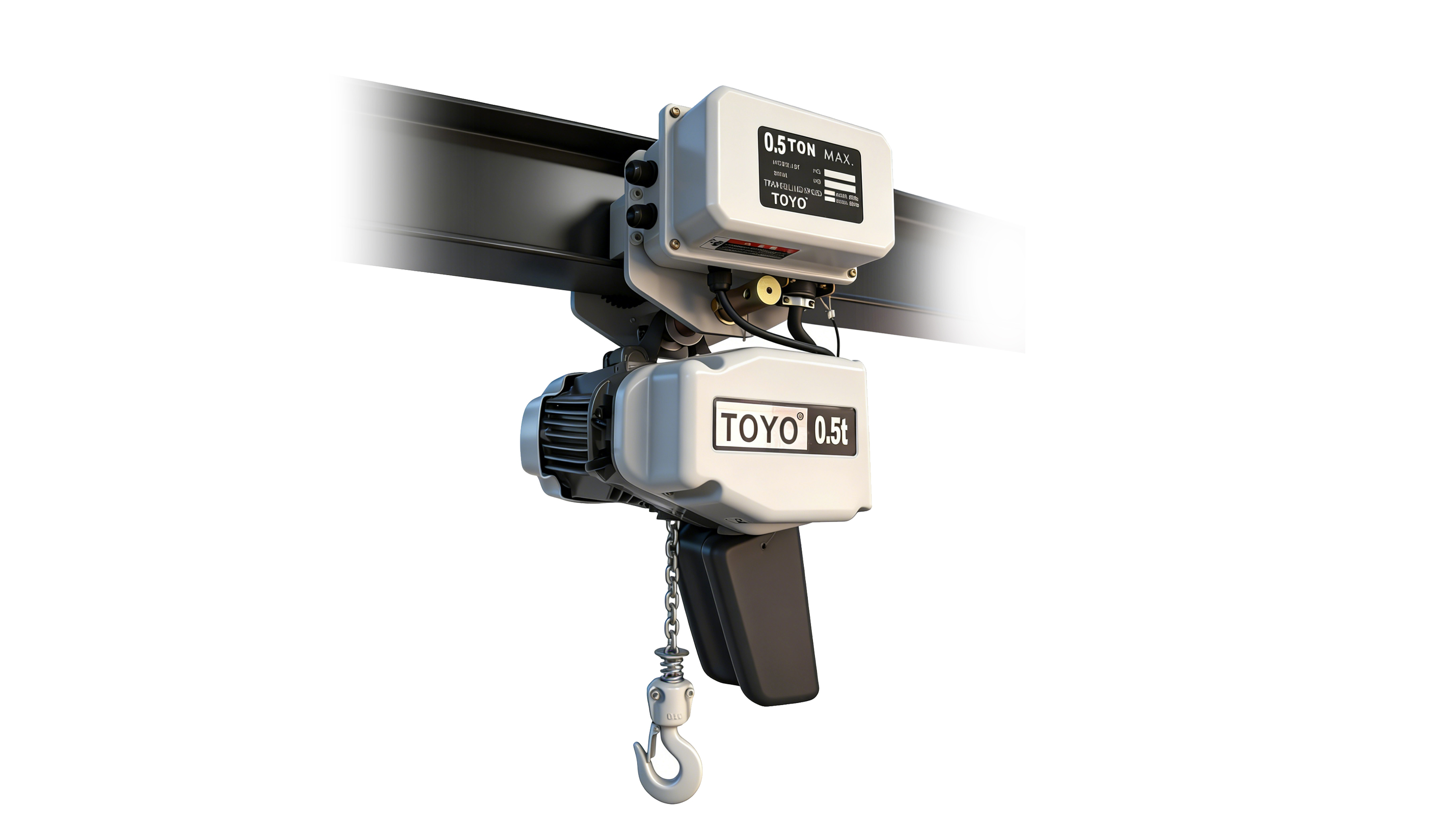
Le Palan électrique à chaîne de type fixe TOYO TY1 Il est doté d'un boîtier en aluminium, d'une chaîne FEC japonaise, d'engrenages de précision traités thermiquement, d'un frein électromagnétique, de fins de course et d'une poignée de commande étanche. La page produit indique un indice de protection IP55.
Découvrez le palan électrique à chaîne TOYO TY1
Palan électrique à chaîne de type fixe TOYO TY1
Les spécifications actuelles de la série TY1 couvrent plusieurs capacités et configurations, ce qui permet à cette série de répondre à un large éventail de besoins en matière de levage industriel.
1. Capacité de levage
La capacité de levage est généralement la première caractéristique prise en compte par les acheteurs, mais elle ne devrait pas être le seul critère de sélection.
Avant de choisir un palan, déterminez :
- Poids maximal de la charge
- Charge de travail normale
- Poids des accessoires de levage
- Hauteur de levage requise
- Fréquence de levage
- Vitesse de levage requise
- Environnement de travail
- Exigences liées aux fonctions
Il est important de noter qu'il y a Il n'existe pas de limite de capacité universelle permettant de déterminer automatiquement s'il vaut mieux utiliser un palan à chaîne ou un palan à câble métallique..
Ces deux technologies peuvent couvrir des plages de capacité qui se recoupent, en fonction de la conception du produit.
Par exemple, les spécifications actuelles des produits TY1 de TOYO comprennent des modèles à partir de 0,5 tonne, tandis que la gamme CD1 couvre également plusieurs capacités de levage industriel.
Par conséquent, les acheteurs doivent choisir le palan en fonction de l'application dans son ensemble plutôt qu'en se basant uniquement sur sa capacité.
2. Hauteur de levage
La hauteur de levage peut avoir une incidence considérable sur la configuration du palan.
Si l'application nécessite une course de levage plus longue, un palan électrique à câble peut constituer une solution adaptée, car le câble s'enroule sur un tambour.
Toutefois, les palans électriques à chaîne peuvent également être conçus pour différentes hauteurs de levage. La hauteur de levage effective disponible dépend du modèle et de la configuration.
Par exemple, la fiche produit du modèle CD1 de TOYO indique des hauteurs de levage standard pouvant atteindre 36 m pour certaines configurations, tandis que la série TY1 propose différentes hauteurs de levage standard en fonction de la capacité et du modèle.
Lorsque vous demandez un devis, précisez toujours la hauteur de levage requise.
Par exemple :
Capacité de levage : 5 tonnes
Hauteur de levage : 12 mètres
Ces informations sont bien plus utiles pour un fabricant que de simplement demander un « palan électrique de 5 tonnes ».
3. Fréquence de fonctionnement et rapport cyclique
À quelle fréquence le palan fonctionnera-t-il ?
Cette question est cruciale.
Un palan utilisé pour des opérations ponctuelles de levage dans le cadre de la maintenance ne répond pas aux mêmes exigences qu'un palan fonctionnant en continu dans un environnement de production.
Envisager :
- Nombre d'heures de travail par jour
- Nombre de cycles de levage par heure
- Charge moyenne
- Charge maximale
- Distance moyenne de levage
- Vitesse de levage requise
- Jours d'ouverture par an
Les spécifications du modèle CD1 de TOYO, par exemple, classent le système de travail dans la catégorie « usage intermédiaire » avec un indice FC = 25% et un groupe de travail M3 pour les configurations spécifiées.
Le palan choisi doit donc être adapté aux conditions réelles d'utilisation, plutôt que d'être sélectionné uniquement en fonction de sa capacité nominale.
4. Installation et espace disponible
L'espace nécessaire à l'installation est un autre facteur important.
Un palan électrique à chaîne peut constituer un choix judicieux lorsque l'application nécessite une solution de levage relativement compacte.
Par exemple, le palan électrique à chaîne à faible hauteur de levage de TOYO est spécialement conçu pour les applications où le poids de l'équipement et l'espace disponible constituent des facteurs importants.
Les palans électriques à câble métallique, quant à eux, sont généralement intégrés à des systèmes de ponts roulants et à d'autres structures de levage.
Avant de passer commande, vérifiez :
- Hauteur libre disponible
- Dimensions de la poutre
- Configuration du chariot
- Approche par « crochet »
- Course requise du crochet
- Dimensions hors tout du palan
- Accès pour la maintenance
Le palan doit répondre à la fois aux exigences de levage et aux conditions physiques d'installation.
5. Vitesse de levage
La vitesse de levage a une incidence directe sur la productivité.
Si le palan est utilisé fréquemment dans un environnement de production, la vitesse de levage peut avoir un impact significatif sur l'efficacité globale de la manutention.
Cependant, plus rapide ne signifie pas toujours meilleur.
Certaines applications exigent un positionnement précis plutôt qu'une vitesse maximale. Dans ces cas-là, des configurations à deux vitesses ou à vitesse variable peuvent s'avérer plus adaptées.
Les caractéristiques techniques du modèle CD1 de TOYO comprennent des options de levage à une ou deux vitesses, tandis que les configurations à fréquence variable peuvent offrir plusieurs options de vitesse en fonction de la configuration choisie.
Lors du choix d'un palan, tenez compte à la fois exigences en matière de productivité et de contrôle de la charge.
6. Environnement de travail
L'environnement dans lequel le palan fonctionne peut avoir une incidence sur la configuration requise.
Demandez-vous si le palan sera utilisé :
- À l'intérieur
- En plein air
- Dans des conditions humides
- Dans les zones poussiéreuses
- Dans les usines de fabrication
- Dans les entrepôts
- Dans les chantiers de construction
- Dans les zones de maintenance
Par exemple, le palan électrique à chaîne TY1 de TOYO bénéficie d'un indice de protection IP55 et est conçu pour les applications où la sécurité, la fiabilité et l'adaptabilité environnementale des équipements sont essentielles.
Dans le cas d'environnements particuliers, les acheteurs doivent discuter de l'application avec le fabricant avant de passer commande.
7. Considérations relatives à la maintenance
Les palans électriques à câble métallique et les palans électriques à chaîne nécessitent tous deux une inspection et un entretien réguliers.
Pour un palan électrique à câble métallique, les opérations d'entretien comprennent généralement :
- État du câble métallique
- Tambour
- Guide de cordage
- Crochets
- Freins
- Engrenages
- Composants électriques
Pour un palan électrique à chaîne, les opérations d'entretien comprennent généralement :
- Chaîne de chargement
- Guide-chaîne
- Pignon
- Crochets
- Système de freinage
- Engrenages
- Composants électriques
Le programme d'entretien approprié dépend de la conception de l'équipement, de sa fréquence d'utilisation, de son environnement de fonctionnement et des recommandations du fabricant.
Des contrôles réguliers sont indispensables pour garantir la sécurité et la fiabilité des opérations de levage.
Quand faut-il opter pour un palan électrique à câble ?
Un palan électrique à câble peut constituer une solution adaptée lorsque votre application nécessite :
- Manutention industrielle
- Intégration avec un pont roulant
- Hauteurs de levage plus importantes
- Opérations de levage de charges lourdes ou fréquentes
- Manutention des matériaux sur les chaînes de production
- Entrepôt et manutention des marchandises
- Applications portuaires ou minières
- Dispositif de levage à câble métallique
Le palan électrique à câble métallique CD1 de TOYO est conçu pour des applications telles que les usines, les mines, les ports, les entrepôts et les zones de stockage de marchandises.
Quand faut-il opter pour un palan électrique à chaîne ?
Un palan électrique à chaîne peut constituer une solution adaptée lorsque votre application nécessite :
- Un système de levage industriel pratique
- Équipements compacts
- Levage en atelier
- Installation de l'équipement
- Opérations de maintenance
- Manutention en entrepôt
- Applications industrielles
- Dispositifs de levage sur monorail fixes ou adaptés
Le palan électrique à chaîne TY1 de TOYO est conçu pour des applications telles que la production industrielle, l'entreposage et la logistique, le bâtiment, ainsi que l'installation et la maintenance d'équipements.
Comment choisir le palan électrique adapté
Au lieu de se contenter de demander :
« Ai-je besoin d'un palan à câble métallique ou d'un palan à chaîne ? »
Commencez par ces sept questions :
1. Quelle est la charge maximale ?
Indiquez la charge maximale d'utilisation en tonnes ou en kilogrammes.
2. Quelle est la hauteur de levage requise ?
Précisez la course effective du crochet requise.
3. À quelle fréquence le palan sera-t-il utilisé ?
Précisez les heures de fonctionnement prévues et les cycles de levage.
4. Quelle vitesse de levage vous faut-il ?
Déterminez si un fonctionnement standard, à deux vitesses ou à vitesse variable est nécessaire.
5. Comment le palan sera-t-il installé ?
Précisez s'il s'agira d'un système fixe, monté sur chariot, installé sur un pont roulant, une potence, un monorail ou un autre système.
6. Quelle est la source d'alimentation ?
Fournir :
- Tension
- Phase
- Fréquence
Par exemple :
380 V / triphasé / 50 Hz
TOYO propose également différentes options d'alimentation électrique pour certaines configurations de palans électriques à chaîne.
7. Comment se présente l'environnement de travail ?
Précisez au fabricant si le palan sera utilisé à l'intérieur, à l'extérieur, dans des conditions humides, dans des environnements poussiéreux ou dans d'autres conditions particulières.
La communication de ces informations permet au fabricant de recommander une configuration de palan plus adaptée.
Solutions de palans électriques TOYO
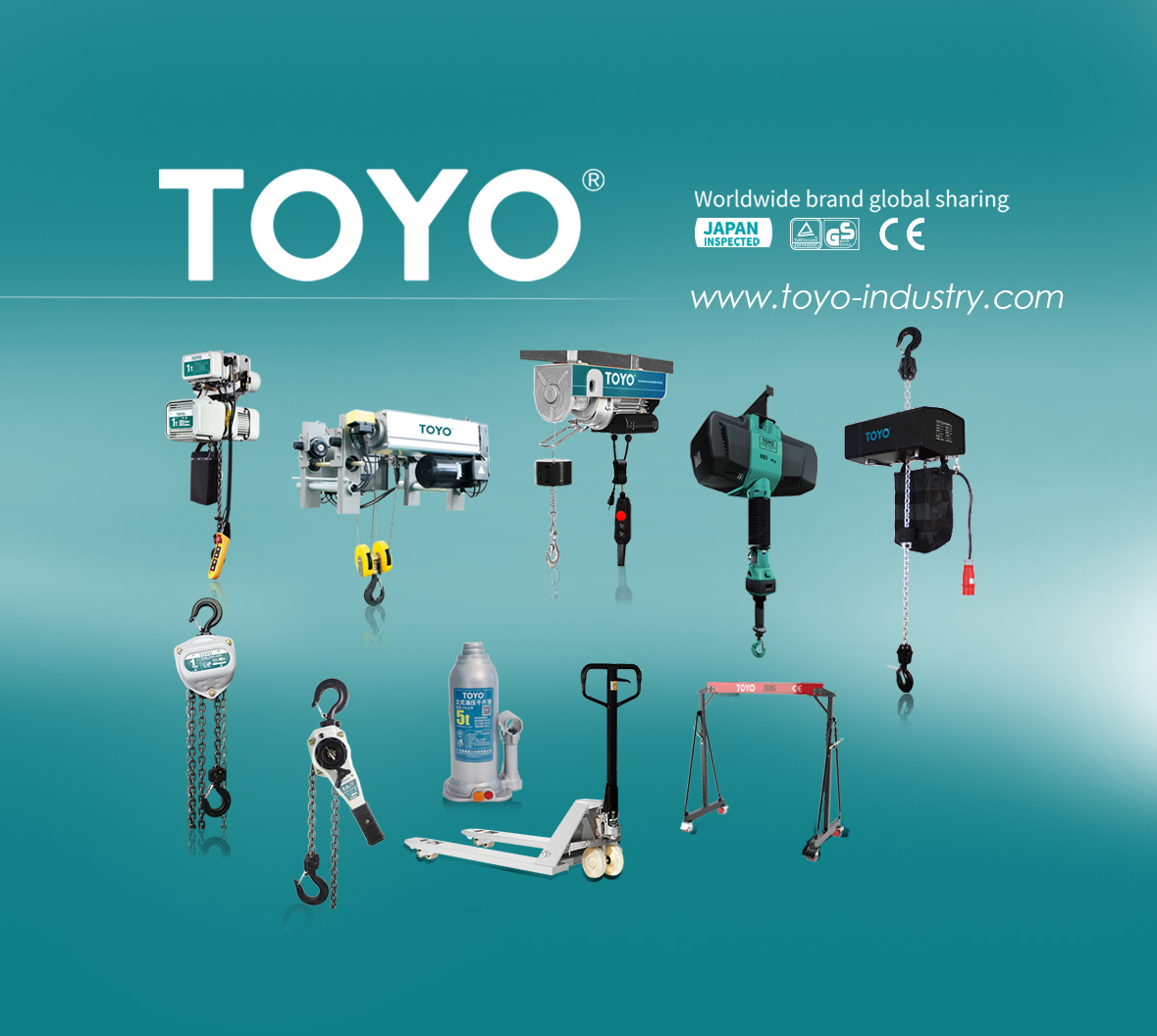
TOYO propose différentes solutions de palans électriques destinées aux applications industrielles de manutention, notamment : palans électriques à câble métallique et palans électriques à chaîne.
La gamme de palans électriques TOYO comprend actuellement des palans à câble métallique, tels que les modèles CD1, MD1 et les modèles de type européen, ainsi que des palans à chaîne électriques, tels que les modèles TY1, TY2, TY3, TY4-MINI et d'autres configurations.
Palans électriques à câble métallique
Pour les applications industrielles nécessitant un système de levage à câble métallique, découvrez la gamme de palans électriques à câble métallique TOYO :
Palans à câble métallique TOYO Electric
Pour une configuration traditionnelle de palan à câble métallique industriel :
Palan électrique à câble métallique TOYO CD1
Palans électriques à chaîne
Pour les applications nécessitant un système de levage électrique à chaîne :
Gamme de palans électriques TOYO
Pour le palan électrique à chaîne de type fixe TY1 :
Palan électrique à chaîne de type fixe TOYO TY1
Questions fréquemment posées
Un palan à câble métallique est-il plus performant qu'un palan à chaîne ?
Pas nécessairement. Le choix le plus judicieux dépend de la capacité de levage, de la hauteur de levage, de la fréquence d'utilisation, de la configuration de l'installation, de l'environnement d'exploitation et d'autres exigences liées à l'application.
Quelle est la principale différence entre un palan à câble métallique et un palan à chaîne ?
La principale différence réside dans le moyen de levage et le mécanisme utilisé. Un palan à câble métallique utilise un câble en acier enroulé autour d'un tambour, tandis qu'un palan à chaîne utilise une chaîne de levage entraînée par une roue à chaîne.
Un palan électrique à chaîne peut-il supporter des charges lourdes ?
Oui. Les palans électriques à chaîne sont disponibles en différentes capacités. La capacité réelle dépend du modèle et de la configuration spécifiques. Par exemple, la série TY1 de TOYO comprend plusieurs modèles adaptés à différents besoins de levage.
Un palan électrique à câble métallique est-il adapté à un pont roulant ?
Oui. Les palans électriques à câble métallique sont largement utilisés avec les systèmes de ponts roulants. Le modèle CD1 de TOYO peut être installé sur des ponts roulants monopoutre, des ponts roulants à travée fixe et des potences.
Quel palan dois-je choisir pour une charge de 5 tonnes ?
Une charge de 5 tonnes ne suffit pas à elle seule pour choisir le palan adapté. Vous devez également indiquer la hauteur de levage, la fréquence d'utilisation, la vitesse de levage, le mode d'installation, l'alimentation électrique et l'environnement de travail.
TOYO peut-il vous aider à choisir le palan électrique adapté ?
Oui. Veuillez communiquer à TOYO la capacité de levage, la hauteur de levage, la fréquence d'utilisation, l'alimentation électrique, le mode d'installation et l'environnement d'utilisation. L'équipe commerciale pourra alors vous proposer une configuration adaptée.
Conclusion
Le choix entre un palan électrique à câble et un palan électrique à chaîne devrait se fonder sur l'ensemble du dossier de candidature plutôt que sur une seule spécification.
Un palan électrique à câble métallique peut constituer un excellent choix pour les systèmes de grues industrielles, les grandes hauteurs de levage et les applications exigeantes de manutention.
Un palan électrique à chaîne peut constituer une solution pratique pour les applications de levage dans les secteurs de la fabrication, de la maintenance, de l'entreposage, de l'installation et de l'industrie en général, lorsque sa configuration répond aux exigences de travail.
La meilleure approche consiste à définir d'abord vos conditions réelles de levage, puis à choisir le palan en fonction de ses capacité nominale, hauteur de levage, exigences d'utilisation, vitesse, méthode d'installation et environnement de travail.
Vous avez besoin d'aide pour choisir le palan électrique qui vous convient ?
Veuillez envoyer les informations suivantes à TOYO :
Capacité de levage :
Hauteur de levage :
Heures de travail par jour :
Fréquence de levage :
Vitesse de levage :
Alimentation électrique :
Méthode d'installation :
Environnement de travail :
TOYO peut analyser vos besoins et vous proposer une solution de palan électrique adaptée.
Contactez TOYO pour une solution de levage industriel.
Demandez un devis gratuit à TOYO
Courriel : info@toyo-industry.com
Site web : www.toyo-industry.com