Quick Answer
Manual pallet trucks use a mechanical hydraulic system operated by human force, while electric pallet stackers use battery-powered motors, hydraulic pump stations, and electronic control systems for lifting and movement. Manual models are structurally simple, low-cost, and easy to maintain, while electric models deliver higher efficiency, reduced labor intensity, and better performance in high-frequency warehouse operations.
Introduction
Pallet trucks are widely used in warehouses, factories, logistics centers, and distribution systems for palletized cargo handling.
From an engineering perspective, pallet handling equipment can be divided into two main categories:
- Manual hydraulic pallet trucks
- Electric pallet stackers
These two systems differ fundamentally in energy source, structural design, and load handling mechanism.
This article explains the structural differences between the TOYO AC Hand Pallet Truck and the TOYO ACL10 Electric Pallet Stacker based on industrial engineering principles and material handling system design standards.
1. Manual Pallet Truck Engineering System
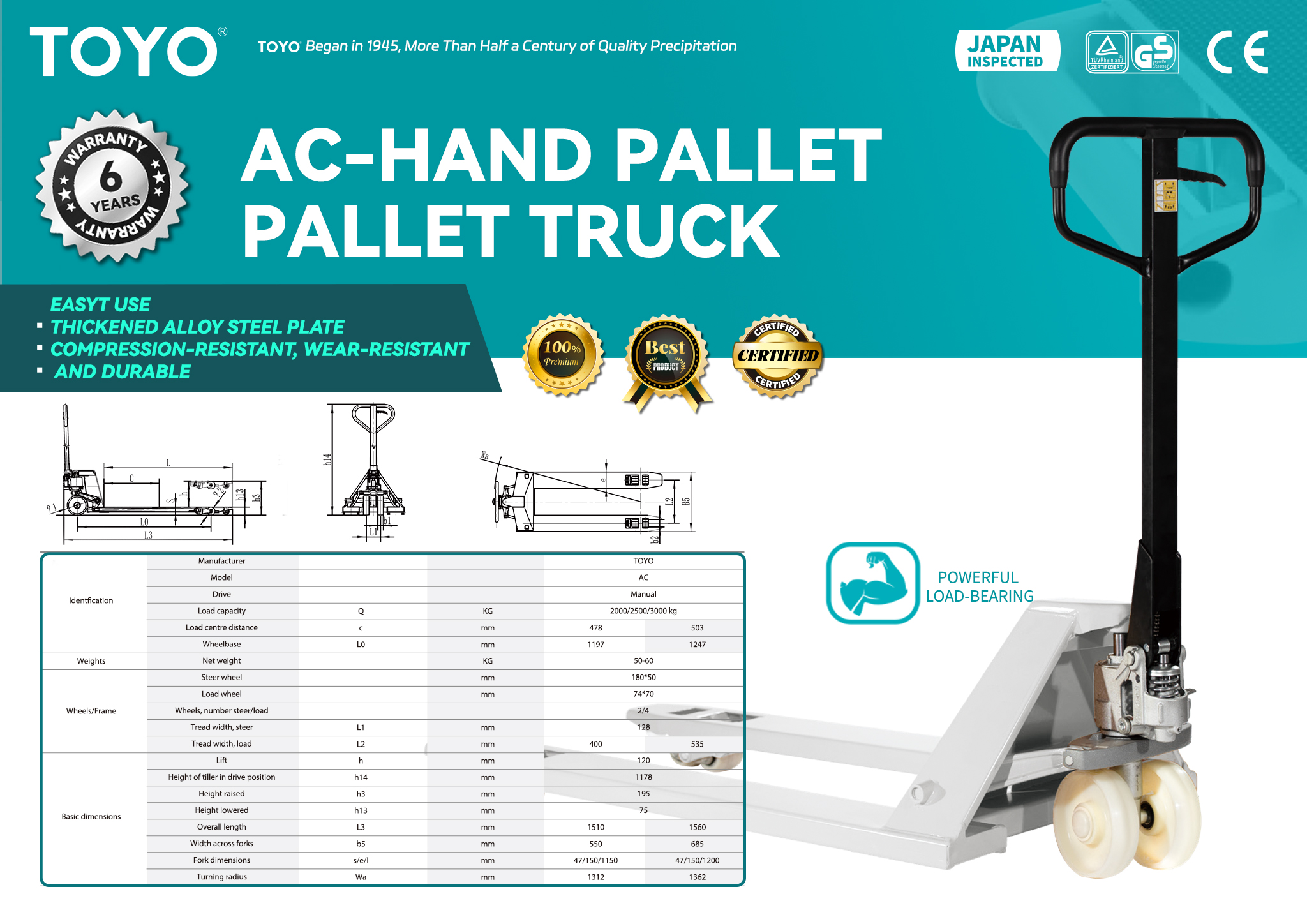
👉 Product reference: TOYO AC Hand Pallet Truck
The manual pallet truck is a pure hydraulic mechanical system that converts human force into lifting pressure through a lever-driven pump mechanism.
1.1 System Architecture
Mechanical Input System
- Tiller handle (lever amplification system)
- Mechanical linkage rods
- Pivot joint structure
This system increases applied force using lever mechanics.
Hydraulic System
- Hydraulic pump unit
- Oil cylinder
- Piston assembly
- Pressure release valve
The working principle is based on Pascal’s Law, where pressure applied to a confined fluid is transmitted uniformly.
Structural Load System
- High-strength welded steel forks
- Reinforced chassis frame
- Load-bearing wheel system
The structure is designed to distribute vertical load into ground contact points.
1.2 Engineering Characteristics
- No electrical system
- No energy storage components
- Very low failure rate
- High mechanical reliability
1.3 Limitations
- Fully dependent on human force
- Limited operational efficiency
- Not suitable for high-frequency workflows
1.4 Industrial Standard Reference
Manual pallet truck design and operation principles align with industrial safety requirements defined by:
- OSHA — Workplace material handling safety guidelines
- ANSI — Industrial equipment safety and design standards
2. Electric Pallet Stacker Engineering System
👉 Product reference: TOYO ACL10 Electric Pallet Stacker
The electric pallet stacker is a mechatronic system integrating electrical energy, hydraulic actuation, and electronic control logic.
2.1 System Architecture
1. Energy System
- 24V dual battery system
- Energy storage and discharge circuit
- Charging interface system
2. Motion System
- 0.75 kW drive motor
- Electric drive wheel assembly
- Electronic speed control
3. Hydraulic Lifting System
- 2.2 kW hydraulic pump station
- Solenoid valve system
- Oil pressure control circuit
4. Electronic Control System
- Electronic controller (24V/90A)
- Wiring harness system
- Emergency stop function
- Control handle interface
2.2 Engineering Characteristics
- High system integration
- Electromechanical + hydraulic hybrid structure
- Suitable for continuous industrial cycles
- Reinforced chassis for motor and battery load
2.3 Advantages
- High operational efficiency
- Reduced operator fatigue
- Stable lifting performance
- Suitable for intensive warehouse operations
2.4 Industrial Standard Reference
Electric pallet stackers are designed in accordance with industrial safety and equipment guidelines from:
- ISO — International standards for industrial equipment design and safety
- OSHA — Occupational safety regulations for powered industrial equipment
- ANSI — Engineering standards for industrial machinery systems
3. Core Engineering Differences
| System Aspect | Manual Pallet Truck | Electric Pallet Stacker |
|---|---|---|
| Energy Source | Human force | Battery (24V system) |
| System Type | Mechanical hydraulic | Electro-hydraulic mechatronic |
| Drive System | Manual push | Motor-driven |
| Control System | Mechanical lever | Electronic controller |
| Structural Complexity | Low | High |
| Efficiency Level | Low–Medium | High |
| Maintenance Demand | Low | Medium–High |
4. Hydraulic System Engineering Comparison
Manual System
- Hand-operated hydraulic pump
- Single hydraulic circuit
- Direct mechanical pressure input
✔ High reliability
✔ Minimal maintenance
Electric System
- Motor-driven hydraulic pump station
- Controlled hydraulic pressure output
- Electrically regulated lifting cycle
✔ Higher efficiency
✔ Stable repetitive performance
✔ Suitable for high-frequency operation
5. Industrial Application Scenarios
Manual Pallet Truck Use Cases
- Small warehouses
- Retail logistics
- Container loading/unloading
- Low-frequency material handling
Electric Pallet Stacker Use Cases
- Large distribution centers
- Manufacturing plants
- E-commerce warehouses
- Medium-duty stacking operations
👉 TOYO ACL10 Electric Pallet Stacker
6. Engineering Decision Logic
Selection depends on:
1. Operational Cycle Frequency
- Low frequency → manual system
- High frequency → electric system
2. Energy Efficiency
- Manual: human force conversion
- Electric: motor-to-hydraulic system
3. Productivity vs Cost
- Simple system = lower cost
- Integrated system = higher productivity
7. Maintenance Engineering
Manual System
- Hydraulic oil inspection
- Seal replacement
- Wheel wear monitoring
✔ Simple maintenance structure
Electric System
- Battery maintenance cycle
- Motor inspection
- Hydraulic pump diagnostics
- Controller system checks
✔ Requires preventive maintenance system
8. Conclusion
From an engineering standpoint:
- Manual pallet trucks are mechanical hydraulic force conversion systems
- Electric pallet stackers are integrated electromechanical material handling systems
There is no universal “better” option. The correct selection depends on warehouse size, load frequency, efficiency requirements, and maintenance capability.
Industrial Equipment References
This article is based on widely accepted industrial engineering principles and safety frameworks, including:
- ISO — International standards for industrial equipment design and safety management
- OSHA — Workplace safety and material handling regulations
- ANSI — Engineering standards for industrial machinery systems
- Hydraulic system principles based on Pascal’s Law used in industrial lifting equipment
- Mechatronics and electric drive system engineering principles used in warehouse automation equipment