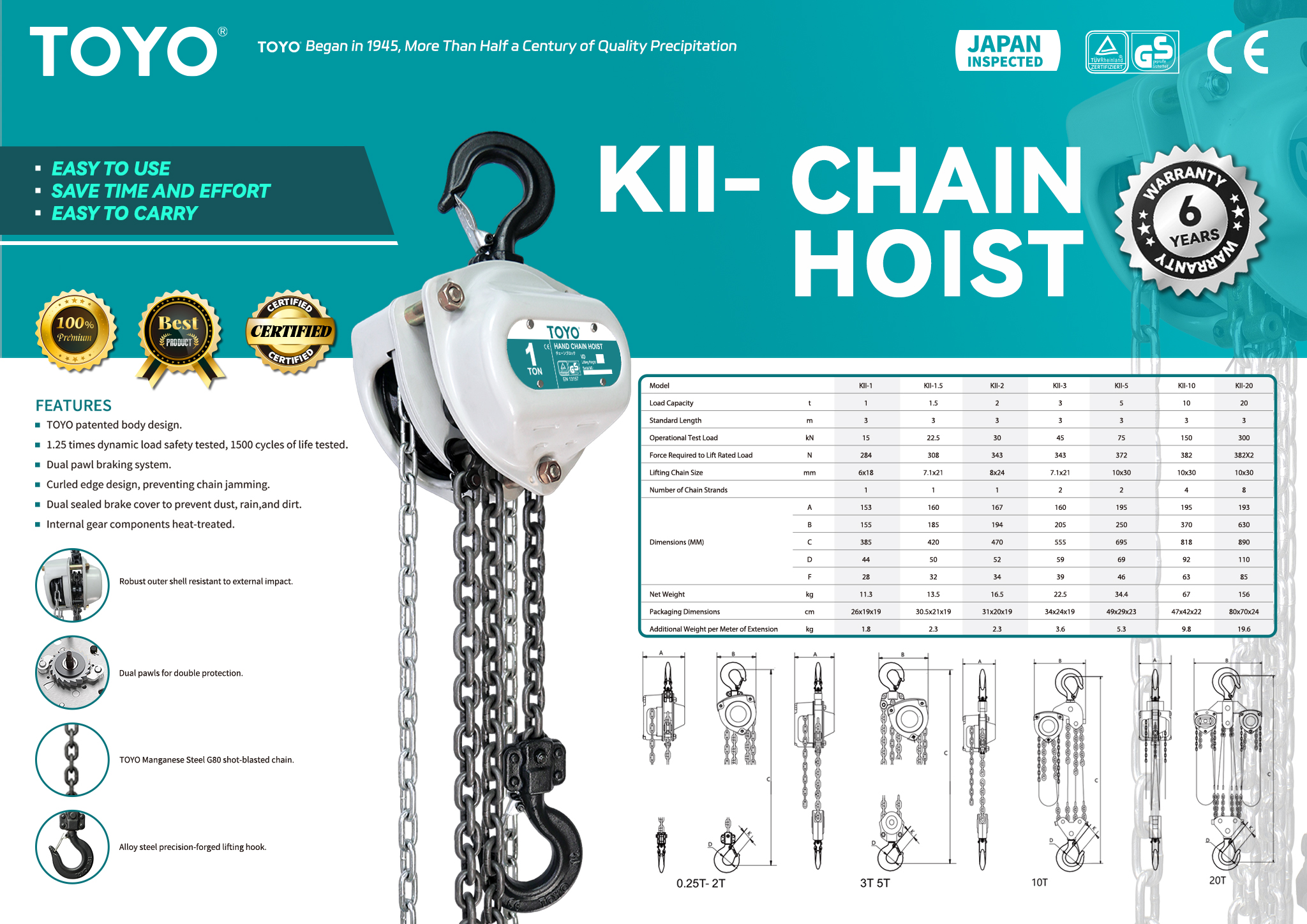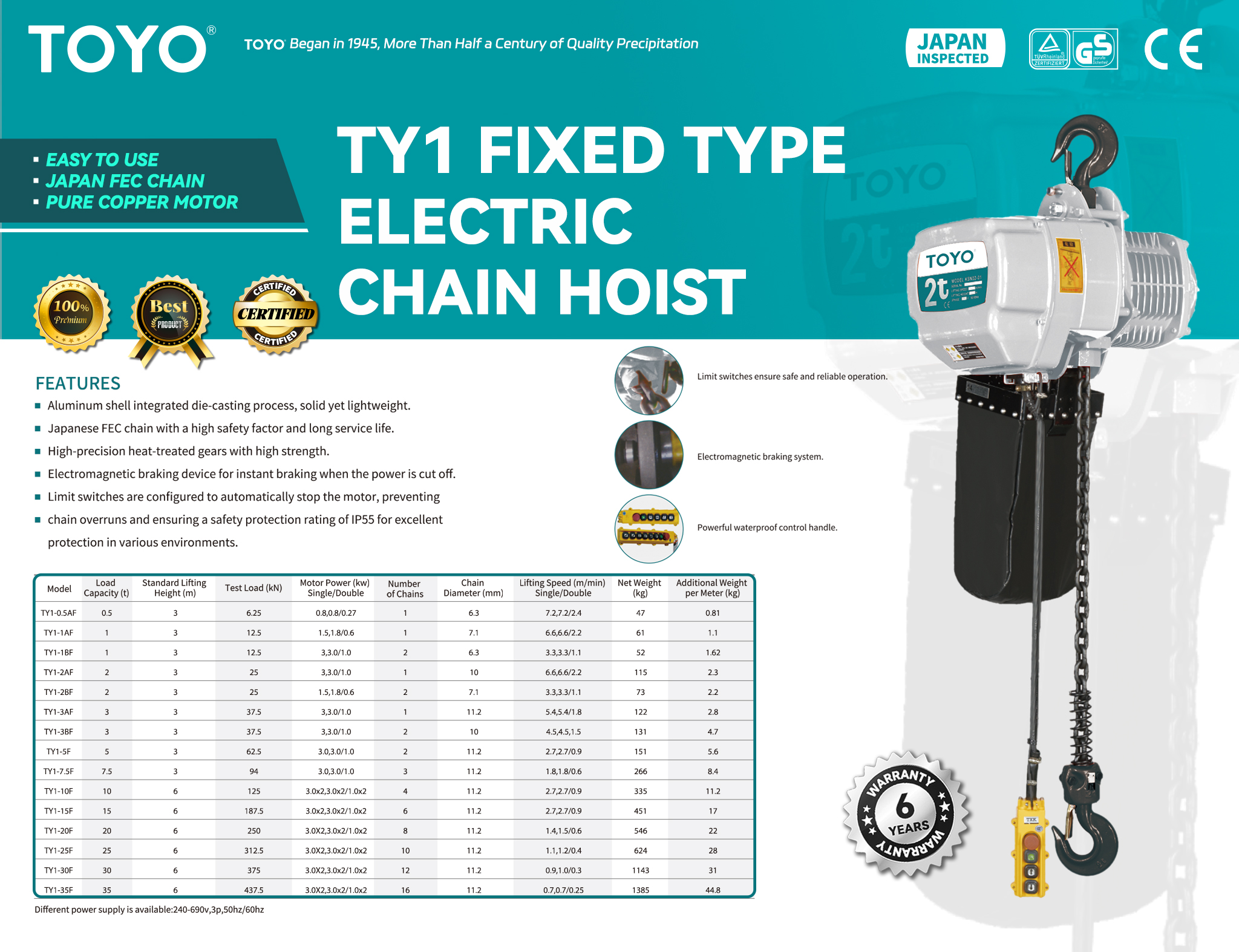

Chain hoists are widely used in industrial lifting operations. Ensuring proper safety practices is essential to prevent accidents, equipment damage, and operational risks.
This guide provides key safety guidelines for the correct use, inspection, and maintenance of chain hoists in industrial environments.
1. Never Exceed Rated Capacity
Every chain hoist is designed with a specific rated load capacity.
- Always check the load before lifting
- Never exceed the rated capacity
- Avoid side pulling or shock loading
Overloading is one of the most common causes of equipment failure in industrial lifting operations.
2. Inspect Chains and Hooks Regularly
Before each operation, perform a visual inspection:
- Check for chain wear, deformation, or cracks
- Inspect hooks for bending or damage
- Ensure safety latches are functioning properly
Any damaged component must be replaced immediately.
👉 View chain hoist products for industrial applications:
https://www.toyo-industry.com/manual-chain-hoist/chain-hoist/
3. Avoid Shock Loading
Shock loading occurs when the load is suddenly applied or dropped.
- Lift smoothly and steadily
- Avoid sudden starts or stops
- Do not drop or swing loads
Shock loading significantly increases stress on the hoist system and reduces equipment lifespan.
4. Ensure Vertical Lifting Alignment
Proper alignment is critical for safe operation:
- Always lift vertically, not at an angle
- Avoid lateral pulling or dragging
- Ensure load is directly under the hook
Misalignment can cause mechanical failure or serious accidents.
5. Do Not Use Damaged Equipment
Never operate a chain hoist that shows signs of damage:
- Broken or worn chains
- Deformed hooks
- Malfunctioning brake system
Damaged equipment must be removed from service immediately to ensure workplace safety.
6. Proper Lubrication and Maintenance
Regular maintenance improves safety and extends service life:
- Lubricate load chain and gears regularly
- Check brake system performance
- Store equipment in dry and clean industrial conditions
👉 Learn more about proper hoist selection and safe operation:
https://www.toyo-industry.com/how-to-choose-lifting-height-for-chain-hoist-complete-guide/
7. Operator Training Is Essential
Only trained personnel should operate chain hoists.
Operators must understand:
- Load limits
- Correct lifting procedures
- Emergency handling procedures
Proper training significantly reduces operational risks in industrial environments.
Why Safety Matters in Industrial Lifting
Unsafe lifting operations can lead to:
- Equipment failure
- Workplace injuries
- Production downtime
- Financial losses
Following proper safety guidelines ensures efficient and reliable industrial operations.
Related Products
Explore TOYO chain hoists designed for industrial lifting applications:
https://www.toyo-industry.com/manual-chain-hoist/
About TOYO
TOYO provides industrial lifting equipment designed for safety, durability, and performance in demanding working environments.
Learn more about manufacturing standards:
https://www.toyo-industry.com/about-us/
Contact for Support
For technical consultation or product selection:
https://www.toyo-industry.com/contact/