Complete Guide to Manual Chain Hoists (Chain Blocks)
Manual chain hoists, also known as chain blocks, are essential mechanical lifting devices widely used in industrial environments for safe and efficient load handling.
This guide provides a complete overview of manual chain hoists, including working principles, types, applications, selection criteria, safety requirements, and maintenance practices.
TOYO provides professional-grade manual chain hoists designed for industrial lifting applications, ensuring stable performance, durability, and safety in demanding environments:
https://www.toyo-industry.com/manual-chain-hoist/
What Is a Manual Chain Hoist
A manual chain hoist is a hand-operated lifting device used to raise or lower loads through a mechanical chain system.
It does not require electricity, making it suitable for environments where power supply is limited or where precise manual control is required.
How a Chain Block Works
A manual chain hoist operates through a gear-driven mechanical system:
- Pulling the hand chain rotates internal gears
- The gear system multiplies input force
- The load chain lifts or lowers the load
- A braking system ensures safe load holding
This mechanical advantage allows heavy loads to be lifted with minimal manual effort.
Types of Manual Chain Hoists
Standard Chain Block
Suitable for general industrial lifting applications with stable performance.
Low Headroom Chain Hoist
Designed for environments with limited vertical installation space.
Heavy-Duty Chain Hoist
Used for high-load, frequent, and demanding industrial operations.
👉 Explore full chain block product range:
https://www.toyo-industry.com/manual-chain-hoist/chain-hoist/
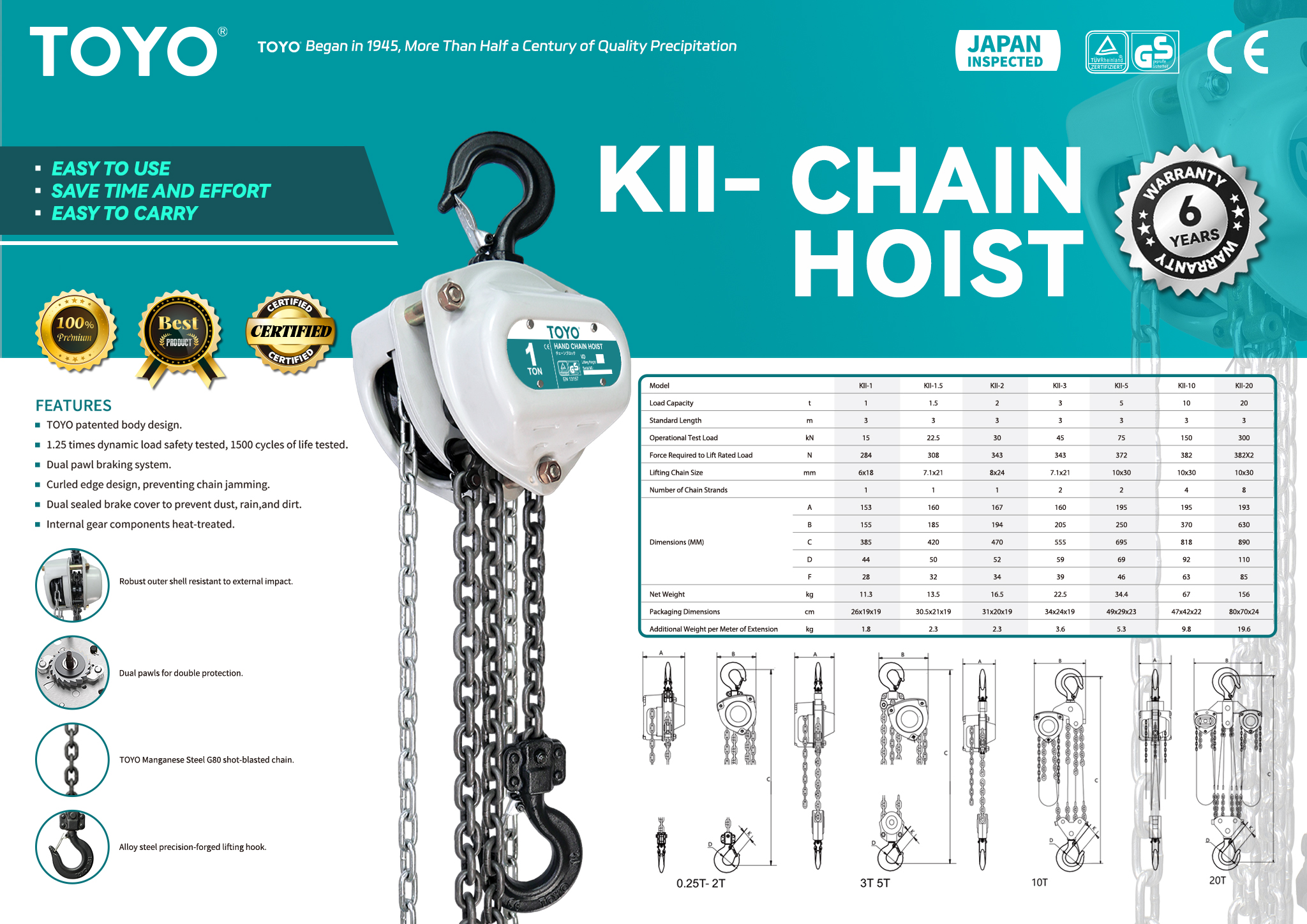
Key Components
- Load Chain – High-strength alloy steel chain for lifting
- Hook – Forged steel hook with safety latch
- Gear System – Precision mechanical transmission system
- Brake System – Ensures safe load holding
- Hand Chain – Manual operation component
Applications of Chain Blocks
Manual chain hoists are widely used in:
- Construction and infrastructure projects
- Industrial manufacturing workshops
- Warehousing and logistics operations
- Equipment installation and maintenance
- Shipbuilding and mining industries
How to Choose the Right Chain Hoist
Selecting the right chain hoist depends on several key factors:
Load Capacity
Choose a hoist with a rated capacity suitable for the working load.
Lifting Height
Select appropriate chain length based on operational requirements.
Working Environment
Consider humidity, temperature, dust, and outdoor conditions.
Frequency of Use
Heavy-duty models are recommended for frequent or continuous operations.
👉 Learn more about safe selection and lifting standards in the chain hoist safety guide for industrial lifting applications:
https://www.toyo-industry.com/chain-hoist-safety-guide-safe-operation-and-inspection-practices/
Safety Tips for Operation
- Never exceed rated capacity
- Inspect chains and hooks regularly
- Avoid shock loading
- Ensure vertical lifting alignment
- Do not operate damaged equipment
Proper safety compliance significantly reduces operational risks in industrial environments.
Maintenance and Inspection
Regular maintenance ensures long-term performance and safety:
- Lubricate chains and gears regularly
- Check brake system functionality
- Inspect for wear, deformation, or corrosion
- Store equipment in dry and clean environments
Why Choose TOYO Chain Blocks
TOYO manual chain hoists are designed for:
- High-strength construction for heavy-duty applications
- Reliable braking systems for safe operation
- Stable performance in industrial environments
- Long service life with low maintenance requirements
👉 Learn more about TOYO manufacturing capability:
https://www.toyo-industry.com/about-us/
Conclusion
Manual chain hoists remain a cost-effective and reliable solution for a wide range of industrial lifting applications.
Understanding their structure, proper selection, and safe operation helps improve both workplace safety and operational efficiency.
👉 Contact TOYO for quotation or technical support:
https://www.toyo-industry.com/contact/