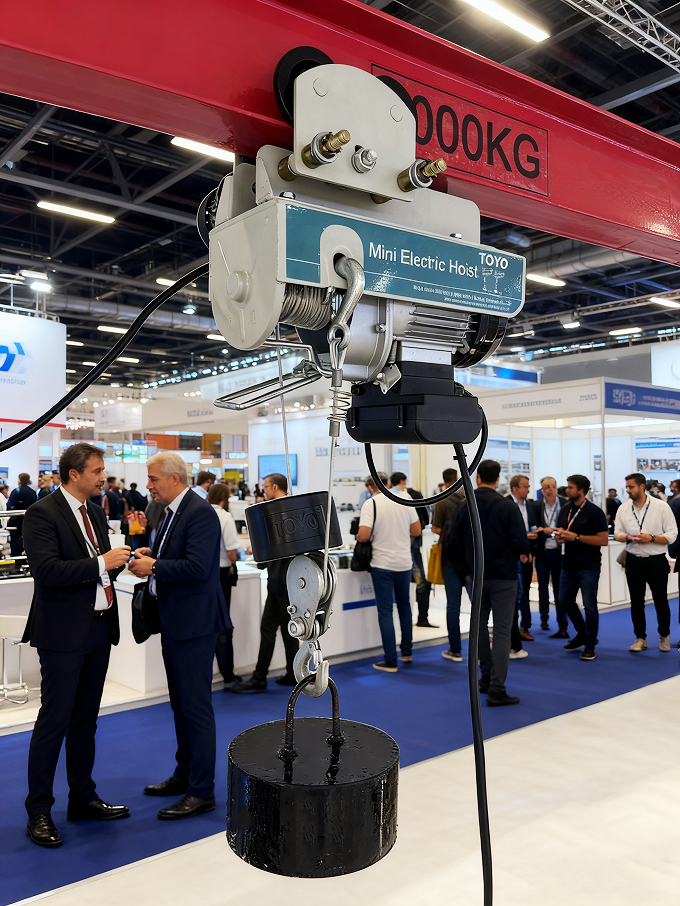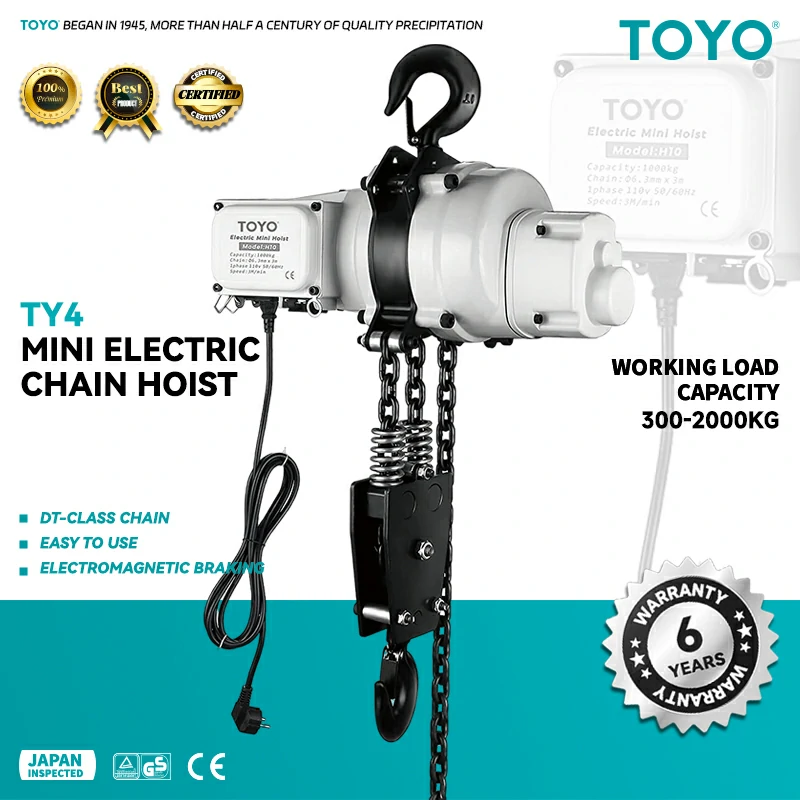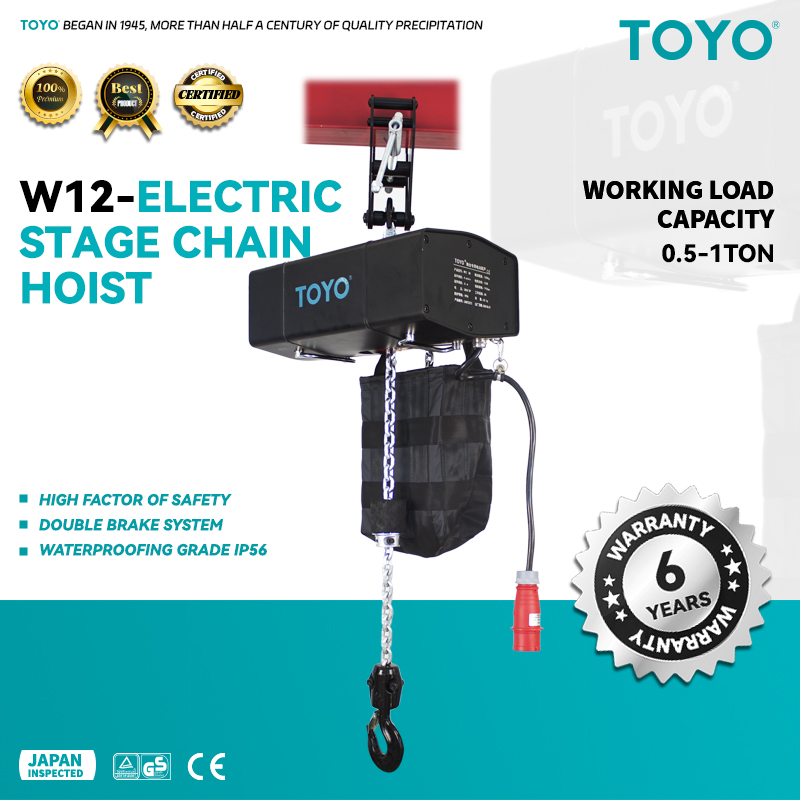
A 5 ton electric chain hoist is a practical lifting solution for industrial applications that require the controlled handling of heavy loads. It is commonly used in manufacturing plants, maintenance workshops, warehouses, assembly facilities, and material handling operations.
However, selecting the right 5 ton electric chain hoist involves more than checking its rated lifting capacity. Buyers also need to evaluate lifting height, duty classification, power supply, lifting speed, mounting configuration, safety features, and working environment.
In this guide, we explain the key factors industrial buyers should consider before purchasing a 5 ton electric chain hoist.
1. Confirm the Required Lifting Capacity
A 5 ton electric chain hoist has a rated lifting capacity of 5,000 kg under the manufacturer’s specified operating conditions.
Before selecting a model, evaluate the maximum load to be lifted, the weight of the lifting accessories, and the frequency of lifting operations. The complete suspended load must remain within the permitted limits of the equipment and lifting arrangement.
Common industrial lifting capacities include 500 kg, 1 ton, 2 tons, 3 tons, and 5 tons. Selecting the appropriate capacity helps ensure that the hoist matches the application without relying on assumptions about future operating conditions.
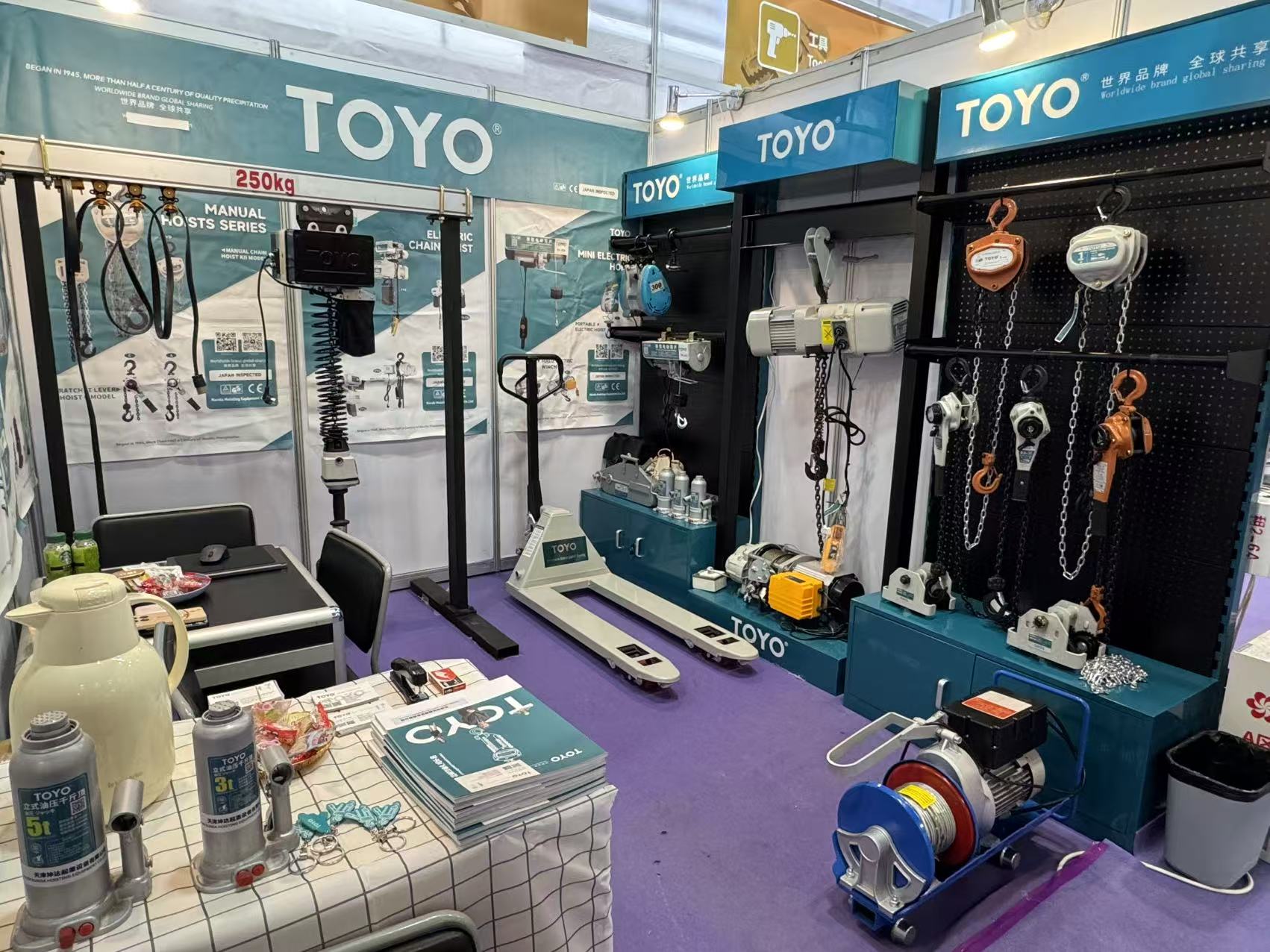
For buyers comparing different lifting solutions, TOYO offers a range of electric chain hoists for industrial applications.
2. Determine the Required Lifting Height
Lifting height is the vertical distance that a load must travel between its lowest and highest working positions.
When specifying a 5 ton electric chain hoist, consider:
-
The required vertical travel distance.
-
The height of the supporting beam.
-
Available headroom.
-
The dimensions of the load and lifting accessories.
-
The clearance required for loading and unloading.
Lifting height should not be confused with overall equipment height or minimum headroom. These are different measurements and may affect the installation arrangement.
If your application requires a long lifting distance, specify the required height clearly when requesting a quotation. The manufacturer can then confirm the appropriate chain length and configuration.
3. Select the Correct Duty Classification
The duty classification of an electric chain hoist should match its actual workload.
A hoist used occasionally for maintenance may have different requirements from one operating repeatedly on a production line.
Consider the following factors:
-
Average load and load spectrum.
-
Lifting cycles per hour.
-
Operating hours per shift.
-
Starting and stopping frequency.
-
Required service life.
Ask the manufacturer to recommend an appropriate duty classification according to the intended operating conditions and applicable classification standards, such as FEM or ISO.
Choosing a hoist based only on rated capacity may result in a model that is unsuitable for frequent or intensive lifting operations.
4. Check the Power Supply and Motor Specifications
Electrical compatibility is essential when purchasing an industrial electric chain hoist.
Before placing an order, confirm the following specifications:
-
Rated voltage.
-
Power frequency, such as 50 Hz or 60 Hz.
-
Single-phase or three-phase power.
-
Motor power.
-
Control voltage.
-
Insulation class.
-
Required electrical protection.
For example, a facility using 380 V, 50 Hz, three-phase power needs a hoist configuration compatible with that supply.
Do not assume that two hoists with the same lifting capacity have identical electrical specifications. Always check the manufacturer’s technical datasheet before confirming an order.
For outdoor, dusty, humid, or potentially explosive environments, additional protection or a specially certified model may be required.
5. Compare Single-Speed and Dual-Speed Hoists
Lifting speed affects productivity and load positioning.
A single-speed electric chain hoist operates at one fixed lifting speed and may be suitable for general lifting operations.
A dual-speed model provides a faster speed for routine lifting and a slower speed for more controlled positioning. Depending on the model, variable-frequency control may offer additional flexibility.
When comparing lifting speeds, consider:
-
Required lifting cycle time.
-
Positioning accuracy.
-
Load stability.
-
Operating frequency.
-
Available motor and control configurations.
The fastest model is not necessarily the best choice. The appropriate speed should match the requirements of the application and the manufacturer’s available configurations.
6. Choose Between a Fixed Hoist and a Trolley-Mounted Hoist
The installation configuration determines whether the hoist can move horizontally as well as vertically.
Fixed-Type Electric Chain Hoist
A fixed hoist lifts loads at a stationary position. It may be suitable for dedicated lifting stations, maintenance areas, and fixed production workstations.
For lighter lifting applications, buyers can explore TOYO’s PA-A and PA-B fixed-type mini electric hoists. These models serve different capacity requirements and should not be treated as substitutes for a 5 ton hoist.
Electric Chain Hoist with a Trolley
A trolley allows the hoist to travel horizontally along a compatible beam.
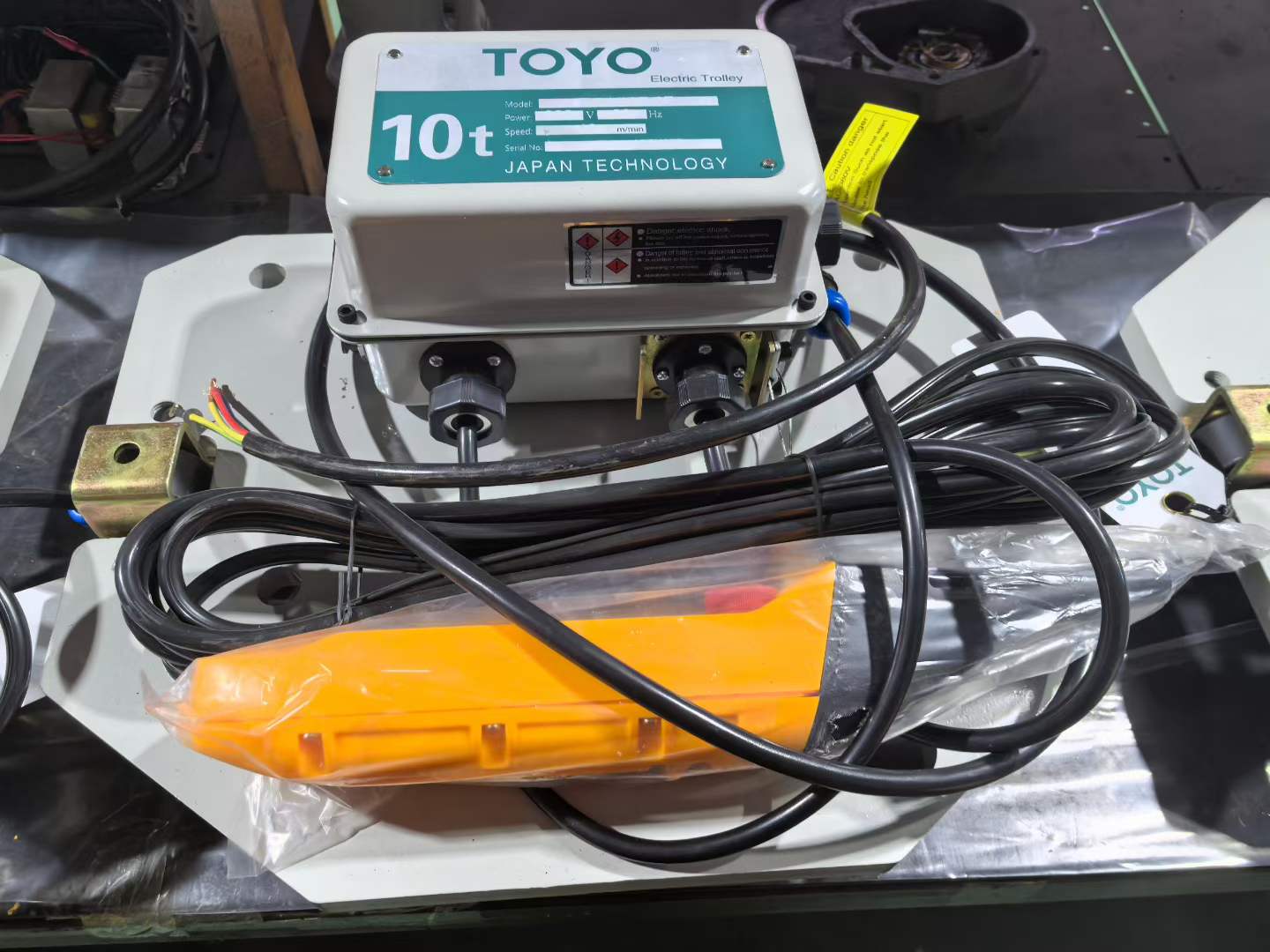
Depending on the application, buyers may consider manual geared trolleys or motorized electric trolleys. Before selecting a trolley-mounted arrangement, confirm:
-
Beam type and flange width.
-
Trolley rated capacity.
-
Compatibility between the trolley and hoist.
-
Required horizontal travel distance.
-
Available headroom and installation clearance.
Review TOYO’s electric chain hoist range and confirm the required trolley configuration with the supplier.
For applications that use manual lifting equipment instead, TOYO also offers manual chain hoists.
7. Evaluate Safety Features and Working Conditions
Safety and environmental suitability are important considerations when choosing a heavy-duty electric chain hoist.
Depending on the model, relevant features may include:
-
Overload protection.
-
Upper and lower limit switches.
-
Electromagnetic braking systems.
-
Appropriate electrical enclosure protection.
-
Suitable load chain and hook assemblies.
-
Compatible control and emergency stop arrangements.
The exact features available vary by model. Buyers should verify the supplied configuration against the manufacturer’s technical documentation.
The working environment also matters. Consider ambient temperature, humidity, dust, corrosion exposure, and any special site requirements.
Equipment used in hazardous locations must have the appropriate certification and configuration for the specific hazard. Ordinary industrial equipment should not be assumed suitable for explosive atmospheres.
Regular inspection and maintenance should follow the manufacturer’s instructions and applicable safety requirements. For further information, visit TOYO’s Quality Assurance and Product Testing pages.
8. What Should Buyers Compare When Requesting a Quotation?
When sourcing a 5 ton electric chain hoist, compare complete technical and commercial specifications rather than unit price alone.
Before requesting a quotation, prepare the following information:
-
Rated lifting capacity.
-
Required lifting height.
-
Power supply and frequency.
-
Desired lifting speed.
-
Duty classification or operating frequency.
-
Fixed or trolley-mounted configuration.
-
Beam dimensions, if a trolley is required.
-
Working environment.
-
Order quantity.
-
Delivery destination and required delivery date.
-
Required technical documents and certificates.
Providing complete requirements helps the supplier recommend a suitable model and reduces the risk of specification changes after ordering.
If your project requires a special lifting height, electrical configuration, or other customized features, visit TOYO’s OEM and Customization Service to discuss your requirements.
Frequently Asked Questions
1. How much weight can a 5 ton electric chain hoist lift?
Its rated capacity is 5,000 kg under the specified operating conditions. The complete suspended load, including relevant lifting accessories, must remain within the permitted limits.
2. What lifting height is available for a 5 ton electric chain hoist?
Available lifting heights depend on the model and configuration. Specify the required vertical travel distance and confirm the available chain length with the manufacturer.
3. Can a 5 ton electric chain hoist be used with a trolley?
Yes, if the hoist and trolley are compatible with each other and the supporting beam. Confirm trolley capacity, beam dimensions, mounting arrangement, and horizontal travel requirements before ordering.
4. What power supply does a 5 ton electric chain hoist require?
The required supply depends on the model. Confirm voltage, frequency, phase, motor power, and control voltage against the manufacturer’s technical datasheet.
5. Is a 5 ton electric chain hoist suitable for continuous operation?
Suitability depends on the hoist’s duty classification, load spectrum, lifting cycles, operating hours, and environmental conditions. Ask the manufacturer to confirm the appropriate model for intensive or frequent operation.
6. What information is needed to obtain an accurate quotation?
Provide the rated capacity, lifting height, electrical supply, desired lifting speed, duty requirements, installation configuration, quantity, delivery destination, and any special certification or environmental requirements.
Conclusion
Choosing the right 5 ton electric chain hoist requires a complete assessment of lifting capacity, lifting height, duty classification, electrical compatibility, lifting speed, mounting arrangement, and safety requirements.
By confirming these details before ordering, industrial buyers can compare suitable models more effectively and reduce the risk of costly specification mismatches.
TOYO supplies lifting and material handling equipment for industrial applications. If you are sourcing a 5 ton electric chain hoist for a factory, workshop, warehouse, or industrial project, contact our team for product information, technical specifications, and a quotation.
Contact TOYO
Website: https://www.toyo-industry.com/
Email: info@toyo-industry.com
TOYO — Professional Lifting & Material Handling Solutions.
Reliable Lifting Equipment Since 1994.