1. The Core Principle: Demystifying How Does the Hydraulic Jack Work
To operate and specify hydraulic jacks effectively, one must first understand the immutable physical law at their heart. This knowledge separates professional users from casual operators and is fundamental for agents and distributors explaining value to clients in heavy industries across South America, Russia, and Southeast Asia.
1.1 The Unbreakable Law: Pascal's Principle in Action
Every hydraulic jack is a direct application of Pascal's Principle, which states that pressure applied to a confined fluid is transmitted undiminished in all directions. In practice, this means a small force on a small area (the pump piston) creates a pressure that acts on a much larger area (the ram or lifting piston), generating a massive output force. The force multiplication factor is the ratio of the ram's area to the pump piston's area. For a typical industrial jack with a ratio of 100:1, 10 kg of input force can lift 1000 kg.
1.2 A Step-by-Step Journey of Force: From Handle to Load
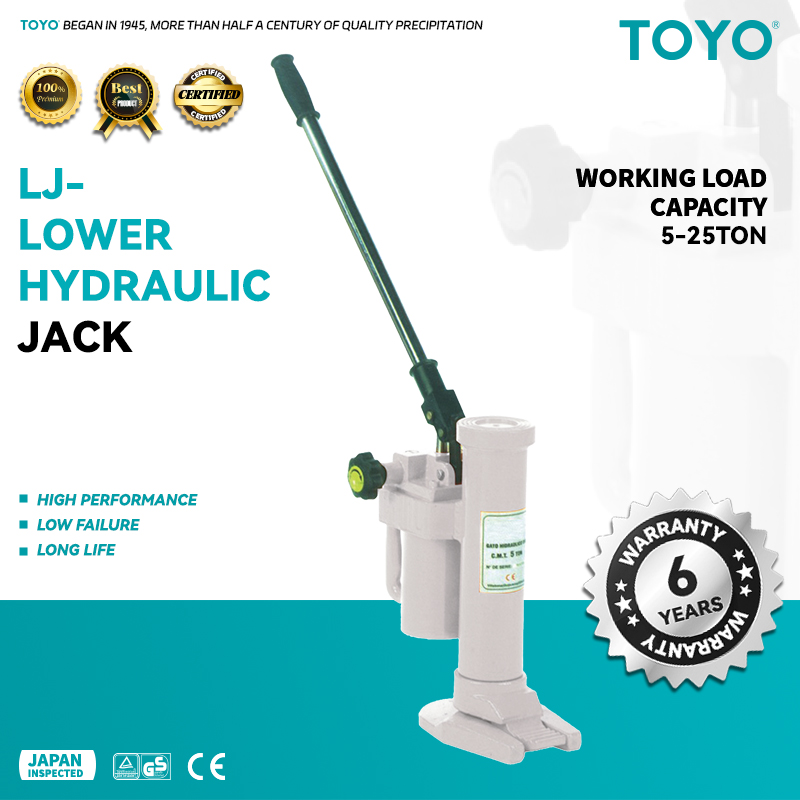
Let's trace the force pathway in a bottle jack, common in mining and construction:
- Input Stage: The user pumps the handle, moving a small-diameter piston in the pump cylinder. This draws hydraulic fluid from the reservoir through an inlet check valve.
- Pressure Generation: On the downstroke, the pump piston pushes the fluid, closing the inlet valve and forcing it through another check valve into the main cylinder underneath the ram.
- Force Multiplication: The fluid pressure (Force/Area) is now applied to the entire base of the large ram. Because the ram's surface area is vastly larger than the pump piston's area, the upward force is multiplied proportionally.
- Load Holding: A mechanical load-holding valve (often a ball-and-seat type) closes automatically when pumping stops, preventing the ram from retracting under load.
- Lowering: Opening the release valve (usually via a turn screw) allows controlled fluid to bypass back to the reservoir, lowering the load safely.
1.3 Key Components and Their Critical Functions
Understanding components aids in troubleshooting and procurement. The core assembly includes:
- Reservoir: Stores hydraulic fluid (typically mineral-based oil). Capacity and fluid quality directly impact performance.
- Pump Cylinder & Piston: The "input" side. Wear here reduces efficiency.
- Main Cylinder & Ram: The "output" side. Must withstand extreme pressure without deformation. High-tensile forged steel is standard.
- Check Valves (Inlet & Outlet): Ensure one-way fluid flow. Failure causes load creep or failure to lift.
- Release Valve: A precision needle valve for controlled descent. A worn valve leads to sudden drops.
- Overload Valve (in advanced models): A safety relief that opens at a set pressure to prevent catastrophic failure.
For stability during prolonged work, a hydraulic jack should always be paired with robust floor jack and stands .
2. Beyond the Basics: A Practical Methodologies for Optimal Use
Knowing the theory is one thing; applying it safely and efficiently on a busy shop floor in Johannesburg or a remote mining site in Chile is another. This section provides actionable methodologies.
2.1 The 7-Step Professional Operational Guide
- Inspect & Prepare: Check for leaks, damage, and fluid level. Ensure the release valve is fully closed. Clean the jack and load contact points.
- Positioning is Paramount: Place the jack on a firm, level, and stable base. The load must be centered on the jack's saddle. Never use on soft ground or uneven surfaces.
- Lift in Stages: Pump smoothly and steadily. For heavy loads, lift in small increments (5-10 mm), pausing to check stability.
- Secure the Load Immediately: Once at the desired height, place properly rated jack stands under the load's support points. The hydraulic jack is a lifting device, not a long-term holding device.
- Perform Work: With the load securely on stands, you can proceed with maintenance or assembly.
- Controlled Lowering: Slightly lift the load off the stands, remove them, then slowly open the release valve. Maintain full control; do not let the load free-fall.
- Post-Use Protocol: Lower the ram completely, clean the jack, and store it in a dry, protected position to prevent ram corrosion.
2.2 Pre-Operation Checklist: Your Safety and Performance Template
Print and use this checklist before every major lift:
- Hydraulic fluid level is between MIN/MAX marks.
- No visible leaks from cylinders, valves, or fittings.
- Ram and pump piston are clean and free of deep scratches/dents.
- Handle is securely attached and not bent.
- Release valve turns smoothly and closes fully.
- Jack's rated capacity (clearly marked) exceeds the load weight by a safe margin (recommended: 25%).
- Appropriate personal protective equipment (PPE) is worn.
2.3 Case Study: Increasing Workshop Efficiency by 30% with Systematic Jack Use
In 2024, a heavy machinery repair workshop in Sao Paulo, Brazil, was experiencing frequent project delays. An audit revealed inconsistent and unsafe jack use, leading to minor accidents, damaged equipment, and rework. We implemented a training program based on the 7-step guide and mandatory checklist use.
Within six months, the results were quantified: a 30% reduction in time spent on positioning and lifting tasks, zero lifting-related incidents, and a 15% decrease in jack maintenance costs due to proper handling. This case underscores that procedural knowledge directly impacts profitability and safety for distributors' end-clients.
3. The High Cost of Ignorance: Common Mistakes and Critical Traps
Many failures stem from repeated, preventable errors. Recognizing these traps is crucial for distributors advising clients on safety and maintenance protocols.
3.1 The 5 Most Frequent (and Dangerous) User Errors
- Overloading: The cardinal sin. Exceeding the rated capacity stresses metal beyond yield point, leading to sudden, violent failure. Always know the exact load weight.
- Using as a Permanent Support: Leaving a load suspended on a hydraulic jack overnight or for extended periods. Fluid can seep past seals, leading to gradual, unpredictable lowering. Always use floor jack and stands .
- Poor Positioning: Placing the jack on dirt, gravel, or uneven concrete. This can cause the jack to tip or sink during the lift.
- Ignoring Maintenance: Operating with contaminated fluid (water, dirt) accelerates wear on pumps and valves, causing erratic operation.
- Rapid, Jerky Pumping: This can introduce air into the system (aeration), creating a spongy feel and reducing lifting capacity.
3.2 Hydraulic Fluid Myths and Truths: Debunking Misconceptions
Myth 1: "Any oil will work." Truth: Hydraulic fluid has specific viscosity, anti-wear, and anti-foam additives. Using motor oil or ATF can damage seals and reduce performance.
Myth 2: "If it's not leaking, the fluid is fine." Truth: Fluid degrades over time due to heat and contamination. Annual inspection and periodic replacement (per manufacturer guidelines) are necessary, especially in high-humidity regions like Southeast Asia.
Myth 3: "More fluid is better." Truth: Overfilling the reservoir can cause excessive pressure and seal blowout during operation or temperature changes.
3.3 Real-World Failure Analysis: When a "Simple" Jack Overhaul Saved a $50k Project
I recall a situation with a client in the Middle East, a Machinery Mover Supplier , who reported that a 50-ton capacity hydraulic jack was "slow and weak." They were about to abandon it on a critical plant relocation project, risking delays worth over $50,000. On-site inspection revealed not a failed jack, but one filled with viscous, contaminated fluid and with a slightly stuck inlet check valve.
We conducted a full fluid flush, cleaned the valve, and replaced a worn pump cup seal—a half-day maintenance task. The jack performed to its original specification, and the project continued on schedule. The trap was assuming catastrophic failure when the issue was routine, preventable wear. This highlights the value of basic maintenance knowledge for end-users.
4. Making the Right Choice: Comparative Analysis and ROI
For wholesale buyers and agents, understanding the competitive landscape is key to advising clients and making profitable inventory decisions.
4.1 Hydraulic vs. Mechanical: A 2026 Data-Driven Comparison for Different Markets
The choice between hydraulic and mechanical (screw or ratchet) jacks depends on application. Here is a critical decision-making table:
| Feature | Hydraulic Jack | Mechanical Screw Jack |
|---|---|---|
| Principle | Pascal's Law (Fluid Pressure) | Mechanical Advantage (Screw Thread) |
| Typical Capacity Range | 1.5 to 100+ tons | 0.5 to 20 tons |
| Key Advantage | High capacity, smooth lifting, less user effort. | Mechanical lock, precise positioning, no fluid leaks. |
| Key Disadvantage | Requires maintenance, can leak, not for permanent hold. | Slower operation, higher user effort for heavy loads. |
| Ideal Market/Use | Heavy industry, mining, construction, automotive repair (high power). | Precision alignment, stage rigging, long-term support, environments banning fluids. |
| Avg. Lifespan (with maintenance) | 8-12 years | 15-20 years |
For markets like Russia with extreme temperatures, note that hydraulic fluid viscosity is critical. Synthetic fluids perform better in cold climates.
4.2 Cost Breakdown: Initial Price, Maintenance, and Total Cost of Ownership
The cheapest jack is often the most expensive over its life. Total Cost of Ownership (TCO) includes:
- Initial Purchase Price: Varies by capacity and quality.
- Preventive Maintenance: Fluid changes, seal kits, occasional professional calibration. Estimate 5-7% of purchase price annually for heavy use.
- Downtime Cost: A failed jack can halt an entire project. Quality jacks have higher Mean Time Between Failures (MTBF).
- Safety & Liability Cost: A failure causing injury or damage has immense financial and reputational cost. Compliance with standards mitigates this.
Investing in a jack from a reputable manufacturer with available spare parts often yields a lower 10-year TCO than a "bargain" option.
4.3 Investment Return Calculation: How Proper Jack Selection Impacts Project Timelines
ROI isn't just about the tool's cost. A 20-ton hydraulic jack enabling a 4-person crew to position a machine in 2 hours, versus a manual method taking 8 hours, creates direct labor savings. For a crew cost of $80/hour, the saving is $480 per lift. If this operation is performed weekly, the jack pays for itself in a matter of months through productivity gains alone, not counting reduced injury risk.
5. Navigating the Legal Landscape: Compliance and Standards for Global Markets
For distributors in South America, the Middle East, and Russia, compliance is not optional—it's a commercial and legal necessity.
5.1 Essential ISO, ANSI, and Regional Standards for South America, Middle East & Russia
- ISO 12100: Safety of machinery – General principles for design. The foundational standard.
- ISO/TS 29001: Quality management for the petroleum, petrochemical, and natural gas industries (critical for Middle Eastern clients).
- ANSI/ASME B30.1: The primary U.S. standard for jacks, often referenced globally for design and testing requirements.
- GOST R and GOST RV: Mandatory certification systems for Russia and the Customs Union. A jack cannot be sold in Russia without GOST-R certification.
- INMETRO (Brazil): Brazilian National Institute of Metrology, Quality and Technology requires certification for many industrial products.
Progressive manufacturers design products to meet or exceed these standards, providing a significant advantage to their distributors.
5.2 Compliance Checklist for Importers and Distributors
Before placing an order with a factory, verify:
- The manufacturer holds relevant ISO 9001 quality management certification.
- The specific jack model has a valid test certificate from an accredited lab (e.g., showing proof load test to 150% of rated capacity).
- Product markings are permanent, legible, and in the required languages (capacity, model, serial number, manufacturer).
- The user manual is comprehensive, includes safety warnings, and is available in key languages for your markets.
- The manufacturer can provide a Declaration of Conformity for relevant standards.
5.3 Liability and Insurance Implications of Non-Compliant Equipment
Using or selling non-compliant equipment voids most insurance policies in the event of an accident. In many jurisdictions, the distributor and the end-user share legal liability. A 2025 report from a European insurance consortium found that 60% of lifting equipment accident claims involved products lacking proper certification or with inadequate instructions. The financial risk far outweighs any marginal savings on non-compliant stock.
6. From Novice to Expert: Tailored Insights for All User Levels
Your client base ranges from first-time buyers to seasoned engineers. Catering to both builds trust and authority.
6.1 Beginner's Guide: First-Time Setup and Safe Lifting Practices
For the new workshop owner:
- Unboxing: Remove all packaging. Check for shipping damage. Find the manual and read it first.
- Initial Fluid Check: Some jacks are shipped dry. Fill with the manufacturer-recommended fluid to the correct level.
- Break-in Cycle: Operate the jack through its full range several times with no load to purge any trapped air from the system.
- First Lift: Start with a known, lightweight load (below 50% capacity) in a controlled environment to build confidence.
- Find a Mentor: Have an experienced user observe your first few real-world lifts.
6.2 Advanced Techniques: Precision Lifting, Synchronization, and Integration with Other Gear
For complex projects like installing a turbine or moving historical structures:
- Synchronized Lifting: Using multiple jacks connected to a single, common hydraulic power unit with a manifold and flow dividers ensures perfectly even lift. This is critical to prevent structural twisting.
- Integration with Load Monitoring: Use wireless load cells placed under the jack saddles to monitor the exact weight on each point in real-time.
- Combination with Other Equipment: A hydraulic jack is often the prime mover in a system that includes Machinery Mover Supplier rollers or skates for lateral movement once the load is lifted.
6.3 Tool & Resource Recommendations: Must-Have Accessories and Calibration Tools
- Professional-Grade Jack Stands: Never rely on the jack alone. Invest in stands with a matching or higher capacity rating.
- Hydraulic Fluid Purification Kit: A portable filter cart for on-site fluid cleaning extends component life dramatically.
- Digital Pressure Gauge with Test Port Adapter: Allows you to verify the system pressure and calibrate overload valves.
- Seal Kit Inventory: Keep common seal kits (pump cup, ram seal) for your most-used jack models to minimize downtime.
- Torque Wrench: Essential for correctly tightening the release valve assembly and other critical fittings during maintenance.
7. The Future of Lifting: 2026 Trends and Innovations
The industry is not static. Forward-thinking distributors should be aware of emerging trends to guide their clients and inventory planning.
7.1 Smart Hydraulics: IoT-Enabled Jacks and Predictive Maintenance
The most significant trend is digitization. Next-generation jacks feature embedded sensors that monitor pressure, temperature, ram position, and cycle count. Data is transmitted via Bluetooth to a tablet or cloud platform. This enables:
- Predictive Maintenance: The system alerts the user to change fluid based on actual contamination levels, not just time.
- Usage Logging: For rental companies and large contractors, tracking utilization and maintenance history per asset.
- Safety Interlocks: The jack can be geo-fenced or programmed to not operate if it's due for inspection or if sensor readings are abnormal.
7.2 Material Science Advances: Lighter, Stronger Components
Advanced composites and high-strength, lightweight alloys are reducing the weight of high-capacity jacks by up to 25% without sacrificing strength. This is a major benefit for mobile service technicians and operations where equipment must be manually carried to remote sites. Furthermore, surface treatments like diamond-like carbon (DLC) coatings on rams drastically reduce friction and wear, enhancing seal life and smoothness of operation.
7.3 Sustainability Trends: Biodegradable Fluids and Energy Recovery Systems
Environmental regulations, particularly in Europe and for multinational corporations, are driving demand for sustainable solutions. This includes:
- Bio-based Hydraulic Fluids: Fluids derived from plant oils that are readily biodegradable and non-toxic, reducing environmental impact in case of a spill.
- Energy-Efficient Designs: New pump designs reduce internal friction and parasitic losses, requiring less user effort.
- Remanufacturing Programs: Leading manufacturers now offer official remanufacturing services, returning old jacks to "as-new" condition with full warranty, at a lower cost and environmental footprint than new production.
The hydraulic jack remains an indispensable tool across global industries, but its effective application requires a blend of fundamental physics knowledge, rigorous procedural discipline, and an awareness of the evolving legal and technological landscape. For professional buyers and distributors in growth markets, success lies not just in sourcing a product, but in becoming a trusted advisor who provides this holistic expertise. Before your next purchase, demand more than a price quote; request the factory's quality certifications, review their test protocols, and ask for detailed maintenance guidelines. A partnership with a manufacturer that invests in education, compliance, and innovation—like providing robust floor jack and stands as part of a system—ultimately protects your projects, your people, and your profitability. Start by auditing your current lifting procedures against the checklists in this guide, and consider how the next generation of smart, compliant equipment can future-proof your operations.