How to Choose the Right Lifting Sling for Your UAE Operations?
Selecting the appropriate lifting sling is a critical decision that directly impacts safety, productivity, and operational costs. In the UAE, where temperatures soar above 45°C and dust-laden winds are common, equipment must withstand extreme conditions while meeting stringent regulatory requirements. Whether you're lifting steel beams on a construction site in Dubai or handling oilfield pipes in Abu Dhabi, the right sling can mean the difference between a seamless lift and a catastrophic failure. This section breaks down the essential factors to consider when choosing a lift sling for your UAE operations.
Comparing Web Slings, Round Slings, and Chain Slings
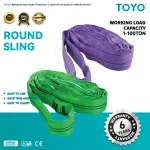
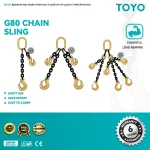
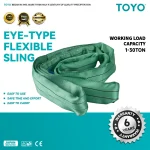
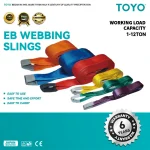
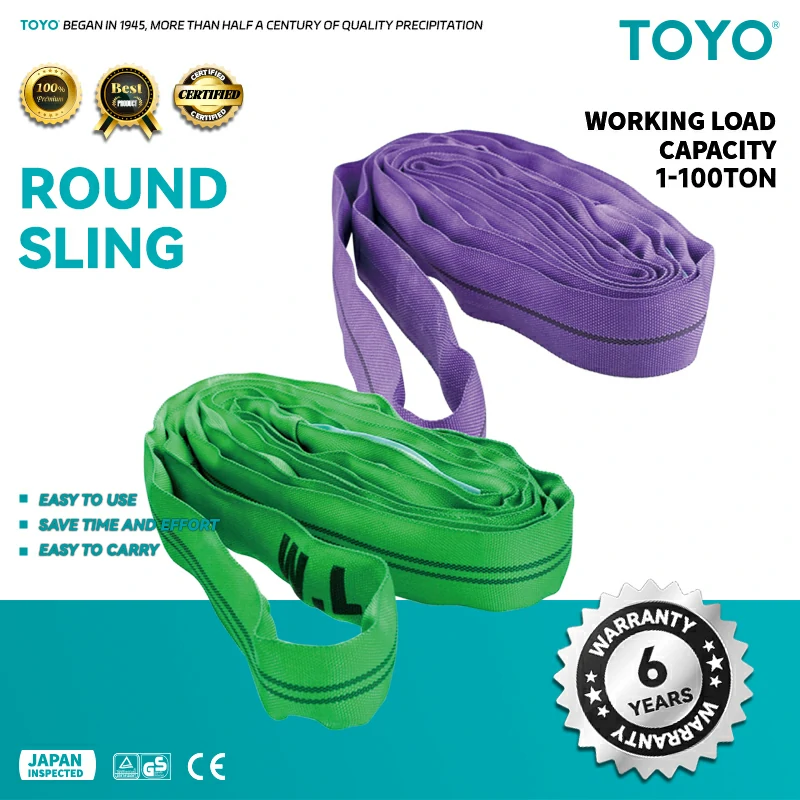
Three primary sling types dominate the UAE market: web slings (synthetic flat webbing), round slings (endless loops of polyester yarn), and chain slings (alloy steel chains). Each has distinct advantages depending on the load, environment, and frequency of use. Understanding these differences is the first step toward making an informed purchase.
| Feature | Web Slings | Round Slings | Chain Slings |
|---|---|---|---|
| Material | Nylon or polyester webbing | Continuous polyester yarn in a protective sleeve | Alloy steel, Grade 80 or 100 |
| Flexibility | High – conforms to load shapes | Very high – excellent for delicate or irregular loads | Low – rigid, limited conformity |
| Weight | Lightweight and easy to handle | Lightweight; often lighter than web slings of equal capacity | Heavy – requires more labor to rig |
| Load Capacity | Up to 60 tonnes (depending on ply and width) | Up to 100 tonnes or more | Up to 50 tonnes and above (virtually unlimited with multi-leg) |
| Abrasion & Cut Resistance | Moderate; susceptible to cuts from sharp edges | Low to moderate; sleeve offers some protection but can be damaged | Excellent – ideal for rough or sharp loads |
| Chemical Resistance | Polyester resists acids; nylon resists alkalis. Both degrade in strong chemicals. | Polyester core; similar chemical resistance to polyester web slings | Steel is susceptible to corrosion; galvanized or coated options available |
| Temperature Range | -40°C to 100°C (polyester); nylon up to 90°C | -40°C to 100°C | -40°C to 200°C (standard); up to 400°C with special grades |
| Typical Cost | Low to moderate | Moderate | High initial cost, but long service life |
| Best Applications in UAE | General construction, warehouse lifting, smooth loads | Pipe laying, marine, precast concrete, heavy machinery | Foundries, steel fabrication, oil & gas, high-temperature environments |
In my experience managing a rigging supply project for a UAE-based offshore platform, we initially specified web slings for lifting coated pipes. However, the abrasive anti-corrosion coating shredded the polyester webbing within weeks. Switching to chain slings with protective sleeves eliminated the downtime and reduced long-term costs by 30%. This lesson underscores the importance of matching sling material to the load surface, not just the weight.
Understanding UAE-Specific Load Requirements and Standards
The UAE enforces strict lifting equipment regulations through the Emirates Authority for Standardization and Metrology (ESMA) and sector-specific guidelines from entities like ADNOC and Dubai Municipality. Any lifting sling used in the country must comply with ESMA standards, which often reference international norms such as ISO 4878 (for flat woven webbing slings) and ISO 7531 (for chain slings). Additionally, the UAE Fire and Life Safety Code influences material choices in high-risk environments like oil refineries, where spark-resistant slings may be mandatory.
Load requirements vary by industry. In construction, dynamic loads from crane movement and wind gusting (common during UAE shamal winds) demand slings with a higher safety factor—typically 5:1 or 6:1 for synthetic slings and 4:1 for chains. For offshore lifts, DNV GL rules often apply, requiring certified proof load testing and documentation. I've seen shipments of uncertified slings held at Jebel Ali Port for weeks because the importer couldn't produce ESMA conformity certificates. Always verify that your supplier provides traceable test certificates and ESMA registration marks on the sling labels.
Evaluating Supplier Credentials: What to Look for in a UAE Distributor
Not all distributors in the UAE are created equal. The market is flooded with low-cost imports from unverified sources, often lacking proper heat treatment or material traceability. When evaluating a supplier, look for these credentials:
- ESMA Certificate of Conformity for the specific sling type.
- ISO 9001:2015 certification for quality management.
- LEEA (Lifting Equipment Engineers Association) membership or training credentials for their technical staff.
- Local stock availability – a distributor with a warehouse in UAE can reduce lead times from weeks to days.
- After-sales support, including inspection services and load testing.
A practical example: during a hotel tower project in Ras Al Khaimah, our team urgently needed 20-tonne round slings. We approached a local distributor who claimed to have stock, but upon visiting their warehouse, we found slings with faded labels and no test certificates. We walked away and instead sourced from a Dubai-based supplier with LEEA-trained engineers who delivered factory-certified slings within 48 hours. The extra due diligence prevented a potential lift failure that could have delayed the project by months.
2026 Buyer’s Checklist for Lifting Sling Procurement
Use this checklist to streamline your purchasing process:
- Confirm the exact working load limit (WLL) required, factoring in hitch type and angle.
- Specify the material: polyester for general use, nylon for shock absorption, steel chain for high heat or abrasion.
- Request ESMA-compliant documentation and third-party test certificates.
- Inspect sling labels for clear marking: manufacturer, WLL, length, serial number, and standard.
- Evaluate total cost of ownership, not just purchase price—consider lifespan, maintenance, and downtime.
- Check the distributor's return and warranty policy.
- For large orders, negotiate a consignment stock agreement to ensure just-in-time availability.
- Plan for periodic re-certification; ask if the supplier offers inspection services.
What Are the Step-by-Step Safety Guidelines for Using Lifting Slings?
Even the highest-quality lifting sling can fail if used improperly. In the UAE, where multilingual workforces are common, clear safety protocols are non-negotiable. The following guidelines align with LEEA's Code of Practice and local regulations to keep your lifting operations incident-free.
Pre-Lift Inspection: A 10-Point Checklist
Before every lift, a competent person must inspect the sling. I've implemented this 10-point checklist on multiple UAE sites, and it has caught issues that would have otherwise gone unnoticed:
- Check the sling identification tag—is it legible and does it match the load?
- Examine the entire length for cuts, abrasions, or broken stitches (web/round slings).
- For chain slings, look for nicks, gouges, stretch, or bent links.
- Verify that fittings (hooks, shackles, master links) are free from deformation and cracks.
- Assess for chemical damage: discoloration, hardening, or softening of synthetic fibers.
- Check for heat or friction damage, such as glazed surfaces on polyester.
- Ensure the sling is free from knots and improper modifications.
- Confirm the load weight does not exceed the WLL for the hitch and angle.
- Inspect the environment: sharp edges, extreme temperatures, or corrosive atmospheres.
- Document the inspection in a logbook or digital app.
Correct Sling Attachment and Hitch Types
The three fundamental hitches are vertical, choker, and basket. Each distributes stress differently. A vertical hitch uses the full WLL, while a choker hitch reduces capacity to about 80% (depending on the angle of choke). A basket hitch can double the capacity if the legs are vertical, but as the angle between legs increases, capacity decreases dramatically. For instance, at a 60° included angle, the load on each leg is 1.15 times the vertical load; at 120°, it's 2 times. Misunderstanding this relationship is a leading cause of sling overload.
Always attach the sling to the load's designated lifting points. Avoid wrapping a sling around sharp corners without protective sleeves or corner blocks. In one UAE warehouse installation, a crew used a polyester round sling in a choker hitch on a steel beam with unprotected edges. The sling cut through on the second lift, dropping a 3-ton HVAC unit. The root cause was inadequate edge protection, a mistake that cost the contractor AED 50,000 in damages and a safety stand-down.
Load Angle Calculations Made Simple
Calculating the effect of sling angles doesn't require an engineering degree. Use this formula: Tension per leg = (Load weight / Number of legs) × Angle Factor. The angle factor equals 1 divided by the sine of the angle between the sling leg and the horizontal. For quick reference, at 90° (vertical), factor = 1.00; at 60°, factor = 1.15; at 45°, factor = 1.41; at 30°, factor = 2.00. So a 4-tonne load on two legs at 45° results in 2 × 1.41 = 2.82 tonnes per leg. You'd need slings with a WLL of at least 3 tonnes each.
Many mobile apps now automate these calculations, but I still recommend riggers learn the manual method. On a remote site in the Western Region of Abu Dhabi, a signal loss made digital tools unusable. The rigging supervisor's ability to calculate angles by hand kept the lift on schedule and safe.
Maintenance and Storage Best Practices in UAE Climate
The UAE's climate accelerates degradation of synthetic slings. UV radiation, high humidity, and abrasive sand demand rigorous maintenance. Store slings in a cool, dry, shaded area away from direct sunlight. Never leave them on the ground where sand can infiltrate fibers. After use, clean with fresh water and mild detergent to remove salt or chemical residues, then air-dry thoroughly.
Chain slings require lubrication to prevent corrosion, especially in coastal areas like Fujairah. Use a dry-film lubricant that doesn't attract sand. Inspect chain slings monthly for rust and wear, and keep a detailed record. I've seen chain slings retired after only six months in a Dubai marina project because they were stored outdoors without protection. A simple storage rack with a canvas cover would have tripled their service life.
What Are the Top Mistakes When Purchasing and Using Lifting Slings in UAE?
Mistakes in lifting equipment procurement and usage can lead to equipment damage, legal penalties, and severe injuries. Here are the most common pitfalls I've observed across UAE industries.
Choosing Price Over Quality: The Hidden Costs
Low-priced slings often come without traceable material origins or proper heat treatment. They may use substandard polyester yarn or recycled steel with inconsistent tensile strength. While the upfront savings can be 20-40%, the hidden costs include more frequent replacements, unplanned downtime, and potential liability from accidents. In 2025, a UAE logistics company faced a AED 200,000 fine after a failed sling injured two workers. Investigation revealed the sling was a non-certified import with a falsified WLL tag. The company's attempt to save AED 500 per sling ended up costing them 400 times that amount.
Ignoring UAE Regulatory Compliance (ESMA, ISO)
Operating without ESMA-compliant slings can result in project shutdowns and blacklisting from major clients like ADNOC or Emaar. UAE authorities conduct random site inspections, and non-compliance can lead to immediate prohibition of equipment use. Beyond legal risks, non-compliant slings may not meet the safety factors required for local conditions, such as high ambient temperatures reducing synthetic strength. Always insist on seeing the ESMA certificate and verify its validity on the ESMA online portal.
Mismatching Sling Type to Application
Using a web sling to lift hot asphalt containers or a chain sling on polished marble slabs are examples of costly mismatches. Each sling type has a specific niche. In a precast factory I visited, the team used chain slings for handling concrete panels, causing surface chipping and rework. Switching to wide polyester web slings with protective pads eliminated the damage and improved cycle times.
Neglecting Regular Inspection and Retirement Criteria
Slings have a finite life. Synthetic slings must be retired if they show cuts, severe abrasion, chemical burns, or if the label is missing. Chain slings need retirement when links are stretched by 5% or more, or when wear exceeds 10% of the original diameter. Despite these clear criteria, many companies keep slings in service "until they break." A proactive replacement program based on usage hours or inspection findings is far cheaper than reactive disaster management. I recommend implementing a color-coded inspection system—common in the North Sea oil industry—to visually indicate the sling's status each quarter.
How Much Do Lifting Slings Cost in UAE? A 2026 Pricing and ROI Analysis
Understanding the cost landscape helps you budget effectively and avoid overpaying. Prices vary by type, capacity, length, and certification level.
Price Ranges by Sling Type and Capacity
As of early 2026, typical UAE market prices (excluding VAT) are:
- 1-tonne polyester web sling, 3m: AED 40–80
- 5-tonne web sling, 6m: AED 120–250
- 10-tonne round sling, 4m: AED 300–600
- 20-tonne round sling, 6m: AED 800–1,500
- 5-tonne single-leg chain sling, 3m: AED 400–800
- 15-tonne two-leg chain sling, 4m: AED 1,500–3,000
These are indicative; certified ESMA-compliant slings from reputable manufacturers command a premium. Custom lengths, high-temperature variants, or slings with RFID tags can add 20-50% to the base cost.
Import vs. Local Purchase: Duties, Shipping, and Lead Times
Importing lifting slings into the UAE incurs 5% customs duty on CIF value, plus clearing charges. Shipping from Europe or Asia can take 4-8 weeks by sea, while air freight is expensive for heavy chain slings. Local distributors with ready stock can deliver within 1-3 days, often at a competitive price when you factor in logistics and holding costs. However, for large-scale projects, direct import from a trusted manufacturer can reduce unit costs by 15-25%. I've managed both approaches: for a one-time purchase of 200 slings, local sourcing saved time; for an ongoing plant expansion requiring 1,000+ slings, a direct contract with a Chinese manufacturer under ESMA supervision cut costs by 30%.
Calculating ROI: When to Invest in High-Tensile Slings
High-tensile slings, such as those made from ultra-high molecular weight polyethylene (UHMWPE) or Grade 100 chain, cost more but offer longer life and higher WLL-to-weight ratios. Calculate ROI by comparing the cost per lift over the expected service life. For example, a standard polyester round sling might last 500 lifts in an abrasive environment, while a premium cut-resistant sling lasts 2,000 lifts. If the premium sling costs twice as much but delivers four times the life, the ROI is clear. In a UAE steel mill, upgrading to Grade 100 chain slings reduced annual replacement costs by 40% and improved handling speed due to lighter weight.
Financing and Leasing Options for Large Orders
Capital expenditure on lifting equipment can strain cash flow. Several UAE-based equipment finance companies offer leasing or rental-purchase options for slings and rigging hardware. Leasing is particularly attractive for short-term projects or when you need to preserve credit lines. Typical lease terms range from 12 to 36 months, with ownership transferring at the end for a nominal fee. Always compare the effective interest rate and ensure the lease agreement includes maintenance and inspection services.
What Are the Latest Trends in Lifting Sling Technology and UAE Market?
The lifting equipment industry is evolving rapidly, driven by digitalization, sustainability mandates, and the UAE's ambitious construction agenda.
Smart Slings: IoT and Load Monitoring Innovations
Smart slings with embedded sensors can monitor load weight, angle, temperature, and cumulative fatigue in real time. Data transmits to a central platform via Bluetooth or LoRaWAN, alerting supervisors to overloads or unsafe conditions. In a pilot project at a Dubai logistics hub, we deployed RFID-enabled round slings that automatically logged every lift, creating a digital inspection trail. This reduced manual inspection time by 70% and provided auditable proof of compliance for client audits. The initial investment was recouped within 10 months through efficiency gains and avoided downtime.
Sustainable and Lightweight Materials Gaining Traction
Environmental regulations and corporate ESG goals are pushing manufacturers to develop slings from recycled polyester or bio-based fibers. Lightweight materials like Dyneema® offer strength comparable to steel at a fraction of the weight, reducing fuel consumption during transport and easing rigger fatigue. In the UAE, where heat stress is a serious concern, lighter slings improve worker safety and productivity. Several Abu Dhabi-based oil companies now specify low-carbon-footprint lifting gear in their tender requirements, making sustainability a competitive differentiator.
UAE’s Infrastructure Boom and Its Impact on Lifting Equipment Demand
The UAE's Vision 2031 and ongoing mega-projects—such as the Dubai Urban Tech District, Abu Dhabi's Masdar City expansion, and the Etihad Rail network—are fueling unprecedented demand for lifting equipment. The construction sector alone is projected to grow by 4.5% annually through 2028, according to a 2025 report by Mordor Intelligence. This surge strains supply chains and makes reliable sourcing more critical than ever. Forward-thinking contractors are securing long-term supply agreements with manufacturers to lock in prices and guarantee availability.
The Rise of E-Commerce in Industrial Equipment Procurement
Online platforms are transforming how UAE buyers source lifting slings. Marketplaces like Tradeling and Amazon Business now list industrial rigging gear, and specialist B2B portals offer instant quotes and 3D product configurators. While e-commerce brings convenience and price transparency, it also increases the risk of counterfeit products. I advise buyers to verify seller credentials, check for ESMA marks in product images, and use only platforms that offer buyer protection. A hybrid approach—researching online but purchasing through authorized local distributors—often yields the best balance of price and assurance.
What Tools and Resources Can Streamline Your Lifting Sling Management?
Effective sling management goes beyond the purchase. These tools and resources help maintain safety, compliance, and efficiency.
Top Mobile Apps for Rigging Calculations and Inspections
Several mobile apps simplify rigging math and inspection documentation:
- RigCalc – calculates sling tension, hitch capacity, and center of gravity.
- LEEA App – provides access to LEEA guidance, inspection checklists, and a member directory.
- Lift Plan – allows creation of digital lift plans with automatic angle and capacity checks.
- iAuditor – customizable inspection templates for slings and rigging gear, with photo capture and cloud sync.
On a recent project, our team replaced paper inspection logs with iAuditor. The result was a 50% reduction in inspection time and real-time visibility for the HSE manager. The app's analytics also highlighted a recurring issue with edge-cut damage, prompting a change in sling protection methods.
UAE Regulatory Bodies and Key Standards (ESMA, LEEA, ASME)
Familiarize yourself with these key organizations and standards:
- ESMA (Emirates Authority for Standardization and Metrology) – the primary regulatory body for lifting equipment standards in the UAE.
- LEEA (Lifting Equipment Engineers Association) – provides technical guidance, training, and auditing services globally, with a strong presence in the Middle East.
- ASME B30.9 – the American standard for slings, widely referenced in UAE project specifications.
- ISO 4878 and ISO 7531 – international standards for flat webbing slings and chain slings, respectively.
- BS EN 1492 – European standard for textile slings, often accepted in lieu of ISO in UAE.
Free Downloadable Templates: Inspection Logs and Maintenance Schedules
To help you stay organized, we've developed free resources available on our website:
- Daily Sling Inspection Checklist (PDF)
- Monthly Sling Inventory and Retirement Log (Excel)
- Pre-Lift Rigging Calculation Worksheet
- Annual Maintenance Schedule Template for Chain Slings
These templates align with LEEA recommendations and can be customized for your site's specific needs. Download them at [your website URL] or contact our support team for printed versions.
Recommended Training Providers for Rigging and Lifting Safety
Investing in competent personnel is the most effective safety measure. In the UAE, several providers offer accredited rigging and sling inspection courses:
- LEEA Training Centre – Middle East (Dubai) – offers LEEA-accredited courses from foundation to advanced levels.
- TUV Middle East – provides certified rigging and lifting supervisor training.
- EuroMaTech – conducts regular lifting equipment safety courses in Dubai and Abu Dhabi.
- Local technical colleges such as Abu Dhabi Polytechnic offer vocational rigging programs.
Ensure your riggers hold valid third-party certificates and undergo refresher training every two years. In my experience, companies that invest in LEEA-certified training see a measurable drop in near-misses and sling damage rates.
Ready to upgrade your lifting operations with reliable, ESMA-compliant slings? Whether you need a single custom-length web sling or a fleet of smart-enabled round slings, our team of experts is here to support your UAE projects. Contact us today for a free consultation and site assessment. Don't forget to download our free inspection checklists and explore our online catalog of certified lifting solutions. Your next safe lift starts with the right partner.
References
- Emirates Authority for Standardization and Metrology (ESMA)
- Lifting Equipment Engineers Association (LEEA)
- ISO 4878:1981 – Flat woven webbing slings
- ISO 7531:1987 – Chain slings
- ASME B30.9 – Slings
- Mordor Intelligence – UAE Construction Market Report (2025)
- Grand View Research – Lifting Sling Market Analysis (2024)