![TY1-Fixed-Type-Electric-Chain-Hoist-1[1]](https://www.toyo-industry.com/wp-content/uploads/2026/04/TY1-Fixed-Type-Electric-Chain-Hoist-11.jpg)
Abstract
Ring chain electric hoists are essential for industrial lifting, warehouse operations, construction, and equipment maintenance. Failures often stem from improper chain container installation, chain elongation, or gearbox misalignment. This article explains the chain-gear system and hoist gearbox, identifies failure causes, and provides practical preventive maintenance guidelines for all ring chain hoists on our site. Operators will gain insights to ensure safe operation, reduce downtime, and maintain equipment reliability.
Key Takeaways
- Proper chain container installation prevents chain jamming and gear damage.
- Regular inspection of chains and hoist gearbox alignment avoids common failures.
- Follow manufacturer maintenance SOPs for safe, reliable operation.
- Example parameters from TOYO TY1 ring chain hoists illustrate industrial-standard performance.
Long-tail keywords naturally embedded:
ring chain electric hoist maintenance, prevent electric chain hoist failures, industrial chain hoist troubleshooting, hoist gearbox alignment guide, high-capacity ring chain hoist safety tips
1. Ring Chain Electric Hoist: Chain-Gear System and Gearbox
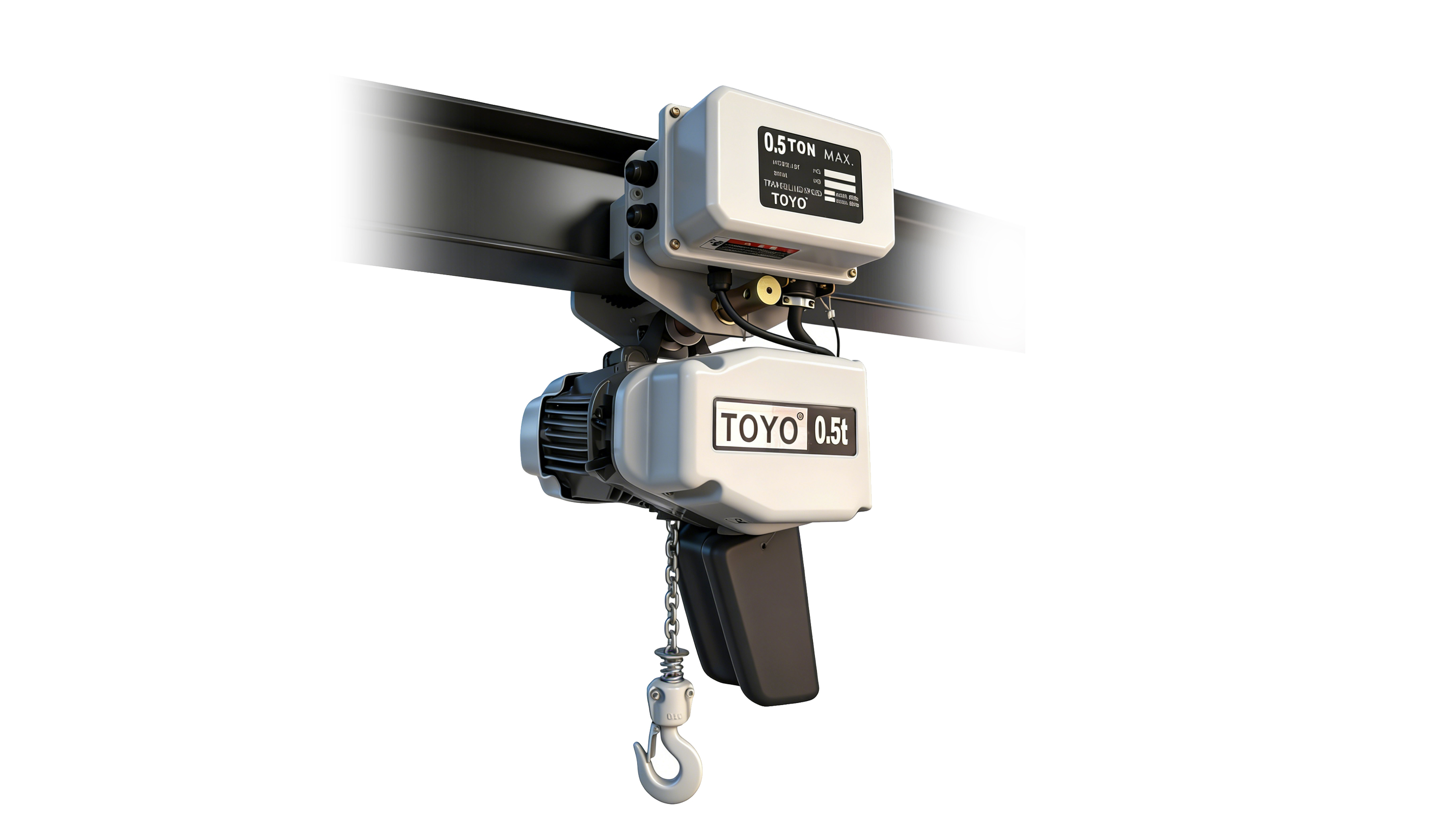
Ring chain hoists convert motor rotation into lifting force through a reduction gearbox. Load-bearing chains mesh with high-precision gears to achieve smooth vertical lifting.
Main Components:
- Motor:Provides rotational power
- Reduction Gearbox:Reduces speed and increases torque
- Load-bearing Chain:High-strength ring chain supporting the load
- Chain Container:Ensures proper chain feeding, prevents jamming
- Gearbox Housing:Protects gears, maintains alignment
Critical Points:
The chain-gear system is sensitive to alignment and load. Misalignment or improper chain feeding increases friction, accelerates gear wear, and may lead to hoist failure.
2. Common Failures in Ring Chain Hoists
2.1 Chain and Gear Damage
Causes:
- Chain elongation → mismatch with gears
- Gear tooth wear or breakage
Symptoms:
- Unusual friction noise
- Difficulty lifting rated load
- Chain elongation or rust
Prevention:
- Regularly inspect chain length, tension, and wear
- Verify gearbox alignment and gear condition
2.2 Chain Container Installation Errors
Causes:
- Incorrect chain container position → chain feeds irregularly
- Chain jams into gearbox → forced operation damages gears
Symptoms:
- Hoist stops mid-operation
- Chain slips or folds at gear entry
- Gear teeth deformation
Best Practice:
- Install chain container according to manufacturer markings
- Ensure smooth chain feeding without folds or excessive tension
3. Failure Case Demonstrations
Case 1: Chain Wear from Misalignment
- High-frequency lifting without checking chain tension → chain elongation, minor gear wear
Case 2: Chain Container Misalignment
- Chain bag installed incorrectly → chain jammed, bent gear teeth, hoist stopped operation
Case 3: Combined Misalignment and Overload
- Improper chain feeding + heavy load → accelerated chain wear, gear damage, downtime up to 48 hours
Illustrative Parameters (Example from TY1 Ring Chain Hoist, 1–20t):
- Load capacity:1–20t
- Lifting height:3–6m standard
- Chain diameter:3–11.2mm
- Lifting speed:1–7 m/min
- Safety features:Electromagnetic braking, limit switches, IP55 protection
These parameters represent typical industrial ring chain hoists on our site.
4. Preventive Maintenance and Operation Guidelines
Chain Container Installation
- Verify chain container position and chain path before operation
- Avoid chain folds, kinks, or excessive tension
Load Testing and Inspection
- Weekly no-load test
- Inspect chain elongation, rust, and cracks
- Check gearbox wear and gear alignment
Maintenance SOP
| Frequency | Task |
| Daily | Inspect chain and gearbox for unusual noise |
| Weekly | Check chain container installation, ensure smooth feeding |
| Monthly | Verify gearbox alignment, check chain tension |
| Quarterly | Professional inspection; replace worn chains or gears |
| Storage | Store in clean, dry location; fully retract chain |
5. Frequently Asked Questions (FAQ)
Q1: How to determine if a chain is elongated?
A1: Compare chain pitch with new chain specifications; check for visible wear.
Q2: What to do if the chain jams?
A2: Stop operation immediately, remove the chain, and inspect the gearbox for damage.
Q3: How often should gearbox alignment be checked?
A3: Standard use: quarterly; heavy-duty or harsh environments: more frequent.
Q4: Can these practices prevent hoist downtime?
A4: Yes, regular inspection, proper chain container installation, and adherence to SOPs minimize downtime and extend hoist life.
6. Conclusion
Correct chain container installation, regular inspection of chains and gearbox, and following preventive maintenance SOPs are key to avoiding failures in ring chain electric hoists. Implementing these practices protects equipment, reduces downtime, and ensures operator safety.
Explore our full range of ring chain hoists and technical specifications:
TOYO Ring Chain Electric Hoists
CTA Examples:
- Download our detailed hoist maintenance checklist
- Contact TOYO experts for professional guidance on industrial hoist selection